Starship flies for orbit, UK stands up a space squadron, and solar packs into 22 acres
SpaceX was set to launch Starship on Monday morning from Starbase, Texas, in the first attempt to send the vehicle into orbit and deploy 26 Starlink V3 satellites, after the FAA cleared the flight on 26 September, according to CNBC.
 Sofia MarchettiScience and health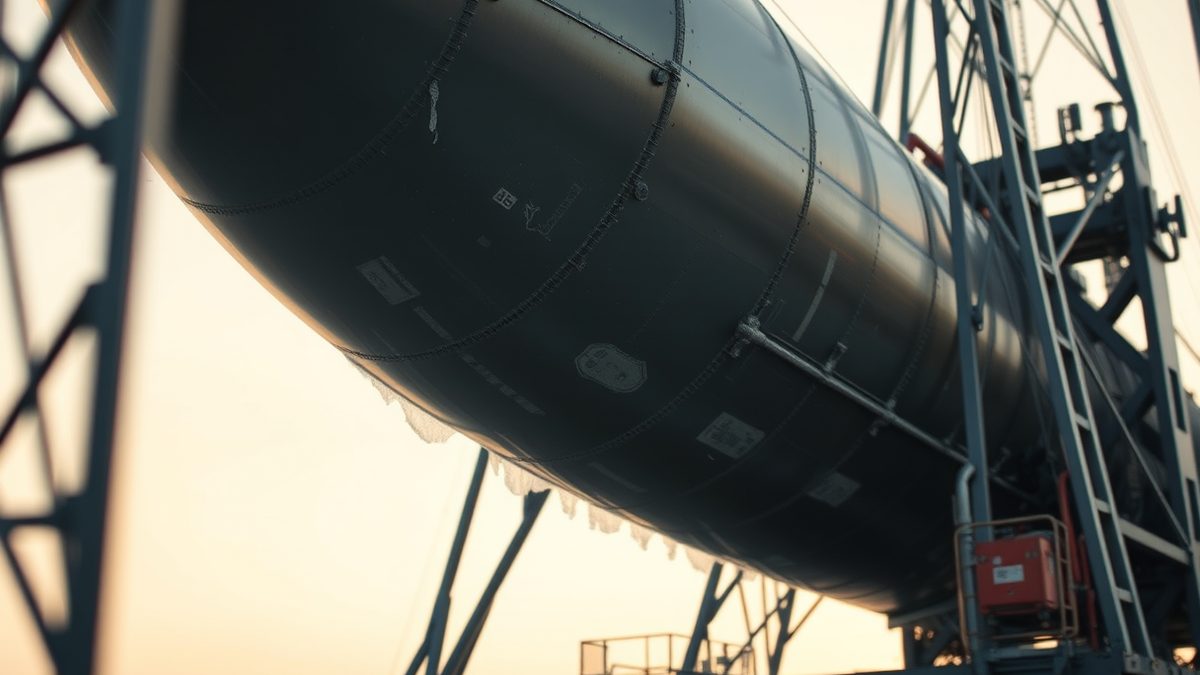
The launch window opened at 8:15 a.m. ET, 7:15 a.m. local time, from the company town of Starbase, Texas, and ran for 75 minutes, CNBC reported on 28 September. That is the news peg: a rocket the company has flown 13 times without ever intending to reach orbit, now asked to circle the planet.
\n\nSpaceX did not get there by itself. The Federal Aviation Administration told CNBC by email that it issued a \"license authorization for the SpaceX Starship Super Heavy Flight 14 launch and reentry operations\" on 26 September. The flight is the 14th test of the stack. Alongside the orbit attempt, SpaceX plans to deploy 26 of its newest Starlink V3 satellites, built at a company facility in Redmond, Washington, and fitted with solar arrays that generate twice the power of earlier generations.
\n\nWhy orbit matters for the balance sheet
\n\nStarship is the load-bearing wall of SpaceX's business plan. CNBC's reporting makes the arithmetic explicit. Starlink, the company's Connectivity segment, was its largest and only profitable segment as of the second quarter. SpaceX operates around 11,000 active satellites in orbit today against roughly 650 for competitor Eutelsat OneWeb. The rocket is the only way the company can keep adding to that fleet at the pace it wants.
\n\nOn an earnings call in August, Elon Musk said, \"It's not out of the question that at some point, Starlink will deliver a majority of the world's internet, at least in countries where we're allowed to operate, which is the vast majority of countries.\" SpaceX went public in June in the largest IPO on record and is now valued at about $2 trillion. COO Gwynne Shotwell said at the All-In Summit earlier this month that the company also intends to use Starship to put \"supercompute in space,\" launching \"AI compute satellites\" into orbit in 2027.
\n\nNone of the 13 earlier test flights were intended to reach orbit, per CNBC. The company is also preparing Starship for a major NASA test flight next year and intends to use the rocket to bring U.S. astronauts back to the moon's surface. That is a lot of program riding on one morning in Texas.
\n\nBritain's answer to orbital threats is not a missile
\n\nTwo days before the launch window opened, the UK stood up a new military unit aimed at the satellites that make modern infrastructure work. Air Chief Marshal Sir Harvey Smyth announced No. III Space Effects Squadron at an inaugural UK Space Power Conference in London, according to The Register, which published the story on 26 September.
\n\nSmyth said the unit will safeguard the vital benefits that space gives to our armed forces, and be capable of denying those benefits to our adversaries.\n\n
The Register notes that No. I Space Operations Squadron and No. II Space Warning Squadron already give the RAF the ability to watch and warn of threats in space. The new unit is meant to act against them. How, exactly, is where the reporting gets cagey: the UK has limited launch facilities and no anti-satellite missile systems, as far as is known, so the capability will come from \"advanced technology,\" including electronic warfare, to \"disrupt, degrade and deny hostile actions.\" The government has formally ruled out destructive anti-satellite missile testing and works through the UN Committee on the Peaceful Uses of Outer Space. The MoD declined to elaborate, telling The Register the information is classified.
\n\nThe context is not hypothetical. The Register reports that four countries are known to have tested anti-satellite missiles: the US, Russia, China and India. Russia destroyed one of its own defunct orbiters in 2021, endangering the International Space Station, which had to manoeuvre the same year to avoid debris from a Chinese test years earlier. The UN passed a US-led resolution in 2022 calling on countries not to conduct such tests. The Register also notes China has looked at lasers and high-power microwaves for disabling orbital assets, and that the US Space Force has claimed to observe Chinese satellites practising \"dogfight\" manoeuvres in orbit.
\n\nSolar's land problem, solved on 22 acres
\n\nOn the ground, the constraint is different: space is scarce even where the rules favour solar. CleanTechnica reported on 27 September on a project that shows how developers are working around it. Cultivate Power's Bowes Solar array sits on a 22-acre site in Elgin, Illinois, wedged between two residential subdivisions and further hemmed in by high-voltage power lines, train tracks and a wetland in one corner.
\n\nThe company split the installation into two arrays for a combined 11 megawatts (DC), which gave it room to meet setback requirements and avoid the wetland. It used a high-density racking system from Planted Solar that sits low to the ground; with an opaque fence and additional screening, the panels are not visible from outside the site. Planted says community solar projects generally need 5 to 7 acres per MWp, a rule of thumb that would put an 11-megawatt array well outside a 22-acre parcel. Planted's software-enabled racking needs about 2 acres per MWp and can fill irregular spaces conventional arrays leave undeveloped, the company says.
\n\nThe local coverage adds the numbers that make community solar legible to neighbours. Chronicle Media, cited by CleanTechnica, reports the array will lower rates for the whole area served by utility Commonwealth Edison, including 580 low- and moderate-income households, with a target of 20 percent savings on energy charges. Cultivate officials say subscribers will save $13.9 million on their ComEd bills over 40 years, and property tax revenues from the site are expected to total $2.1 million over the same period, benefiting the local school district and other agencies.
\n\nThe AI return question, in one room
\n\nThe third thread in this week's dossier is not hardware but evidence. The Decoder reported on 26 September on an anecdote from Azeem Azhar, the British tech entrepreneur and founder of the research group Exponential View, speaking with Nicholas Thompson of The Atlantic. Azhar described addressing about 160 IT vice presidents in Las Vegas and asking who could point to measurable AI results. Two-thirds stayed standing, more than he expected. He then asked who had results good enough to interrupt the CEO's summer vacation. About eight people remained on their feet.
\n\nAzhar's reading is that companies are making progress, but slowly, and whether that pace justifies current investment levels is unresolved. The Decoder notes he also points to what he calls the \"bear version of the story\": a Boston Consulting Group survey finding that about 70 percent of CEOs worldwide say AI success matters for how they are perceived in their roles, which gives them an incentive to present a rosier picture than the facts support. Azhar says he does not have a simple answer either and calls the situation \"finely balanced.\"
\n\nThree stories, three different tests of the same proposition: that the money going into orbit and into data centres will come back with interest. Starship's flight 14 is a hardware test. The RAF's new squadron is a bet that space is now contested terrain. The Elgin array is a reminder that even mature technology runs into the limits of land. And the Las Vegas room is the least comfortable of the four, because it asks whether the returns are real or merely visible.
Sources
4- 01SpaceX prepares to send Starship rocket to orbit for first timeEN
- 02Space Squeeze Forces Solar Developers To Get CreativeEN
- 03Two-thirds of IT leaders report AI results, but few would interrupt the CEO's vacation over themEN
- 04Space Jam: UK debuts space squadron to protect satellitesEN
All figures and quotations in this text come from the sources listed below.
Content prepared by the editorial team with AI assistance.
Sofia Marchetti
Comments
0- No comments yet — be the first.