Fusion's year of firsts: Helion, Realta and CFS report concrete milestones
Helion says its Polaris machine became the first privately developed fusion device to run on deuterium-tritium fuel and hit 150 million degrees Celsius, according to a company announcement dated 13 February 2026.
 Sofia MarchettiScience and health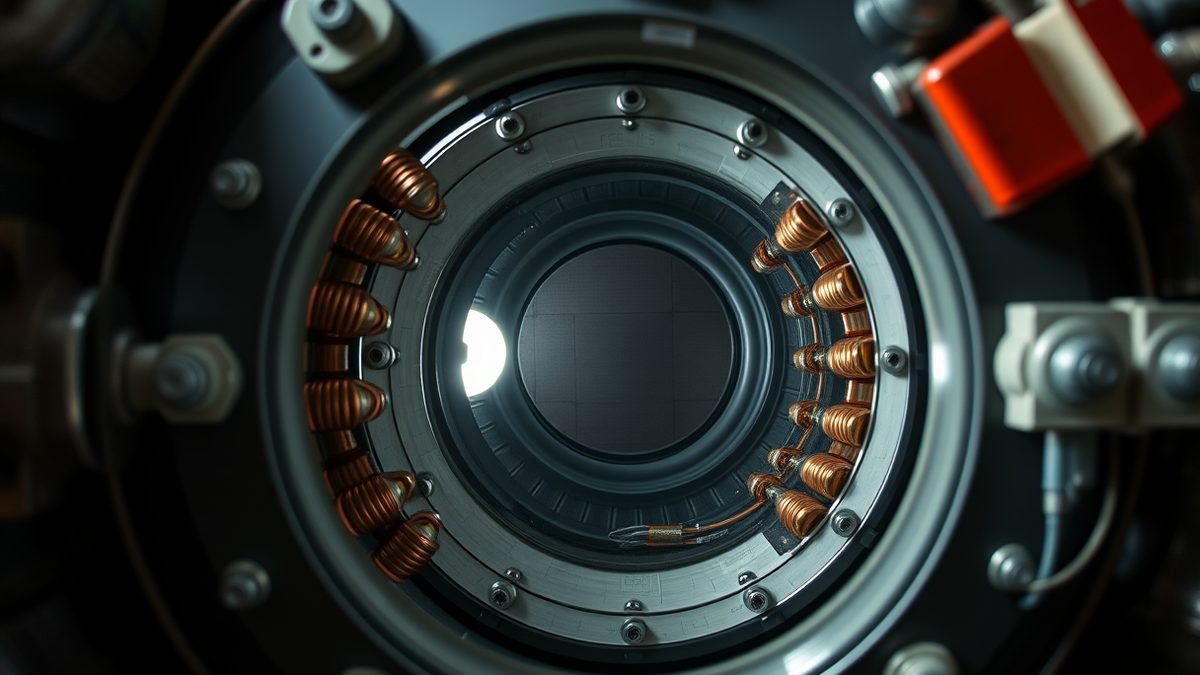
Three private fusion companies have published technical results that, taken together, show a field moving from paper designs to hardware tests. The claims are narrow, the caveats are real, and none of them amounts to net electricity from fusion. But the direction of travel is consistent.
The numbers that matter most come from Helion. Its seventh-generation Polaris prototype, operating since the end of 2024, became in January the first and currently only private fusion machine to use deuterium-tritium fuel, according to the company's newsroom. It also reached plasma temperatures of 150 million degrees Celsius, breaking Helion's own record of 100 million degrees set by its sixth-generation Trenta device. The industry treats 100 million degrees as the threshold for a commercially relevant machine. This record sets a new bar for private machines.
What Helion actually showed
Helion's announcement is careful about what comes next. Deuterium-tritium is a stepping stone, not the commercial fuel. The company says it will keep raising temperatures in Polaris to demonstrate reliable operation on deuterium-helium-3, the mix it intends to use in commercial plants. That distinction matters because D-T fusion produces most of its energy as neutrons, while D-He-3 is aneutronic in principle and harder to ignite. The company has not said when that campaign will finish.
Two outside researchers are quoted in the Helion post. Ryan McBride, an inertial confinement fusion specialist who has worked at Sandia National Laboratories and the University of Michigan, said he reviewed diagnostic data and called the evidence of D-T fusion and temperatures above 13 keV or 150 million degrees Celsius exciting. Jean Paul Allain, associate director for fusion energy sciences at the Department of Energy's Office of Science, said the Polaris campaign showed record-setting temperatures and gains from the fuel mix.
"We believe the surest path to commercializing fusion is building, learning and iterating as quickly as possible," said David Kirtley, co-founder and CEO of Helion.
Helion has been building on the site of Orion, its first commercial machine, in Malaga, Washington, since July 2025. The company says that plant will deliver electricity from fusion to the grid for Microsoft. It has not published a date for first power.
The company also lists its financial and regulatory progress alongside the physics. Helion secured new licenses from Washington state, cleared what it calls a key regulatory milestone toward building and operating a fusion power plant, raised a $465 million Series G, and nearly tripled its valuation to $15.5 billion in a Thrive-led round, according to headlines on its newsroom page. Its headcount now tops 800 and it has opened a Seattle office, GeekWire reported.
Realta's direct conversion demo, and its limits
A different kind of milestone landed on 19 June 2026. Realta Fusion, working with the University of Wisconsin-Madison, demonstrated direct energy conversion on the Wisconsin HTS Axisymmetric Mirror device. The company says this is the first time a commercial fusion company has converted the kinetic energy of a fusion plasma directly into electricity rather than routing it through a thermal cycle.
The hardware was modest by power-plant standards. A single-stage converter with three meshed grids replaced the center disk on WHAM's end-ring assembly, slowing charged particles exiting the mirror's loss cone through an electrostatic potential. It drew multiple amps at around 100 volts, enough, in Realta's own words, to illuminate a few lightbulbs.
Realta is explicit about what the test does not show. It is not a demonstration of net electricity production, and it is not large-scale conversion of fusion-born power. WHAM runs on deuterium only, so most of the directly converted energy came from the input power heating and sustaining the plasma, not from fusion reactions. At a scientific gain of Qsci = 5 in a D-T plasma, Realta says, alpha power would equal the input power needed to keep the plasma running. That is a future device, not this one. The company frames magnetic mirrors as a design where leakiness becomes useful. Charged fusion products and impurities exhaust naturally through the loss cone, keeping the fuel clean, and their energy can be recaptured rather than dumped into a thermal cycle. Realta says its next step is scaling the converter to multi-kilowatt and eventually multi-megawatt capability.
CFS bets on peer review
Commonwealth Fusion Systems took a different publicity route from a hardware demo. On 4 June 2026 it published five peer-reviewed papers in a special collection of the Journal of Plasma Physics, with 58 co-authors across 226 pages, laying out the physics basis for its ARC power plant.
The headline design figure is roughly 1.1 gigawatts of fusion power converted into 400 megawatts of net electricity delivered continuously to the grid, which CFS says is enough for about 280,000 average American homes. The papers cover plasma behavior, exhaust heat and disruptions, plus an overview that ties them together. Two thirds of the co-authors work outside CFS, at institutions including Chalmers University of Technology, KTH Royal Institute of Technology, the Max Planck Institute for Plasma Physics, Neural Concept and the University of California.
CFS argues that ARC is a direct extension of SPARC, the tokamak it is assembling in Massachusetts to demonstrate net fusion energy, meaning Q greater than 1. The company has previously signed Google as its first commercial customer and Eni as another, selected a site in Virginia for its Fall Line Fusion Power Station, and applied to connect an ARC plant to PJM Interconnection.
Alex Creely, chief engineer of ARC conceptual design, is quoted in the CFS post saying the papers lay out what he calls arguably the first realistic physics design point for a commercially relevant fusion plant. Principal scientist Jon Hillesheim, lead author of the overview paper, said the analysis and modeling workflows are more mature for ARC than they were for SPARC at a comparable stage.
The public benchmark nobody has beaten yet
All of this sits against ITER, the publicly funded international project in southern France. CNET reported in May 2026 that the machine carries an estimated cost of $22 billion and is designed to contain plasma at 150 million degrees Celsius, ten times hotter than the core of the Sun, using superconducting magnets kept a few degrees above absolute zero.
ITER has absorbed a years-long delay and an additional $5 billion in repair costs after cracks were found in heat shield piping in 2020, along with welding distortions and COVID-19 disruption. Its chief strategic advisor, Laban Coblentz, told CNET that the project has become a model for countries of unlike persuasion working together over decades. Javier Artola, a scientist modeling ITER's plasma, described it as publicly funded knowledge belonging to the world.
The private companies benefit from that openness. Every problem ITER solves is one private fusion firms do not have to solve themselves, and member states get access to the science. It is also the reason the private milestones above should be read as steps, not arrivals. Helion has a fuel campaign to finish. Realta has a converter to scale. CFS has SPARC to fire up before ARC means anything.
One more project worth noting, if only for range: a GitHub repository called Driftmap, posted in December 2025, adapts vortex particle flow maps from computer graphics smoke simulation to plasma edge turbulence in tokamaks. Its benchmarks claim peak preservation of 69.5 percent against 68.3 percent for an Arakawa finite-difference baseline, with energy errors of 20.2 percent and 22.0 percent respectively. That is a simulation tool, not a reactor, and the author is upfront that high resistive coupling still needs smaller timesteps or an IMEX scheme. But it shows how far the field's methods have spread.
Sources
5- 01Helion Achieves New Fusion Energy MilestonesEN
- 02A look inside ITER, the world's largest fusion energy projectEN
- 03A Fusion First: Realta Demos Direct Energy ConversionEN
- 04New physics papers lay firm foundation for CFS' ARC fusion power plant designEN
- 05Show HN: The equation for smoke vortices also describes 100M° fusion plasmaEN
All figures and quotations in this text come from the sources listed below.
Content prepared by the editorial team with AI assistance.
Sofia Marchetti
Comments
0- No comments yet — be the first.