Telecom operators struggle to prove AI returns as edge and spectrum rules shift
The FCC voted on 29 October to lift a 1991 limit on drones using 50 megahertz in the 800 MHz band. Data Center Knowledge reported on 30 October 2026 that metro-site edge AI, not cell towers, is the clearest near-term route to AI returns.
 Dr. Amara PatelEconomy, business and world
Operators still lack a standard way to show whether AI budgets pay. AI spending now competes with network upgrades and customer service budgets. Without a common return measure, projects are hard to compare.
The stakes are easy to state. Edge AI could give operators a new revenue line, but power and cooling limits at cell sites remain unresolved. Regulators are also revisiting competition and spectrum rules. That could change who can invest and on what terms. For operators, the test is whether AI can fund new services without weakening network spending. For drone users, the FCC vote on 29 October removes a 1991 airborne limit in the 800 MHz band. No common return measure exists, and the edge AI market is still taking shape.
The return question
Globe Telecom offers one of the few hard numbers in the debate. The Philippine operator reported ₱1.2 billion in measurable benefits from AI, including ₱825 million in additional revenue and ₱368 million in avoided costs. It calculated a 2.8 times return on its AI investment.
Deutsche Telekom is working to a longer horizon. It targets about €800 million in AI-related revenue outside the US by 2030. The company also expects roughly €2.5 billion in indirect cost savings from AI and automation compared with 2023. Questions remain over how accurately those returns are measured. Research cited by Cerillion found many organisations take two to four years to reach satisfactory returns from a typical AI use case. Only a small proportion recover their investment within a year.
Counting the full cost is its own problem. Infrastructure, subscriptions, governance, staff training, organisational change and the cost of errors all sit on the bill, on top of the price of using the models themselves.
Edge AI changes the map
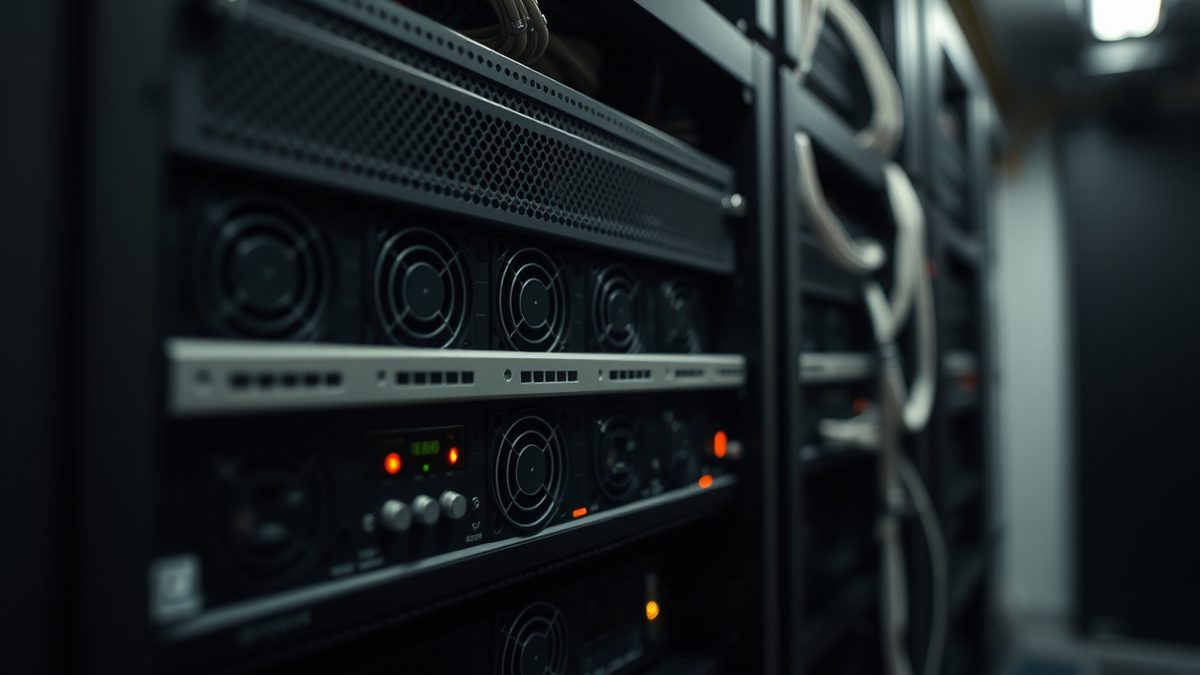
Latency, data gravity and cost are likely to push some AI inference work out of hyperscale data centres toward the edge, Data Center Knowledge reported on 30 October. Nvidia's edge AI projects and partnerships already involve AT&T, Charter Communications, Cisco, Nokia, SoftBank, Telefónica and T-Mobile, among others. Metro sites, not towers, are the clearest near-term opportunity, the report said. Nvidia has placed particular emphasis on edge AI for factory and robotics use cases, often called physical AI, closely tied to AI-RAN. The GPU infrastructure connected to AI-RAN is also expected to help operators automate their own network operations. How that market develops is still an open question in both data centre and telecom circles.
"Power and thermal concerns make AI on a tower or cell site a Catch-22 situation," David Duggal, CEO of EnterpriseWeb, said. "That GPU requires a lot more power ... and more power means more heat".
Regulators reset the terms
Aminu Maida, executive vice-chairman of the Nigerian Communications Commission, said the regulator will use evidence-based assessments to promote fair competition and ensure smaller operators are not disadvantaged. Omotayo Mohammed, head of the commission's Competition and Tariff Unit, represented him in Lagos. The occasion was the second Stakeholder Engagement Forum on the Study of the Level of Competition in the Nigerian Telecommunications Industry. Nigeria Communications Week reported the remarks on 28 October. Maida said significant market power status alone did not establish anti-competitive behaviour.
PwC is conducting the study. The preliminary findings rest largely on responses to surveys and requests for information sent to licensees and other stakeholders. Maida acknowledged that data gaps could affect the assessment. He said they would be identified and considered when interpreting the findings.
The FCC's airborne prohibition dated to 1991, when the commission moved to limit interference to terrestrial networks from phones on planes.
What operators are weighing
AI budgets compete with everything else on the operator's books: network upgrades, customer service and existing business support systems. The harder question is what counts as a return. Cutting network downtime or speeding up customer service may improve performance without adding revenue or reducing actual expenditure. Operators must also judge whether AI beats alternative uses of the same money. The NCC study casts a similarly wide net. It considers market concentration, barriers to entry and expansion, control over essential infrastructure, market conduct, consumer choice and the identification of operators with significant market power. Maida said assessing competition required more than market shares and the number of licensed operators.
What happens next
Stakeholders will examine the preliminary findings, validate the evidence and submit further observations before the commission reaches any regulatory conclusions. PwC will present the findings first.
Deutsche Telekom's AI revenue target runs to 2030, which leaves several years before investors can judge whether the €800 million goal is met. Edge AI is at an earlier stage still. The market is not monolithic and is still taking shape, and how it develops is a central question in both data centre and telecom circles.
Sources
16- 01Edge AI May Give Telecoms a Seat at the TableEN
- 02Telecom AI investment faces greater scrutiny over returnsEN
- 03NCC Pushes to Ensure Fair Competition for Smaller Telecom OperatorsEN
- 04FCC clears drone operations in 800MHz bandEN
- 05CyberKord raises €2.7M to automate IT and cybersecurity operations with AIEN
- 06Congress Is Cutting Off Transportation Investments that Help Families Save MoneyEN
- 07The ETS Investment Engine: Scaling Europe’s Strategic E-fuel Market for Shipping & AviationEN
- 08OpenAI deepens Abu Dhabi foothold as Sam Altman inks deals spanning energy, government and investmentEN
- 09LanG 2.0: Energy-Efficient Agentic AI for Semi-Automated Security Operations at ScaleEN
- 10Xiaomi follows Li Auto with planned Sunwoda EVB investment to deepen battery tiesEN
- 11Big Oil Cashes in on Trump Campaign Investment, Doubles Earnings Compared to Last YearEN
- 12The Rise of the Threat Operator: How AI Will Redefine Security Operations and CareersEN
- 13Unitree reports 70% surge in quarterly revenue, though AI investment weighs on net profitEN
- 14Media rights squeeze, US investment and AI tech: The sports business trends from Sportel 2026EN
- 15Could new US investment curbs complicate China’s biotech licensing surge?EN
- 16NVIDIA Transforms European Retail, From Digital Discovery to Physical OperationsEN
All figures and quotations in this text come from the sources listed below.
Content prepared by the editorial team with AI assistance.
Dr. Amara Patel
Comments
0- No comments yet — be the first.