The Quartz Bottleneck: Why Fab Capacity Plans Hinge on Two Mines in North Carolina
Semiconductor capacity keeps running into the same awkward fact. The purest quartz for the crucibles that turn polysilicon into monocrystalline silicon comes mainly from Spruce Pine, North Carolina, a town whose two mining companies Hurricane Helene shut down in late September 2024.
 Rachel NwosuAI, models and technology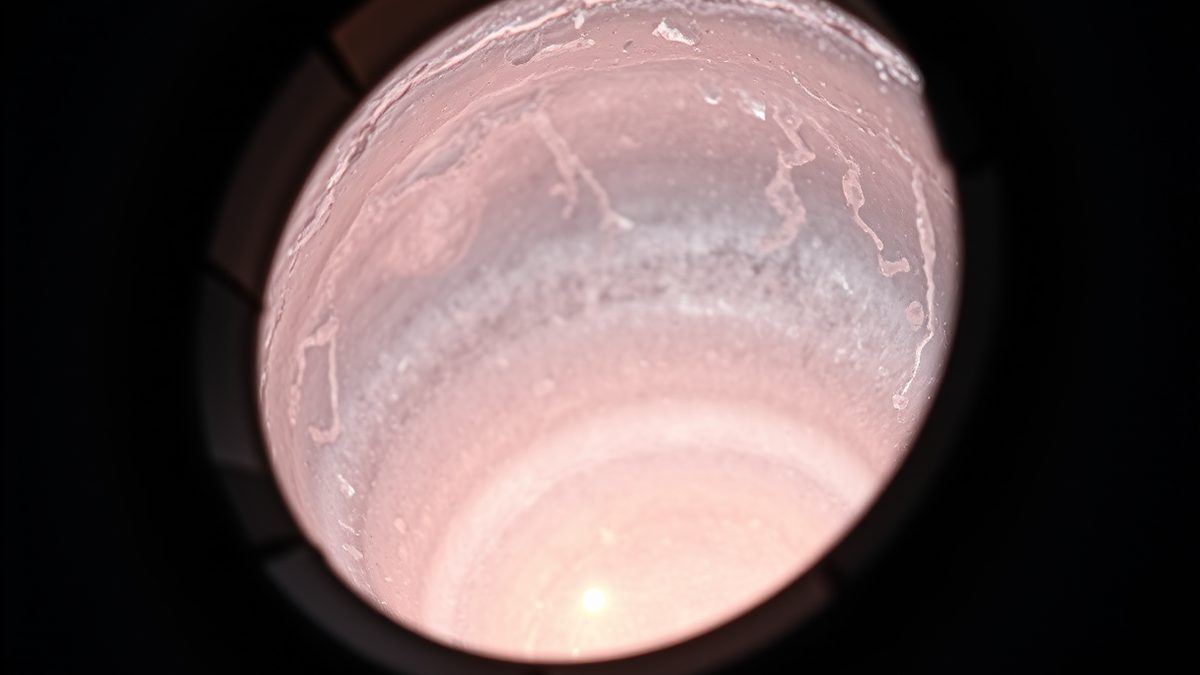
The numbers behind the Spruce Pine bottleneck are smaller and stranger than the internet version. Brian Potter, writing on Construction Physics on 8 November 2024, estimates the town produces 180,000 to 200,000 tons of high-purity quartz a year. That is roughly three days of output from the largest US coal mine. The industry that depends on it is worth trillions.
Potter's piece is a useful corrective to the apocalyptic framing that followed Hurricane Helene. In Ed Conway's 2023 book Material World, an industry expert is quoted saying sufficient damage to the mines "could end the world's production of semiconductors and solar panels within six months." Potter's verdict is narrower. Spruce Pine is not quite an irreplaceable linchpin. Cut it off and yields fall, costs rise, and the search for substitutes accelerates. Semiconductors do not stop.
Why the crucible matters more than the chip
Most microchip silicon starts as quartz. Workers react it with carbon in a submerged arc furnace to make metallurgical-grade silicon at 98 to 99 percent purity. The Siemens process pushes that to polysilicon. Then the Czochralski method melts polysilicon in a quartz crucible above 1,400 degrees Celsius and pulls a single crystal from the melt. Impurities in the crucible migrate into the silicon, so the quartz has to be as clean as reasonably possible. Crucibles are built with a high-purity inner layer and a cheaper outer one.
Cost matters as much as purity.
Potter reports high-purity quartz runs on the order of $10,000 a ton. Crucibles cost several thousand dollars each and last around 400 hours of operation. A Czochralski furnace consumes 20 to 25 crucibles a year, and one cited paper attributed 30 percent of monocrystalline ingot manufacturing cost to crucibles. A large ingot operation runs dozens of furnaces, which is why a single mine's outage travels so far.
The two operators are Covia, formerly Unimin, a subsidiary of Belgian mining company Sibelco, and the Quartz Corp, a Norwegian mining company. After Helene, Tom's Hardware reported on 1 October 2024 that Sibelco had confirmed a suspension of operations. A Quartz Corp spokesperson told The Verge it was too early to determine whether its production facility was affected. Tom's Hardware could not reach Sibelco because phone service in the area was down. The report noted the mines sit in the hills rather than the town, and commenters disputed the headline's framing.
Capacity plans elsewhere ignore the material chain
Meanwhile the capacity push continues. India's government announced a 625 billion rupee (about $6.5 billion) Mobile Phone Manufacturing Scheme in July 2026, running five years, plus 1.28 trillion rupees (around $13.3 billion) for domestic semiconductor manufacturing, according to TechCrunch. China held 63 percent of global smartphone production in 2025 against India's 18 percent, per Counterpoint Research. Neither figure addresses crucible supply.
Texas Instruments said on 24 October 2024 that it had started GaN power semiconductor production in Aizu, Japan, quadrupling internal GaN capacity alongside its Dallas fab and piloting GaN processes on 300mm wafers. Mohammad Yunus, TI's senior vice president of technology and manufacturing, said the company aims to grow internal manufacturing to more than 95 percent by 2030. That is a supply-chain argument, but it is about TI's own fabs, not the quartz underneath them.
Potter's conclusion is the one worth keeping. Alternatives to Spruce Pine quartz exist, but they are not yet developed, not quite as good, and not quite as cheap. A better crucible material would do more than remove the bottleneck. Quartz is a limiting factor in ingot manufacturing, and replacing it could lift production efficiency well beyond what Spruce Pine can supply.
Sources
4- 01Does All Semiconductor Manufacturing Depend on Spruce Pine Quartz?EN
- 02Hurricane Helene devastates quartz mines critical for worldwide semiconductor manufacturingEN
- 03India bets billions on breaking China's grip on smartphone manufacturingEN
- 04Texas Instruments expands internal manufacturing for gallium nitride (GaN) semiconductors, quadrupling capacityEN
All figures and quotations in this text come from the sources listed below.
Content prepared by the editorial team with AI assistance.
Rachel Nwosu
Comments
0- No comments yet — be the first.