Trump finalizes fuel economy rollback as EU energy costs keep climbing
The US Department of Transportation finalized new fuel economy standards on 28 September. Officials at the Department of Energy say the move will raise US petrol prices by 76 cents a gallon and total fuel use by 44%. In the same week, European regulators opened infringement cases against 18 member states over energy sharing rules.
 Dr. Amara PatelEconomy, business and world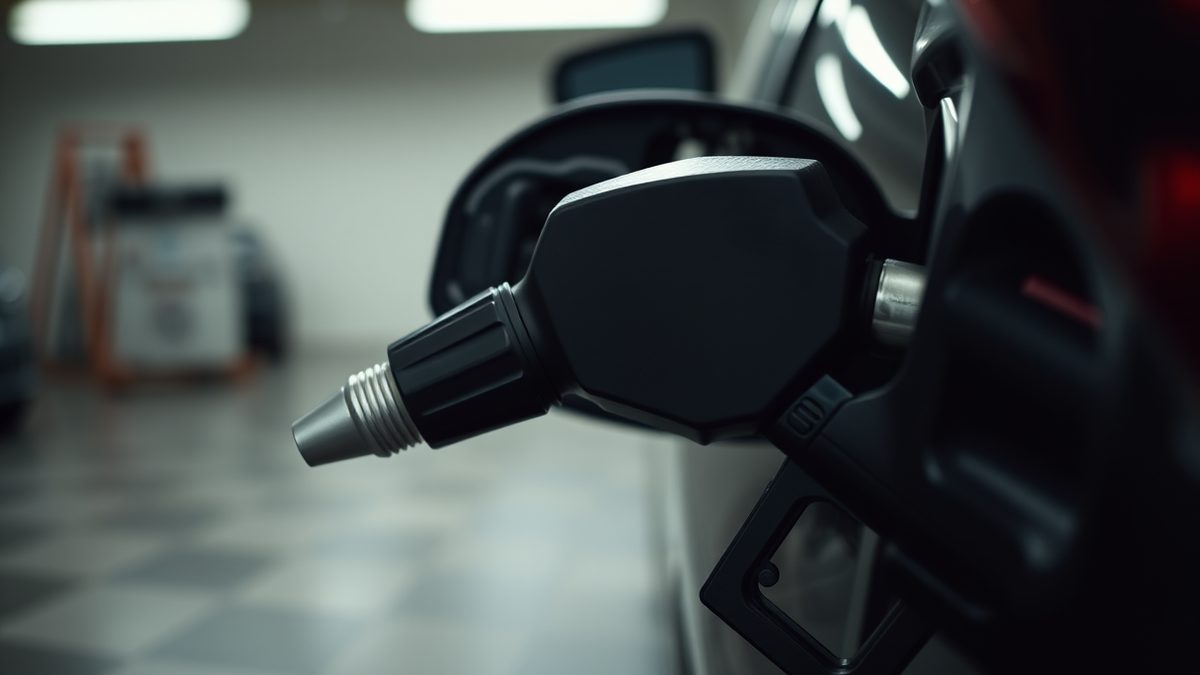
Electrek first flagged the rule on 2 September. It was confirmed final on Monday. The new standard lowers the 2031 fleet-wide target from 50.4 mpg to 34.9 mpg. Transport Secretary Sean Duffy announced on Saturday that the news was "COMING MONDAY." He quoted a statement from President Donald Trump, who framed the change as a rollback of an electric vehicle mandate.
An analysis signed off by Energy Secretary Chris Wright put the petrol price impact at 76 cents per gallon. The National Highway Traffic Safety Administration estimated the change would raise fuel costs by $185 billion and carbon emissions by 5%. Electrek noted that 68,294 public comments were filed, the vast majority opposing the plan. NHTSA did not respond to a request for comment before publication.
That is the American side of a week in which energy costs dominated policy news on both sides of the Atlantic.
Brussels opens infringement files against 18 states
On 28 September, the European Commission sent letters of formal notice to 18 EU countries: Belgium, Estonia, Ireland, Greece, Spain, France, Croatia, Latvia, Lithuania, Luxembourg, Hungary, Malta, the Netherlands, Poland, Romania, Slovenia, Finland and Sweden. According to pv magazine, these countries missed a 17 July 2026 deadline to transpose Directive (EU) 2024/1711. The directive establishes a right to share self-generated renewable electricity over the grid.
The commission's announcement does not state whether the nine member states left out of the action, including Germany, Italy and Portugal, have fully transposed the directive. The letters concern failure to notify transposition, not a finding on the substance of national rules. Countries have two months to respond. If the commission is not satisfied, it can issue a reasoned opinion. This is the second stage of proceedings, which can end at the Court of Justice of the European Union.
Under the new Article 15a, households, small and medium-sized enterprises and public bodies can share self-generated or stored renewable electricity with other customers. This applies within the same bidding zone or a smaller area, as each member state decides. The shared electricity is deducted from metered consumption when suppliers calculate the energy component of bills. National approaches already diverge. Germany started energy sharing under Section 42c of its Energy Industry Act on 1 June, though community energy groups have called the rules half-hearted. Spain extended the maximum distance for shared self-consumption to 5 km in March. France revised allocation rules in June.
Separately, the commission sent letters to 26 member states over the recast Hydrogen and Decarbonised Gas Directive. Only Italy met its 5 August transposition deadline.
Heat pumps and household demand
Household behaviour is already shifting. The European Heat Pump Association said on 28 September that residential heat pump sales across 12 countries rose 11% in the first half of this year. Sales reached about 1,163,000 units, up from 1,048,000 a year earlier, according to pv magazine. Those countries represent roughly 80% of the European market.
The association attributed the increase to high oil and gas prices amid the Strait of Hormuz crisis. It also cited European Commission plans to push governments to cut electricity taxes. Its director general, Paul Kenny, said in a statement: "Europe is ending its addiction to a toxic, costly drug from dodgy suppliers – gas. The sooner electricity becomes the most affordable solution, the quicker we'll get clean."
Storage and supply chains
Regulators are also adjusting support for storage. Italy's energy authority Arera raised the MACSE auction premium cap to €27,000 per qualified MWh per year on 24 September. This is up from €22,000 proposed in July, pv magazine Italy reported, citing independent researcher Mario Iovino. The increase reflects a benchmark investment cost rising from €125,000 to €150,500 per MWh. The weighted average cost of capital moved from 8.0% to 8.2%. Compared with the first auction, the cap is 27% lower.
On the supply side, ASML's public affairs chief Frank Heemskerk spoke at a panel in Amsterdam on 25 September. He said the Dutch lithography maker sold "absolutely nothing" in Europe this year. The region accounted for 0% of revenue in the first two quarters of 2026, down from 1% in 2025 and 5% in 2024, according to Tom's Hardware. Heemskerk called on EU authorities to aggregate and guarantee demand for European-made chips rather than only subsidising fab construction.
Elsewhere, Dubai's DEWA refinanced the 950 MW Noor Energy 1 concentrated solar and PV complex with $2.7 billion in new debt. Pv magazine reported this on 28 September, without disclosing lenders or terms. Chief executive Saeed Mohammed Al Tayer said the deal closed ahead of schedule. He added it would generate savings over the plant's operational life. The project, owned with ACWA Power and China's Silk Road Fund, reached financial close in March 2019 at a cost of AED 15.78 billion, equivalent to $4.3 billion.
Two weeks ago, the picture looked different. On 24 September, Politico reported that European tech leaders and cybersecurity researchers were pushing back on AI extinction warnings from US labs. They argued that resources should go to real-world defences. The debate over AI safety is now running alongside a harder argument about who pays for the power that AI infrastructure needs.
Sources
7- 01Think gas prices are too low? Don't fret, Trump finalizes rule to raise them moreEN
- 02EU opens infringement cases against 18 states over energy-sharing rulesEN
- 03European residential heat pump sales up 11% in H1EN
- 04Italy raises Macse energy storage auction premium cap from €22,000 to €27,000/MWhEN
- 05Dubai refinances 950 MW Noor Energy 1 CSP-PV plant at $2.7 billionEN
- 06ASML says it sold 'absolutely nothing' in Europe in 2026EN
- 07Don't believe the doomers: Europe's tech industry slams AI panicEN
All figures and quotations in this text come from the sources listed below.
Content prepared by the editorial team with AI assistance.
Dr. Amara Patel
Comments
0- No comments yet — be the first.