TSMC surveys suppliers on rare-earth-free factory motors
TSMC has surveyed suppliers on using rare-earth-free motors in factory-automation equipment, three industry executives briefed by the company on its plans told Reuters on 22 October, to reduce the risk that China's export controls disrupt chip production.
 Rachel NwosuAI, models and technology
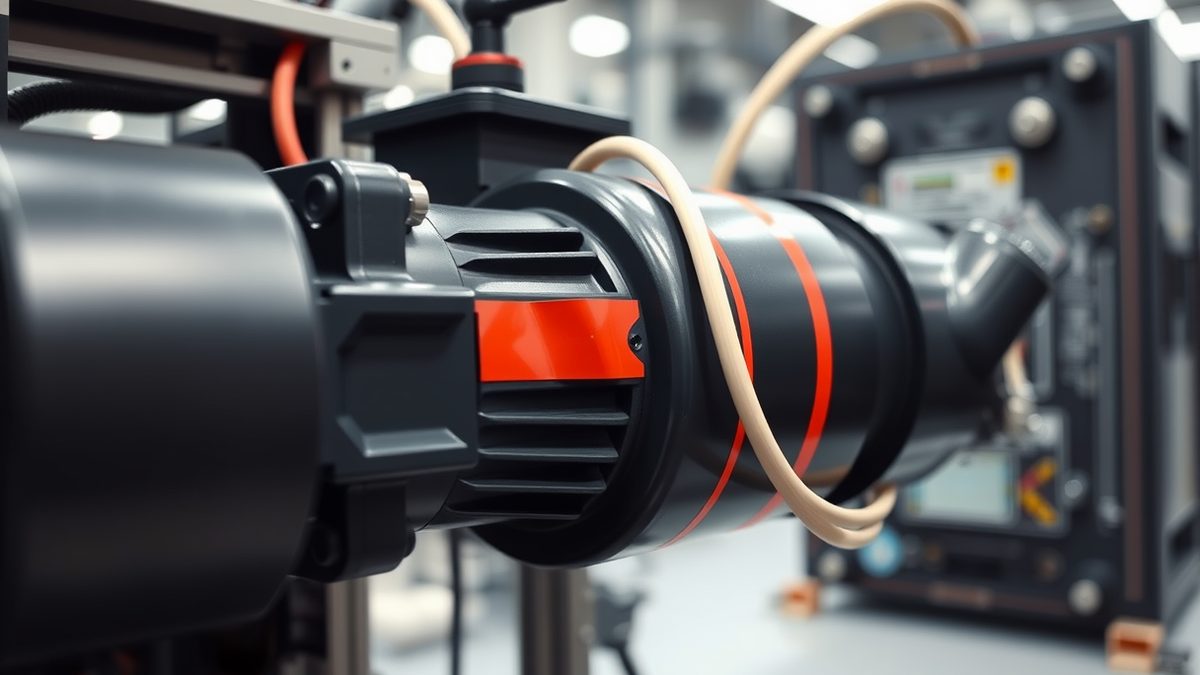
Rare-earth magnets are common in motors that move parts in industrial equipment, including machinery in highly automated plants such as TSMC's. A shortage could disrupt output for smartphone, AI, data centre and defence customers. Two of the people said the talks are early and no broad rollout has resulted. One of the people said the effort was driven by concern about potential supply disruptions from China. TSMC, the world's largest contract chipmaker, declined to comment.
Why a motor shortage reaches the fab
USGS data put China at about 70% of rare-earth mining and about 90% of refining. The International Energy Agency estimates China's share of finished permanent magnets at about 95% and its share of 2024 sintered rare-earth permanent magnet output at 94%. The two IEA figures cover overlapping categories.
Tom's Hardware describes three rare-earth-free options: induction motors, switched reluctance motors and motors built with ferrite magnets instead of rare earths. It said each design carries disadvantages in efficiency, size, power density, precision and control, and that technical verification would be needed before any could handle the precise transport and positioning work inside a semiconductor plant.
What China's controls cover
China's export controls are layered. The April 2025 measures under Announcement No. 18 require licences for seven heavy rare earths and magnets and have never been suspended. The October 2025 measures, including Announcement No. 61's requirement for Chinese export licences for foreign products containing 0.1% or more Chinese rare earths by value, were suspended by Announcement No. 70 until 10 November 2026.
Announcement No. 61 carries separate review provisions for advanced logic chips at 14 nanometers and below and for memory of 256 layers and above. A separate suspension covering US-bound exports under Announcement No. 72 expires on 27 November.
China's Ministry of Commerce said on 28 September 2026 that the Kuala Lumpur interim agreement with the United States would run to 10 January 2027. The announcement did not amend Announcement No. 70. Nami, an export-control consultancy, said in a 22 October analysis that companies are planning on a political extension without a legal amendment. It laid out three scenarios for 10 November: a formal extension by new announcement, a political extension with no amended document, or expiry.
The business at stake
TSMC reported third-quarter revenue of $46.7 billion, above the top of its own guidance. It guided fourth-quarter revenue to $52.3 billion to $54.3 billion and expects 2026 revenue growth of about 44% in US dollars. Gross margin fell 1.3 percentage points to 66.4%, which TSMC blamed on the early ramp of its 2-nanometer chips. Chief executive C.C. Wei said demand remains above supply. TSMC expects capital spending for 2026 to 2028 to be well above the previous three years.
Sources
19- 01Exclusive-TSMC seeks factory-equipment alternatives to thwart China's rare earths grip, sources sayEN
- 02TSMC seeks factory-equipment alternatives to thwart China's rare earths grip, sources sayEN
- 03TSMC stock: Rare-earth alternatives address supply-chain risksEN
- 04TSMC Explores Rare Earth Alternatives To Protect Chip Production From China ControlsEN
- 05[10/25] TSMC's Rare Earth Countermeasures, China's Export Controls, and the Ripple Effects on Japanese CompaniesJA
- 06Why TSMC and Apple Are Taking Action: How the Global Supply Chain Is Changing as Rare Earths Move 'Away from China'JA
- 07TSMC Seeks Rare-Earth-Free Equipment Amid China ControlsEN
- 08China’s Rare Earth Curbs Put $6.5T of Tech at Risk [2026] - https://tech-insider.org/EN
- 09Exclusive-TSMC seeks factory-equipment alternatives to thwart China's rare earths grip, sources sayEN
- 10 You don't have to go to the moon to see Earth differently: Artemis II astronaut Victor Glover on what really matters EN
- 11 NASA's Swift space telescope crashes back to Earth after failed rescue attempt EN
- 12Rare Black Friday savings on MOD e-bikes: Easy 3 cruiser $2,199, EcoFlow DELTA 3 Ultra 440W solar bundle + FREE TRAIL 200, moreEN
- 13 Rocket Lab launches Japanese Earth-observing satellite on 99th mission to date (video) EN
- 14 Planetary defense: How military and civil satellites are watching fireballs to help keep Earth safe from space rocks EN
- 15 NASA's Swift space telescope is about to crash to Earth. Where will it fall? EN
- 16 On this day in space! Oct. 31, 2015: Creepy skull-shaped Halloween asteroid flies by Earth, NASA names it the 'Great Pumpkin' EN
- 17Baidu’s new AI simulator gives robotaxis a crash course in rare road hazardsEN
- 18Greenwatch: Time to declutter Earth's orbit?EN
- 19NASA discovers Jupiter’s invisible shield is more complex than Earth’sEN
All figures and quotations in this text come from the sources listed below.
Content prepared by the editorial team with AI assistance.
Rachel Nwosu
Comments
0- No comments yet — be the first.