Walgreens expects fewer than 100 US store closures in 2026
Walgreens expects to close fewer than 100 US stores in 2026, down from internal projections of as many as 700, Inc. reported. The chain had planned about 1,200 closures over three years before Sycamore Partners bought it in August 2025.
 Sofia MarchettiScience and health
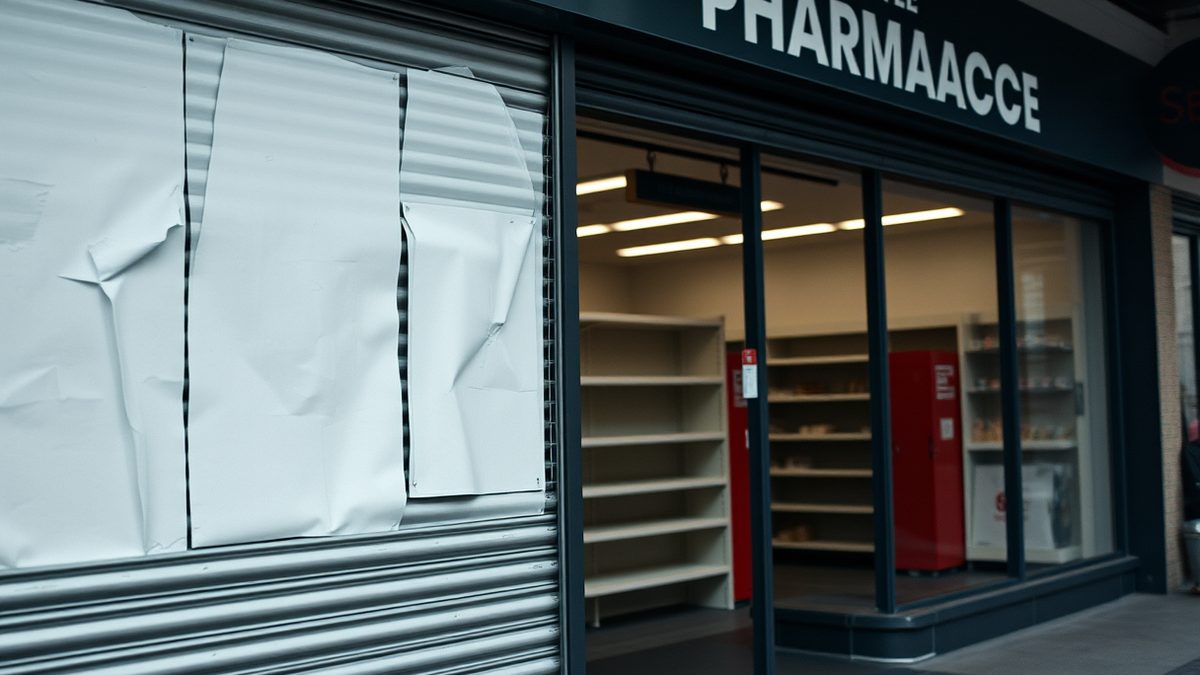
Walgreens now expects to shutter fewer than 100 locations in 2026, down from earlier internal projections of as many as 700, according to Inc. IBTimes reported the same expectation. The company had confirmed in June 2024 that it would close unprofitable stores, but it did not say how many until October 2024, when it announced a plan to close about 1,200 underperforming stores over three years. That plan included around 500 closures in the first year and meant roughly one in seven Walgreens locations was expected to close.
Ownership change
Sycamore Partners completed its acquisition of Walgreens in August 2025. Walgreens had about 8,500 US locations at the time and roughly 8,000 as of mid-July 2026, according to ScrapeHero data cited by Inc. The scaling back of the 2026 closure count followed the deal, IBTimes reported, attributing it at least in part to the ownership change.
The cuts also hit corporate roles. Walgreens eliminated 628 positions, including 469 in Illinois and 159 tied to its Houston distribution center. The Houston site is a roughly 500,000-square-foot facility. Inc. reported it closed in February, while IBTimes and FinancialContent gave an effective date of June 1, 2026.
Confirmed closures
The Inc. compilation lists locations in California, Florida, Illinois, Missouri, New York, South Carolina, Texas, Virginia, Washington, Wisconsin and Washington DC. Examples include San Francisco, Fort Myers, four Illinois locations, Bridgeton, St. Louis, Brooklyn, Beaufort, Houston, Arlington, Seattle, Washington DC and Milwaukee. Walgreens confirmed several of those sites to USA Today.
Walgreens' website lists a Bogota, New Jersey, store closing on Aug. 6 and a Dumont, New Jersey, store closing on Sept. 3, AOL reported. A separate USearch tally counted at least 18 stores closed in 2026, Yahoo Finance reported.
Walgreens attributed the closures to consolidated distribution centers, expiring leases and underperforming sales, according to Inc. The company has also laid off hundreds of employees as part of its post-acquisition restructuring, IBTimes reported. Executives have described the closings as a "store optimization strategy" aimed at focusing resources on stronger-performing locations instead of retreating from the pharmacy business. In February 2026 the company said it was focused on "becoming America's best retail pharmacy", beginning with improving the in-store experience.
Industry pressure
The US has almost 8,000 fewer retail pharmacies than in 2018, and more than 2,000 closed in 2025 alone, Drug Channels reported. Total US prescription dispensing revenue reached a record $751 billion in 2025, up 10% from 2024. Growth came overwhelmingly from specialty drugs, which are less commonly filled at retail pharmacies, so the revenue total says little about the economics of an average retail prescription. Generics make up about 90% of retail prescriptions.
For a typical pharmacy, total annual operating costs do not change based on small variations in prescription volume, Drug Channels reported. The incremental cost of dispensing one more script is very low. That cost structure encourages competition for network position. In markets where consumers have several nearby alternatives, plans can narrow their networks with relatively little disruption. One estimate puts the savings at $1.3 billion if all commercial plans adopted preferred networks.
Drug Channels described the impact as geographically uneven. Dense markets can absorb a closure with little loss of patient access, while a rural community can lose its only nearby pharmacy. Rural Part D enrollees were over 7 miles from their nearest preferred pharmacy, compared with 1.9 miles in metro areas, the same analysis found. IQVIA found that in rural zip codes, 54% of patients are displaced after a closure, compared with 17% in metro areas.
Sources
17- 01Pharmacy giant closes more stores across U.S. in 2026EN
- 02The K-Shaped Pharmacy Shakeout: Consolidation in Cities, Lost Access in Rural AmericaEN
- 03Walgreens Closing Dozens Of Pharmacies In 2026: Here's Where, WhyEN
- 04Walgreens Store Closures 2026: List of Pharmacy Locations Shutting Down Across the USEN
- 05Walgreens Accelerates Restructuring as Sycamore Partners Intensifies Store Closures and Corporate LayoffsEN
- 06Delaware Walgreens among 1,200 pharmacies that will closeEN
- 07Families like mine depend on their local pharmacy for medicine — and for survival - STATEN
- 08All Maryland Rite Aid stores closed, prescriptions transferred to new pharmacies - The Baltimore BannerEN
- 09For Rite Aid, so much went wrong - Chief Healthcare ExecutiveEN
- 10Rite Aid Closes All Remaining Stores - Here’s What Happens NowEN
- 11New CVS stores embrace throwback customer approachEN
- 12Rite Aid bankruptcy means pharmacies will keep dwindlingEN
- 13Pharma: Das zweifelhafte Milliardengeschäft mit Frauen in den Wechseljahren EN
- 14Estonia approves 24/7 robotic pharmacies, paving the way for a European firstEN
- 15Nvidia store pulls RTX 5080 following RTX 5090 removal, prices rise to 2.2X MSRPEN
- 16New Wave of Refrigeration Cyberattacks Hits Supermarkets Across Europe, Forcing Stores to Pull FoodEN
- 17Launch HN: Rivet (YC W23) – Scale and Orchestrate Agents on S3EN
All figures and quotations in this text come from the sources listed below.
Content prepared by the editorial team with AI assistance.
Sofia Marchetti
Comments
0- No comments yet — be the first.