Waymo Recalls Nearly 4,000 Robotaxis as Tesla's Camera-Only Bet Draws Fire
Waymo has recalled nearly 4,000 robotaxis to stop them entering highway construction zones, its sixth recall, while autonomous driving researchers question Tesla's camera-only design after a robotaxi launch marred by phantom braking and wrong-lane driving.
 Daniel FisherSport, cars and travel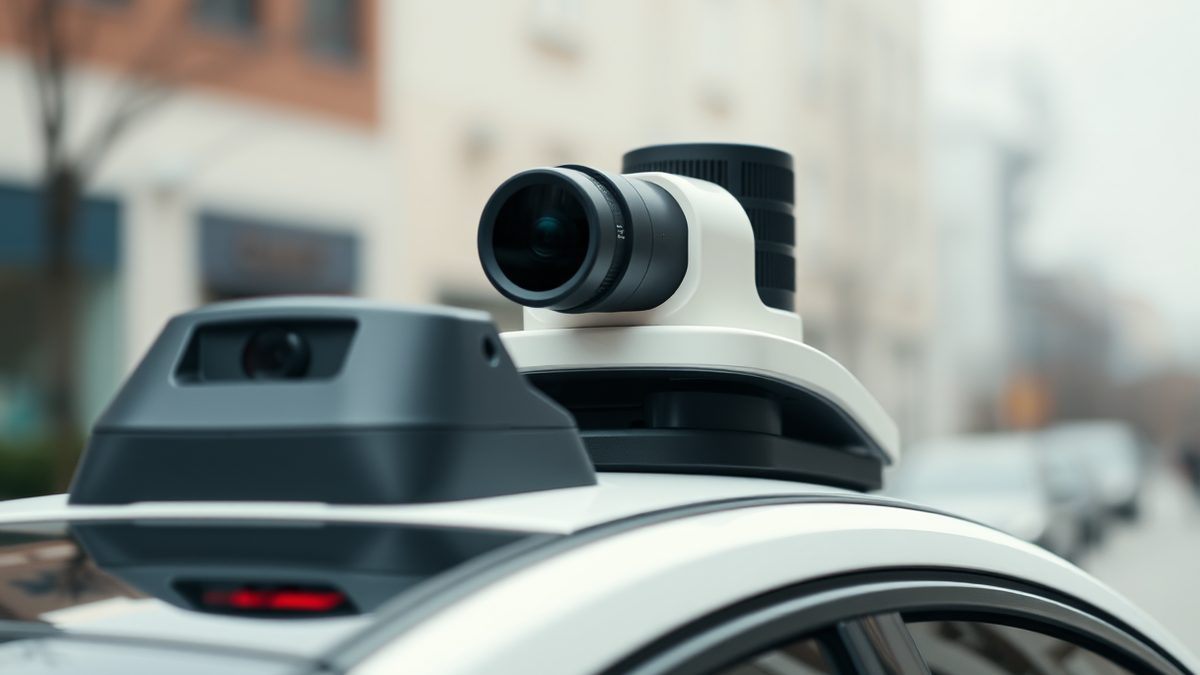
Waymo filed a voluntary software recall covering its fleet of nearly 4,000 robotaxis on June 8. The filing bars the vehicles from highways while the company works out how to make them behave around construction zones. The recall was disclosed in filings with the National Highway Traffic Safety Administration and reported by TechCrunch on June 18.
The trigger was at least 13 documented instances of Waymo robotaxis driving into highway sections that had been closed for construction. Six of those happened in Phoenix in April, and seven occurred in San Francisco in May, according to the NHTSA filings.
Waymo had already pulled its robotaxis off all highways on May 19, the day after the San Francisco incidents. A fix is "currently under development," the filings say. The company is still operating on surface streets and has not taken vehicles off the road, though it has periodically paused service during severe weather that could lead to flooding.
"We identified an area of improvement regarding performance around freeway construction zones," Waymo said in a statement to TechCrunch. "We voluntarily restricted freeway operations last month while making improvements, proactively notified state and federal regulators, and decided to file a voluntary software recall with NHTSA."
A pattern of recalls, and two open investigations
This is the sixth recall Waymo has issued for its robotaxis. In May, the company recalled its fleet after vehicles drove into flooded roads. In December, it issued one to address illegal behavior around school buses. Earlier recalls dealt with low-speed collisions involving chains, gates and telephone poles, and a problem involving towed trucks.
Waymo's driving software is currently under investigation by both the NHTSA and the National Transportation Safety Board over its behavior around school buses, after one of its robotaxis struck a child near a school in January. Waymo has said the vehicle braked to around six miles per hour before impact and that the child suffered minor injuries. On May 15, the NHTSA sent a second document request to Waymo because the company's initial response "necessitates that [NHTSA] receive further data and information," the regulator said.
The construction-zone incidents themselves produced vivid accounts. On May 19, X user @Elliot_slade posted a video claiming a Waymo "blasted through cones" and was "chased" by police. "There were construction signs," Slade told CBS News last month. "There were lights going on. Police in the distance and it sped up. That's when I looked at my fiancée, we're done. This is it. We're dead. We're going to die right here in the Waymo." Waymo offered Slade three free rides up to $40 each, according to CBS.
Alphabet-owned Waymo says its vehicles have driven more than 170 million miles autonomously and claims a 13x reduction in serious-injury-or-worse crashes compared with human drivers. The company is in the middle of a large expansion, planning to launch in more than 20 cities this year, including London and Tokyo.
That expansion is what keeps surfacing the edge cases. Waymo started offering highway rides in November 2025. In mid-April in Phoenix, its robotaxis "did not recognize and drove past ramp closure signs into pre-planned freeway construction zones," the company told the NHTSA. After a review, Waymo's Field Safety Committee restricted freeway operations in the city while engineers worked on a fix. The following month, seven robotaxis drove into highway lanes under active construction in the San Francisco Bay Area because the software was "prioritizing the avoidance of other freeway hazards and/or failing to recognize the construction zone."
Tesla's launch and the phantom braking problem
Tesla's robotaxi problems look different in kind, and the criticism is more fundamental. The service launched on Sunday, June 22, in a limited area of Austin, with early access rides available only to a group of Tesla influencers and investors. Business Insider asked three autonomous driving experts to review videos posted from those rides.
The issues visible in the footage, per Business Insider's July 5 report: speeding more than 10 miles above the limit, driving into the wrong lane, random braking, problems with the pullover button, and at least two interventions by the safety monitor over parking issues. Most rides appeared to go smoothly. Business Insider said it contacted the influencers and investors and did not hear back, and that Tesla did not respond to a detailed request for comment.
The robotaxi uses an advanced version of Tesla's Full Self-Driving software with eight cameras giving 360-degree visual coverage. It carries no radar or lidar, unlike Waymo, whose cars rely on multiple sensing methods. Lidar uses laser light pulses to scan the environment; radar detects objects with radio waves.
Raj Rajkumar, a professor of engineering at Carnegie Mellon University, told Business Insider that pullover problems and even wrong-lane driving could likely be fixed with more training data, but that what he called "phantom braking" may have exposed a design flaw.
"To process camera data, one has to use AI and machine learning," Rajkumar said. "But hallucinations are an integral part of how AI operates, and once you hallucinate, phantom braking ends up happening, so a camera-only solution will not be sufficient for a very long time."
He added: "Imagine being on the freeway at 65 mph and the car suddenly brakes for a phantom object, and there is an 18-wheeler semi truck behind you, and they cannot stop. It could be extremely dangerous, depending on what's happening around you."
In one video Rajkumar reviewed, YouTuber Kim Java was on a robotaxi ride when, according to the video, it braked with nothing obstructing it, sending her belongings to the floor. Java, whose channel covers tech and clean energy and has more than 250 thousand subscribers, can be seen saying immediately afterwards: "That's something that people have talked about being one of the limitations of Full Self-Driving with robotaxi."
Steven Shladover, lead researcher at the Partners for Advanced Transportation Technology program at the University of California, Berkeley, told Business Insider he is concerned the camera-only approach will eventually lead to passenger injuries without intervention. He reviewed an apparent speeding incident and a veer into the wrong lane in addition to the sudden braking.
"Automated driving needs a combination of sensor data from cameras, radars, and lidars, as well as precise localization relative to a high-accuracy digital map of the roadway environment and other data such as the local rules of the road and speed limits," Shladover said.
Phantom braking is not a new complaint for Tesla. The company faces a class-action lawsuit over alleged phantom braking in its Autopilot system, which is an advanced driver assistance system distinct from the supervised version of Full Self-Driving. The NHTSA opened an investigation into Tesla Model 3 and Model Y vehicles in 2022 after more than 750 drivers complained that their cars suddenly braked at high speed while on Autopilot; that investigation is still ongoing. In 2022 a Tesla driver who told police they were using supervised Full Self-Driving was caught in an eight-car pileup caused by sudden, unexpected braking, an incident CNN first reported in December 2022.
Elon Musk addressed phantom braking complaints in 2020 on what was then Twitter, replying "It should be" when a user asked whether the issue was fixed, then adding: "Meant to say that it should be fixed in the latest wide release. Won't need to wait for FSD." Business Insider notes he has not commented further since.
Musk said before the launch that a human safety monitor would accompany each robotaxi in the passenger seat out of an abundance of caution. From the videos, the monitor can halt the vehicle by pressing an "In Lane Stop" button on the touchscreen. One video posted by Dave Lee, an early Tesla investor and YouTuber with more than 230,000 subscribers, shows a safety monitor stopping a robotaxi from colliding with a reversing UPS truck as it tried to park itself.
Data, and who has it
Uber is trying to position itself in the middle of that data problem. In January it launched a division called Uber AV Labs to collect driving data for robotaxi partners including Waymo, Waabi and Lucid Motors, though TechCrunch reported that no contracts were signed at the time. Uber has more than 20 autonomous vehicle partners.
Uber is not returning to building its own robotaxis, a business it stopped after one of its test vehicles killed a pedestrian in 2018 and sold off in 2020 in a deal with Aurora. The new division started with one car, a Hyundai Ioniq 5, and engineers still screwing sensors onto it. "We don't know if the sensor kit will fall off, but that's the scrappiness we have," Uber VP of engineering Danny Guo told TechCrunch.
Partners will not get raw data. Uber's chief technology officer Praveen Neppalli Naga said the division will "have to massage and work on the data to help fit to the partners," building a semantic understanding layer that driving software can use for path planning. Guo described a shadow-mode step in which a partner's software runs alongside the Uber driver and any divergence gets flagged back to the partner.
The obvious comparison is Tesla, which has trained its software on data from millions of customer cars for a decade. Uber's scale is far smaller, and Guo acknowledged as much. "We have 600 cities that we can pick and choose [from]. If the partner tell us a particular city they're interested in, we can just deploy our [cars]," he said. Naga said Uber expects to grow the division to a few hundred people within a year.
Meanwhile, the regulatory record on Tesla keeps building. An investigation by Swiss broadcaster RTS, published in April, drew on a leak of internal Tesla data covering incidents up to 2022. The files showed thousands of customer complaints, more than 2,400 concerning sudden unintended acceleration, and more than 1,000 accidents, with many cases marked "unresolved."
A jury awarded more than $243 million in damages to victims in the first verdict tied to Autopilot, finding both Tesla and the driver responsible. Tesla tried to have the verdict thrown out; a federal judge confirmed the sanction in late February, and the company can still appeal. The investigation also reported that Tesla told investigators crash data in the vehicle's black box was corrupted, and that experts hired by the victims' lawyers recovered deleted data showing the car had detected obstacles but did not act to avoid the collision. Tesla and Musk did not respond to interview requests from the programme's authors.
Neither company's recent record suggests the edge cases are close to solved. Waymo's construction-zone recall is its sixth, with the fix still under development. Tesla's robotaxi is a month into a supervised, invitation-only pilot in one city, and the experts who reviewed its videos say the sensor architecture itself is the open question.
Sources
5- 01Waymo recalls nearly 4,000 robotaxis to stop them driving into highway construction zonesEN
- 02Autonomous driving experts to comment on Tesla's robotaxi launch errorsEN
- 03Waymo pauses Atlanta service as its robotaxis keep driving into floodsEN
- 04Uber launches an 'AV Labs' division to gather driving data for robotaxi partnersEN
- 05Tesla concealed fatal accidents to continue testing autonomous drivingEN
All figures and quotations in this text come from the sources listed below.
Content prepared by the editorial team with AI assistance.
Daniel Fisher
Comments
0- No comments yet — be the first.