Waymo's Flooded Road Problem Shows the Limits of Robotaxi Expansion
Waymo has paused robotaxi service in four cities after one of its vehicles drove into a flooded Atlanta street and got stuck for about an hour, the company confirmed to TechCrunch.
 Daniel FisherSport, cars and travel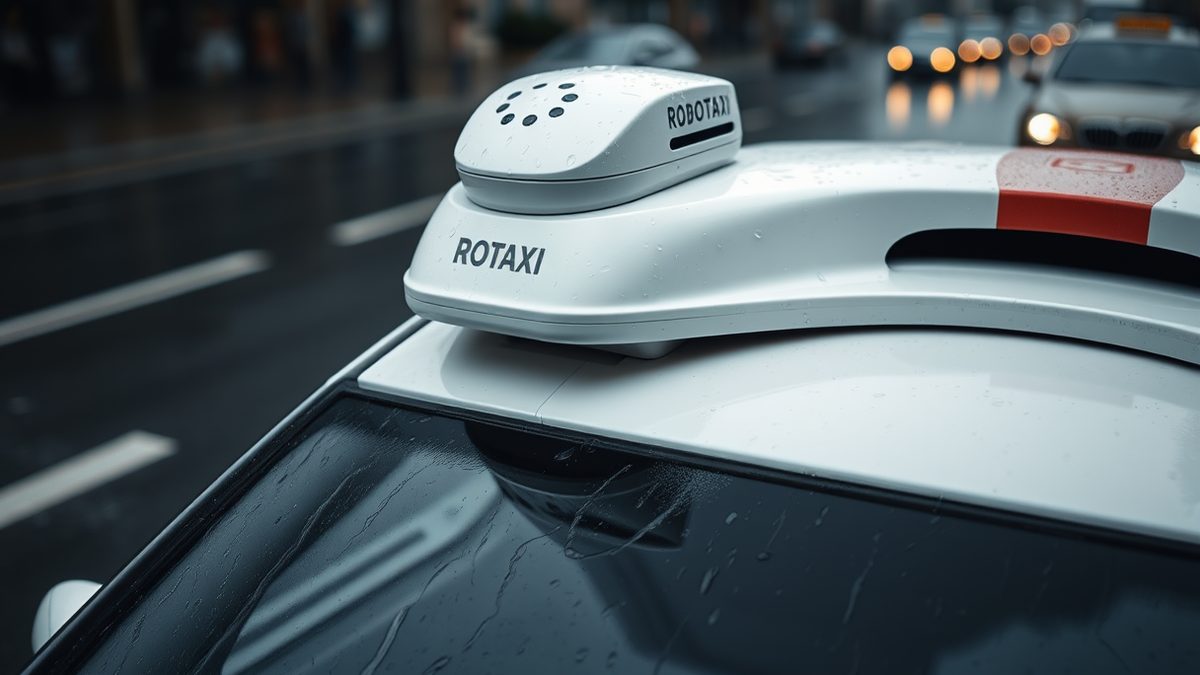
Waymo paused service in Atlanta, San Antonio, Dallas and Houston, a company spokesperson told TechCrunch. The stop came after a robotaxi drove into a flooded street in Atlanta on Wednesday and sat there for roughly an hour. Local news reports spotted the vehicle first. Waymo recovered it and removed it.
That is the visible part. The underlying problem is harder, and it has been building for months. Waymo issued a software recall the previous week after robotaxis kept entering flooded roads. When it filed that recall, the company admitted it had not finished a "final remedy" for the issue, according to documents released by the National Highway Traffic Safety Administration. The agency's paperwork makes clear the fix was still under development.
What the recall actually changed
The update Waymo shipped placed "restrictions at times and in locations where there is an elevated risk of encountering a flooded, higher-speed roadway," the NHTSA documents say. That is a throttle, not a fix. It did not stop the Atlanta vehicle from entering a flooded intersection.
Waymo's explanation, given to TechCrunch on Thursday, is that the Atlanta storm produced so much rainfall that flooding was happening before the National Weather Service had issued a flash flood warning, watch or advisory. Those alerts are part of a larger set of signals the company relies on to prepare vehicles for poor weather. That answer is reasonable on its face and also a little troubling. If the car's readiness depends on an external alert arriving in time, then the vehicle's own perception stack is not the thing deciding whether a road is passable. A robotaxi that waits for a weather bulletin before slowing down has a gap in its sensor-to-decision loop.
"Safety is Waymo's top priority, both for our riders and everyone we share the road with. During a period of intense rain yesterday in Atlanta, an unoccupied Waymo vehicle encountered a flooded road and stopped," the company said in a statement.
NHTSA is watching. "NHTSA is aware of this incident, is in communication with Waymo, and will take appropriate action if necessary," a spokesperson for the safety regulator told TechCrunch.
This is a pattern, not a one-off
Waymo has struggled before to stamp out problematic behavior quickly. When people noticed its robotaxis illegally passing stopped school buses last year, the company shipped a fix that was supposed to address it. The fleet kept making illegal maneuvers around school buses anyway. That behavior is now the subject of one of two active investigation sets into the company. Both NHTSA and the National Transportation Safety Board are looking into the school bus issue. Waymo produced a batch of documents for NHTSA, all redacted to the public. On May 15, the agency sent a second document request because the initial response "necessitates that [NHTSA] receive further data and information."
The other investigation set, from both NHTSA and the NTSB, concerns a January 23 incident in which a Waymo robotaxi struck a child in Santa Monica, California. Waymo has said the vehicle braked to around six miles per hour before impact and that the child suffered minor injuries.
Add the flooding recall, issued in May, and a June recall for nearly 4,000 robotaxis to stop them entering highway construction zones. The record starts to look less like a string of bad luck and more like a company expanding faster than its edge-case coverage. That June recall, reported by TechCrunch on June 18, followed at least 13 instances of robotaxis driving into highway sections closed for construction: six in Phoenix in April and seven in San Francisco in May. Waymo pulled its vehicles from all highways on May 19, and a fix was "currently under development," according to its NHTSA filings. It was the sixth recall Waymo had issued for its robotaxis.
The data gap nobody wants to talk about
There is a structural reason these edge cases keep surfacing. Robotaxi software is shifting away from rules-based operation toward reinforcement learning, and that shift makes real-world driving data the scarce input. Uber said as much in January when it launched a division called Uber AV Labs to collect driving data for partners including Waymo, Waabi and Lucid Motors, though no contracts were signed at the time.
Uber's chief technology officer, Praveen Neppalli Naga, told TechCrunch the goal was to "democratize this data" because the value of partners' AV tech advancing outweighed the money Uber could make from it. Danny Guo, Uber's VP of engineering, said the division had one car, a Hyundai Ioniq 5, and that his team was still screwing on lidars, radars and cameras.
"We don't know if the sensor kit will fall off, but that's the scrappiness we have," Guo said, adding that it would take a while to deploy 100 cars.
The scale problem is real. Tesla has millions of customer cars gathering data daily. Waymo has a fleet measured in thousands and has driven more than 170 million autonomous miles, by its own count. Waymo also claims a 13x reduction in serious-injury-or-worse crashes compared with human drivers. Those are strong numbers. They are also aggregate numbers, and floods, school buses and construction cones are not aggregate events.
Waymo is in the middle of a large expansion, with plans to launch in more than 20 cities this year including London and Tokyo. Every new city brings new weather, new road markings and new construction habits. The company started offering highway rides in November 2025. The Phoenix construction incidents happened the following April.
Regulators are moving too
Waymo is not the only company facing a harder legal environment. In China, the Supreme People's Court ruled on 13 February that drivers remain responsible for ensuring road safety even after activating driving assistance functions. The court cited a September 2025 Zhejiang case in which a driver surnamed Wang installed a device to simulate holding the steering wheel, set the car to drive itself and fell asleep in the passenger seat. "Driving assistance systems cannot replace the driver as the primary operator," the court stated, adding that the driver "remains the actual operator responsible for ensuring driving safety." The ruling sets a nationwide standard that lower courts must reference.
That is a different regulatory tradition from the US, where NHTSA works through recalls, document requests and investigations rather than sweeping judicial standards. But the direction is similar: authorities are less willing to accept safety promises at face value.
For Waymo, the immediate question is narrow. How does a vehicle trained on millions of miles decide that standing water is not a road? The company has not said. Until it does, the four-city pause is not a temporary weather delay. It is a live demonstration that the hardest part of autonomy is not the driving most people do.
Sources
4- 01Waymo expands pause to four cities as robotaxis keep driving into floodsEN
- 02Waymo recalls nearly 4,000 robotaxis to stop them driving into highway construction zonesEN
- 03Uber launches an 'AV Labs' division to gather driving data for robotaxi partnersEN
- 04China Supreme Court rules drivers remain liable despite autonomous driving techEN
All figures and quotations in this text come from the sources listed below.
Content prepared by the editorial team with AI assistance.
Daniel Fisher
Comments
0- No comments yet — be the first.