Wearables shift sleep and heart research from the lab to the bedroom
A University of Texas at Austin study of 82 young adults used a standard Fitbit to show that physical activity lengthens REM latency, the clearest sign yet that consumer wearables can capture sleep architecture outside a clinic.
 Sofia MarchettiScience and health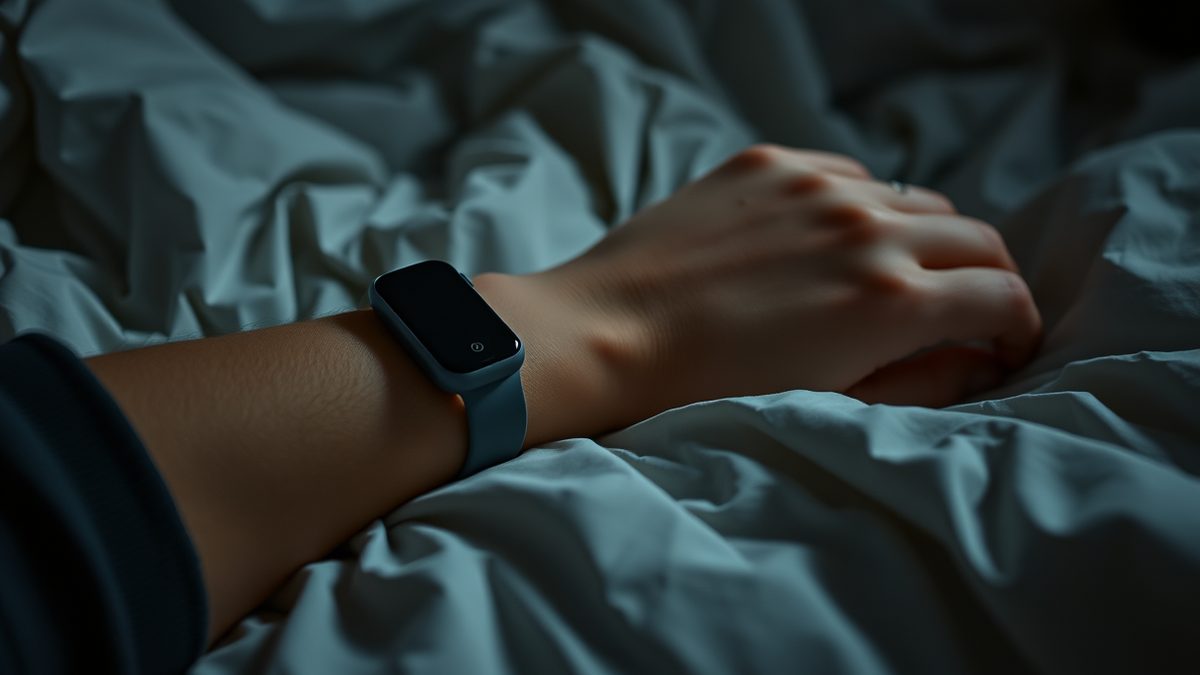
The study, published in Nature Scientific Reports and announced by UT Austin on 2 April 2024, tracked 82 young adults over weeks and months. Participants wore a wrist tracker that logged movement and heart rate, and used a smartphone app to report how they felt. Physical activity lengthened REM latency, the time it takes to enter REM sleep. The researchers say that may mean exercise helps consolidate deeper sleep stages first.
That is not a small methodological footnote. Until now, most evidence linking exercise to better sleep came from lab studies. Those watched people for a single night, in an unfamiliar clinical setting, wearing electrodes.
Why one night in a lab was never enough
Benjamin Baird, a research assistant professor of psychology at UT Austin and one of the study's authors, put the problem plainly in the university's write-up. Lab studies have limits when they look at individual participants for just one night. "It's an unfamiliar, clinical-type setting, which can be stressful," Baird said. "And you can't really look over time, either. So, there are always questions about generalizability from that kind of design."
The Texas team tried to answer a question that had gone largely untested: how differences in sleep architecture relate to how people actually feel. Sleep architecture describes the structure of each 90 to 120 minute cycle, with three stages of non-REM sleep and REM sleep, which makes up roughly the final quarter of each cycle. The researchers replicated earlier lab findings. Low-intensity and moderate-to-vigorous activity both tracked with deeper, more restorative sleep, and better sleep tracked with more energy and less stress the next morning. The difference was the instrument.
David M. Schnyer, a co-author and chair of the Department of Psychology, said the team showed that a standard Fitbit anyone could wear, not an expensive scientific device, was sensitive to sleep architecture measures and produced predictive results. "The world is your oyster now," Schnyer said. "You can use this device to study all manner of different sleep architecture data related to lifestyle, related to mood and mood disorders, in the field, not in a lab, that people might have thought was not possible previously."
The study grew out of a pilot conducted as part of Whole Communities-Whole Health, a research program at UT Austin that involves participants and communities in how health data are collected.
The data pool is now enormous, and messy
Sleep tracking has moved well past the individual user. ABC News reported on 24 September 2024 that when an earthquake hit New South Wales, data scientists in Sweden spotted a disturbance in sleep data from the Swedish-made app Sleep Cycle. An above-average number of people in the surrounding area briefly woke at the time of the quake.
Michael Gradisar, Sleep Cycle's head of science and a former professor of sleep science at Flinders University, told the ABC that researchers can now look at a huge chunk of the world. "Sleep is one of the first things to go wrong in a person's health," he said. "Sleep is the canary in the mine."
That scale cuts both ways. Consumer devices generate millions of hours of data, but they are not the same as a sleep lab. Gabriel Pires, a sleep researcher in Brazil, told the ABC that scientists initially published papers warning people to be careful with the new technology because it did not work well. Investment during the pandemic pushed accuracy up on some devices, and Apple added heart electrical activity, blood oxygen and body temperature sensors to its watch. But the gap between a wellness tracker and a diagnostic tool has not closed everywhere.
One place where it has narrowed is sleep apnoea. Samsung's smart watch sleep apnoea detection system received approval from the US health regulator in early 2024 after an eight-month review, the first consumer smart watch to clear that hurdle. Apple's smart watch received the same approval in September 2024, according to the ABC. Samsung says its feature is not meant to replace a sleep clinic, but the approval means millions of people can access a test without a medical professional.
Danny Eckert, director of the Adelaide Institute for Sleep Health at Flinders University, told the ABC that a 2022 study he co-authored found up to half of single-night diagnostic studies for sleep apnoea, the current gold standard, misclassify severity. "The single-night tests are hugely noisy and inaccurate," he said. "We've never been able to monitor accurately what's going on with sleep apnoea in the home. Now we can do it every single night for weeks, months and years."
Cardiology wants the same trick
A review published in Health Science Reports on 19 November 2025, led by researchers at King Edward Medical University in Pakistan and other institutions, argues that wearable technology can do for cardiovascular care what sleep tracking is doing for sleep research: continuous, real-time physiological assessment and earlier disease detection.
The authors cite cardiovascular disease as the leading cause of death globally, with approximately 17.9 million deaths in 2019, or 32% of all global fatalities, and myocardial infarction and stroke making up 85% of those. The burden falls disproportionately on low- and middle-income countries, which the review says highlights the need for scalable, technology-driven prevention and diagnosis.
The review covers devices that use photoplethysmography, ECG, biosensors and machine-learning algorithms, and says they improved diagnostic sensitivity while raising patient engagement and lifestyle modification. It also flags limits: variability in data accuracy, interoperability barriers, regulatory heterogeneity and privacy vulnerabilities. The authors call for standardized validation frameworks, stronger cybersecurity and equitable global access.
Both fields face the same unresolved question. A consumer device that is good enough to generate a signal at population scale is not automatically good enough to make a clinical call on one person, and the regulatory and validation work to close that gap is still uneven.
China's parallel path
Rest of World published an interview on 24 September 2026 with Ruby Wang, a physician and consultant who has worked in health tech in China and elsewhere, ahead of her book China Cure: The Rise of a Biotech, AI Medicine, and Global Health Superpower. Wang described a health system where digital tools are the default entry point: appointments booked through WeChat or Alipay, telemedicine consultations, and AI doctor avatars handling questions from insomnia to diabetes.
She drew a contrast with the West, where tech is an add-on to an existing health system. "You are trying to screw an extra bit onto a rusty machine, whereas in China, because the infrastructure and the digital rails are so technologically enabled, society accepts that as normal," Wang said. She also cautioned that China's digital health model is not directly exportable, noting that the West would never accept an AI doctor avatar.
The hardware story runs alongside the software one. Wang said China's new Five-Year National Health Plan calls for breakthroughs in brain-computer interfaces alongside drugs, vaccines and medical devices, and that the broader National Five-Year Plan identifies BCI as a future industry. She pointed to the March 2026 approval of Neuracle's NEO system as the world's first commercial approval of an invasive BCI medical device.
China's pharmaceutical industry is having its own moment. Wang said more clinical trials are conducted in China than in the U.S., and that China now accounts for half of global drug licensing deals, with the share of out-licensing deals potentially reaching 60% this year. She attributed that to decades of investment, a large patient population where no disease is rare, low running costs and cheaper labor, while noting weaknesses in immunology and in commercializing drugs outside China.
Wearables sit at the intersection of these trends. The UT Austin study shows a consumer device can produce research-grade sleep architecture data in the field. The cardiovascular review shows the same devices being aimed at conditions where the cost of a missed diagnosis is far higher. Neither paper claims the hardware has replaced clinical judgment. What they claim is narrower and more testable: that the data are good enough to study people where they actually sleep, work and live, at a scale no lab could match.
Whether regulators and health systems treat that data as research input or clinical evidence is the next argument, and it is already running in sleep apnoea approvals, in cardiovascular validation studies and in the Chinese push to move devices from pilot programs into routine care.
Sources
4- 01Move More, Sleep Better, UT Study FindsEN
- 02Wearable Technology and Its Potential Role in Cardiovascular Health Monitoring and Disease ManagementEN
- 03China is excelling in health tech. That's good news for the worldEN
- 04Sleep-tracking devices are wiring the world for the study of sleep. What will we find?EN
All figures and quotations in this text come from the sources listed below.
Content prepared by the editorial team with AI assistance.
Sofia Marchetti
Comments
0- No comments yet — be the first.