Wearables Move Sleep Research Out of the Lab, but the Evidence Is Still Young
Sleep trackers worn at home can detect changes in sleep architecture that researchers once needed a laboratory to see, according to a University of Texas at Austin study published in Nature Scientific Reports.
 Sofia MarchettiScience and health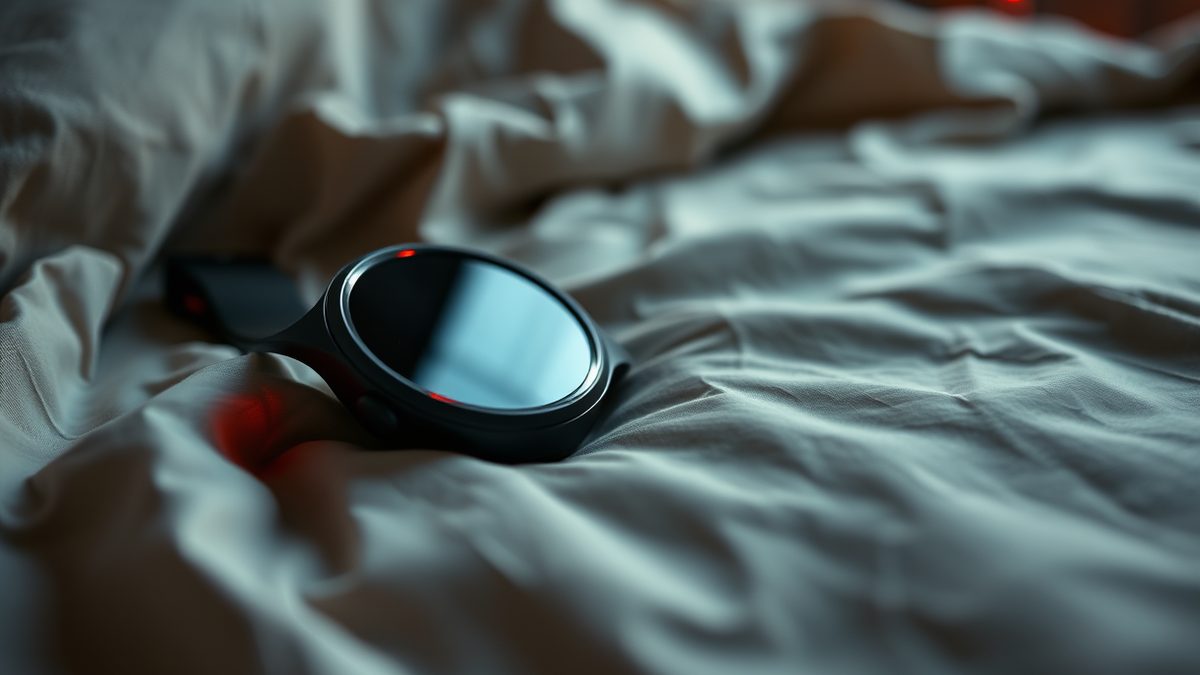
The study tracked 82 young adults for weeks and months. They wore a wrist activity tracker that logged movement and heart rate, and they used a smartphone app to report how they felt. The headline result, according to UT Austin: physical activity lengthened REM latency, the time it takes to enter REM sleep. The university argues this may mean exercise helps consolidate deeper sleep stages before the brain shifts into the stage where vivid dreams happen.
That is a specific claim, not a general one. It also rests on a device you can buy, not a lab rig.
Benjamin Baird, a research assistant professor of psychology and one of the study's authors, framed the methodological problem in the university's own account. "You can learn a lot from lab studies, but obviously there are limitations to studying the sleep patterns of individual participants in just one night," he said. He pointed to the unfamiliar, clinical-type setting and to the impossibility of observing people over time. David M. Schnyer, co-author and chair of the Department of Psychology, went further: "We've shown using a standard Fitbit that anyone could wear, not even an expensive scientific device, that it is actually sensitive to these sorts of sleep architecture measures, and in a way that's showing predictive results." Schnyer added that researchers can now study sleep architecture in the field, related to mood and mood disorders, in ways that were previously thought impossible outside a lab.
The lab-versus-field distinction sounds academic. It is not. It decides what questions can be asked at all.
For years the standard method was one night in a sleep clinic, wired up, in an unfamiliar bed. The UT Austin study says the field has replicated many findings from those labs: low-intensity and moderate-to-vigorous activity both linked to deeper, more restorative sleep, and better sleep linked to more energy and less stress the following morning. The difference is that the new work did it in participants' homes, at work and during daily activities.
That approach is spreading fast. As ABC News reported on 24 September 2024, consumer sleep tracking has given researchers access to millions of hours of data, and the scale has changed what they can look for. When a powerful earthquake hit New South Wales, data scientists in Sweden detected an above-average number of people briefly waking at the time of the quake, based on data from the sleep-tracking app Sleep Cycle. Michael Gradisar, Sleep Cycle's head of science, told the ABC that sleep is "one of the first things to go wrong in a person's health" and described it as "the canary in the mine."
The clinical side is moving too, and more slowly. In early 2024 Samsung's smart watch sleep apnoea detection system received approval from the US health regulator after an eight-month review, the first consumer smart watch to clear that hurdle, according to the ABC. Apple's smart watch received the same approval later that month. Danny Eckert, director of the Adelaide Institute for Sleep Health at Flinders University, told the ABC that a 2022 study he co-authored found up to half of single-night diagnostic studies for sleep apnoea, the current gold standard, misclassify severity. "The single-night tests are hugely noisy and inaccurate," he said, adding that in-home monitoring now allows continuous tracking over weeks, months and years.
None of this makes the UT Austin findings final. The study covered 82 people, and the university itself calls it the most reliable validation to date rather than proof of cause and effect. Wearable sleep staging is inferred from movement and heart rate, not measured directly the way electrodes in a lab measure brain activity. The study's own framing is careful: physical activity was linked to sleep outcomes, and sleep was linked to next-morning energy and stress.
So the reasonable reading is narrower than the headlines suggest. Wearables have made it possible to ask questions about sleep and behaviour at a scale and duration that lab studies could not manage. They have not made the answers automatic.
What the field does with that access is the next question. Gradisar's Omicron example, where night-time coughing in New York rose roughly a week before confirmed cases, shows the appeal: a population-level signal collected passively by phones people already own. It also shows the limit. A cough signal is not a diagnosis, and a sleep stage inferred from a wrist tracker is not a polysomnogram.
Sources
2- 01Move More, Sleep Better, UT Study FindsEN
- 02Sleep-tracking devices are wiring the world for the study of sleep. What will we find?EN
All figures and quotations in this text come from the sources listed below.
Content prepared by the editorial team with AI assistance.
Sofia Marchetti
Comments
0- No comments yet — be the first.