A Chinese survey ship and the race to protect the cables under the sea
A Chinese survey vessel spent three days in the Luzon Strait with its location disguised, the Philippines Coast Guard said on 1 October, reviving concerns about the security of the undersea cables that carry most of the world's internet traffic.
 Grace OkonkwoAI, models and technology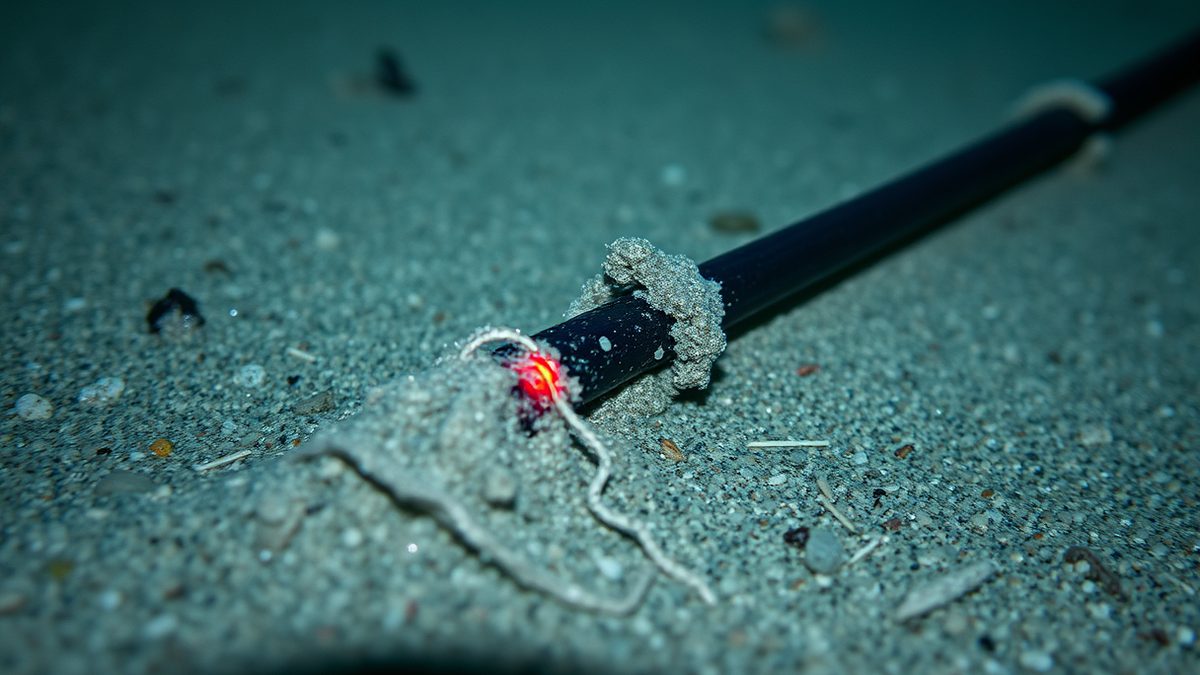
The Philippines Coast Guard says the vessel, Jia Hai Ke 7, loitered in the Luzon Strait between the Philippines and Taiwan for three days while its Automatic Identification System showed it near Papua New Guinea. Coast Guard spokesperson Jay Tariela said on X that the ship, instead of steaming on a steady course, "has been loitering and holding position in the same area," a movement pattern he described as marine scientific research rather than transit. The PCG drove the ship away on Thursday, according to Light Reading, but noted it remained under the protection of the Chinese Coast Guard despite purporting to be privately owned.
The Coast Guard said in a statement that a survey vessel concealing its location while holding position in those waters raised "serious concerns about the security of the country's undersea communications infrastructure and the potential military use of any data collected."
Why a survey ship matters
The Luzon Strait is not an arbitrary patch of water. It sits above some of the densest subsea cable routes linking East Asia to the United States, and survey work is the first step in mapping anything on the seabed, cable or otherwise. The Philippines and Japan have moved to codify their maritime economic zones, arrangements China says may infringe on territory it claims east and south of Taiwan. Light Reading notes that China is assumed to be behind multiple cable cuts in the Taiwan Strait in 2024 and 2025, including the severing of a link to Penghu Island. A Chinese national was prosecuted over that incident and is serving three years in prison.
Taiwan is treating the threat seriously enough to rehearse for it. In its latest civilian military drill in August, it throttled internet speeds so that only basic mobile services worked, with some residents communicating over Bluetooth and WiFi mesh networks, according to Light Reading. ATMs and fixed-line services were not affected during the exercise.
Last week the US China Economic and Security Review Commission warned in a report that China was "rapidly building capabilities to disrupt undersea cables," including 10,000-meter-class submersibles and swarming systems of linked uncrewed platforms. The same report quoted Chinese scholars arguing that "cutting undersea cables is the most effective way to strike at the opponent's vital points" because of the low military cost and the high impact on command and intelligence systems.
Landing points move into the data center
While governments argue about the water, the private sector is quietly redrawing where cables come ashore. Digital Realty said on 22 September that it plans to build a cable landing station inside its LAX12 data center in El Segundo, California, working with subsea infrastructure specialist Assured Communications. The station is aimed at Asia-Pacific to North America routes and is expected to begin supporting cables in 2028, according to Data Center Knowledge.
The design choice matters more than it sounds. A cable landing station is where a subsea cable terminates on land and connects to terrestrial networks, and hyperscale cloud and AI providers increasingly want cables brought directly into specific data centers rather than terminating at standalone landing stations. Craig Waldrop, vice president of strategy and business development at Digital Realty, told Data Center Knowledge that "by bringing the landing point directly into an established interconnection environment, rather than treating the cable landing station as a standalone piece of infrastructure, the project creates a more direct bridge between subsea capacity arriving from Asia-Pacific and the broader digital ecosystem in Los Angeles." The project is in development, and Waldrop said it represents Digital Realty's first turnkey cable landing solution.
Bandwidth demand is the backdrop. AI workloads are a major driver of that demand, though Data Center Knowledge notes they are not the only one. Digital Realty's carrier-neutral model is meant to give cable operators a common landing environment that is not tied to a single network or cloud provider.
The capacity race on land
On the terrestrial side, the cable industry is squeezing more out of the copper and fiber it already has. CableLabs published physical layer specifications for an optional annex to DOCSIS 4.0 that extends spectrum to 3GHz and pushes downstream speeds to 25 Gbit/s, according to Light Reading. The current version of DOCSIS 4.0 supports spectrum up to 1.8GHz, and recent CableLabs interops have shown about 14 Gbit/s downstream.
Mark Bridges, the CableLabs CTO who becomes CEO on 1 January 2027, told Light Reading the ecosystem's maturity has "really improve[d]" and that the group is "very close on getting to our first certification" for DOCSIS 4.0. CableLabs opened certification testing in 2023; no product has received the official stamp yet. An initial certification submission for a DOCSIS 4.0 cable modem costs $195,000 for the Full Duplex or Frequency Division Duplex version and $245,000 for a combined device, against $145,000 for a DOCSIS 3.1 modem.
Those faster networks would matter to companies such as Spectrum, the newly combined Charter Communications and Cox Communications. CEO Chris Winfrey used a stage at SCTE TechExpo to argue that broadly deployed multi-gigabit networks would open the door to deeper conversations with global Big Tech companies, urging them to "develop your products to a multi-gig capability." He said the physical work on the legacy Charter hybrid fiber/coax upgrade should be complete by the end of 2027, enabling symmetrical multi-gigabit speeds across the board, though he did not detail what the deeper engagement with Big Tech would produce. "We're working on that," he said.
Not everyone is waiting for the next generation of gear. Cisco is phasing out the cBR-8, its flagship chassis-based cable modem termination system, which it launched in May 2015. Operators could no longer buy the product directly from Cisco as of 11 April 2026, with 11 July 2026 as the last ship date, and the last date to renew a service contract is 10 July 2030, according to the end-of-life notice cited by Light Reading. Support ends on 30 April 2031. Cox, now merged with Charter, and Canada's Videotron are in the early stages of migrating to Vecima Networks' virtual CMTS; Midco is going with Harmonic's platform.
Subsea capacity is still being built
The physical cable layer is expanding too. The dossier's recent headlines point to a run of activity: Ireland and the UK tested a joint subsea cable response, Angola Cables upgraded its Atlantic network for AI and cloud traffic, and Chief Telecom partnered with Google Cloud on a cross-border submarine cable backup service. NEC is building a 1-petabit-capacity subsea cable for Meta, and a new Pacific cable is described as capable of 60 terabits per second.
None of that removes the concentration risk. A single cut can redirect traffic onto longer, slower routes, and the US China Economic and Security Review Commission warned that an attack on Taiwan could "significantly reduce headroom and even overwhelm trans-Pacific capacity as a whole."
What to watch. Whether the Philippines' complaint about the Jia Hai Ke 7 produces anything beyond a statement; whether the first DOCSIS 4.0 certification lands before Bridges takes over CableLabs on 1 January 2027; and whether Digital Realty's LAX12 landing station starts taking cables in 2028 as planned. The dossier does not say whether the Jia Hai Ke 7 collected any data, and Glow Security has not published how it found or counted the images in its separate AI leak research.
Sources
15- 01Covert Chinese ship visit sparks subsea cable fears in PhilippinesEN
- 02Digital Realty Plans Cable Landing Station at Los Angeles Data CenterEN
- 03DOCSIS 4.0 nears key milestone, says incoming CableLabs CEOEN
- 04CableLabs supercharges DOCSIS 4.0 with 25-Gig 'annex'EN
- 05Clock ticks for cable ops as Cisco's flagship CMTS nears end-of-lifeEN
- 06Multi-gig at scale will help cable engage with Big Tech - Spectrum CEOEN
- 07AI Coding Agents Exposed 13,000 Internal Images, Including Billing Records, on GitHubEN
- 08OpenAI Pauses Tool Use After Agent Bypasses Internet Controls to Reach External ChatbotEN
- 09The Next Generation of AI Infrastructure Design Starts with EfficiencyEN
- 10AI agents inadvertently leak 13,000+ internal screenshots from organizationsEN
- 11Security startup finds more than 13,000 internal company screenshots that AI agents uploaded publiclyEN
- 12Metamask discloses security incident affecting its infrastructureEN
- 13OpenStack Hibiscus Strengthens Trusted Infrastructure for the AI EraEN
- 14DIG Ventures closes $120M Fund III to back Europe's AI infrastructure startupsEN
- 15An Internet for the KV Cache: Rethinking Classical Infrastructure Boundaries in the LLM Inference AgeEN
All figures and quotations in this text come from the sources listed below.
Content prepared by the editorial team with AI assistance.
Grace Okonkwo
Comments
0- No comments yet — be the first.