Japan's $140bn JERA-Dell Plan Moves AI Data Centres Behind the Meter
JERA, Dell and UK developer RHAELM signed a non-binding agreement on Thursday to build AI data centres in Japan, starting with a 400MW site at Chiba that would take power directly from a gas plant, the Financial Times reported.
 Rachel NwosuAI, models and technology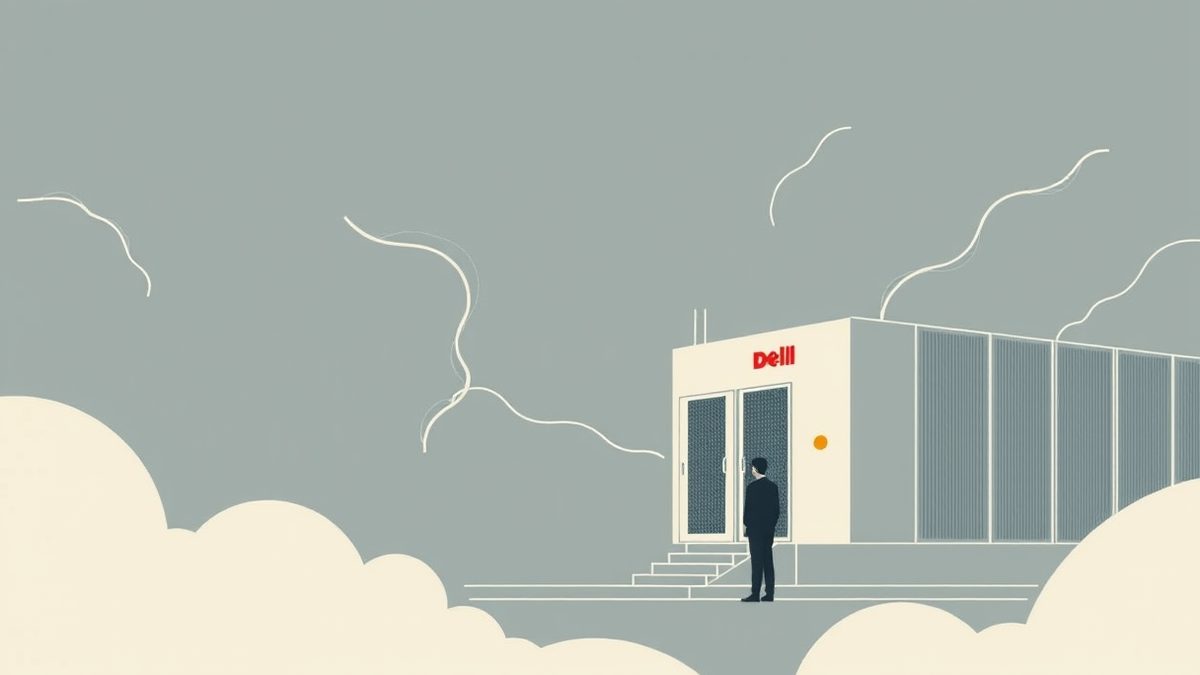
The deal, confirmed by JERA, puts a number on the pitch that has circulated through the industry all year: skip the grid queue, plug into generation you already control. The first project sits next to JERA's gas-fired power station in Chiba, east of Tokyo, draws about 400 megawatts and costs more than $15bn (¥2.3tn) across all phases, according to the FT's reporting. Operations are due around 2028.
JERA says it generates about a third of Japan's electricity. The wider push could reach as much as $140bn, though that figure comes from the FT, not from JERA, which has not put its own number on the rollout. Private equity firm Apollo is the financing partner for RHAELM.
"We can deliver a 400MW facility years ahead of a conventional grid-connected timeline," RHAELM chief executive Bradd Lewis said.
Why everyone is suddenly building power plants
The Chiba model is not exotic anymore. Transmission lines, substations and large transformers take years to develop or procure, while the compute inside a data centre can turn over in months. That mismatch has pushed developers toward behind-the-meter generation, microgrids and battery storage, according to a 1 October analysis in Data Center Dynamics by Bill Tierney of ProLift Rigging, who argues the data centre is becoming a power project in its own right.
The same logic shows up in Texas. Meta's $10bn, 1-gigawatt data centre in northeast El Paso depends on El Paso Electric's application to build a 366MW natural gas facility using 813 modular generators from Enchanted Rock, at an estimated cost of $499m. Administrative law judges released a proposed decision on Wednesday finding the utility failed to adequately consider alternatives and failed to issue a request for proposals, recommending approval only if ratepayers are shielded from the capital and operating costs. The five PUCT commissioners have not scheduled a vote.
Missouri is moving the other way. Ameren Missouri filed a long-range plan with the Missouri Public Service Commission that would add 5,400MW of new gas by 2032, an increase of 1,700MW, delay coal retirements at Sioux and Labadie, cut pre-2030 solar investment from 2,200MW to 1,300MW and drop new wind before 2030 entirely, according to a Sierra Club statement published by CleanTechnica on 29 September.
Not everyone is adding combustion. Fervo Energy said on Thursday that it began selling electricity from its Cape Station enhanced geothermal plant to the grid on 30 September, one day ahead of schedule, bringing online the first third of a planned 100MW facility. The first block took 23 months from groundbreaking, and Fervo is targeting 18 months for later blocks, TechCrunch reported. Google and Southern California Edison have committed to buying power from the site.
The cost of building your own grid
On-site power does not make the environmental cost disappear, it moves it closer to the fence line. New Jersey's Department of Environmental Protection fined a Vineland operator identified as DataOne $1.07 million after it installed and operated 62 natural gas generators without required permits, an enforcement action announced on 22 September. DataOne disputed the determination on the temporary generators but said it would apply for air permits, according to the New Jersey Monitor, as reported by Data Center Knowledge.
"Taking pressure off the grid doesn't eliminate an environmental cost," Abhijit Sunil, senior analyst at Forrester, told Data Center Knowledge.
Bain and Company's technology report, published Tuesday, puts the financial version of that tension in blunt terms. The consultancy estimates the AI industry must generate $6 trillion in annual revenue by 2031 to justify the capital being deployed, with new product development contributing about $4.2tn and enterprise productivity $1tn to $1.4tn. Annual AI infrastructure spending could reach $1.5tn by 2031, and data centre sizes and costs are doubling roughly every 12 to 16 months.
"The economics of AI infrastructure demand trillions in new revenue beyond productivity gains," said David Crawford, chairman of Bain's global technology practice and lead author of the report.
Capital is already getting more expensive. CNBC reported on 27 September that debt-hungry data centre companies face increased risk as bond yields spike, a backdrop that makes long-dated power contracts and prepayment structures, such as the one Nebius signed with AIB Data Centers for 50MW in the southeastern United States on a 12-year initial term, more consequential than they look.
Regulators and neighbours push back
Hydro-Québec made its case to the Régie de l'énergie on Thursday for a new rate for data centres above five megawatts that would roughly double their energy cost, to an average of 13 cents per kWh from 6.82 cents. The utility says such sites consume 190MW at peak today and could reach 1,000MW by 2035. Google and environmental groups including Greenpeace are participating in the hearing, which runs to 9 October with a second part in December, the Globe and Mail reported.
In Australia, Goodman Group confirmed on Monday it had withdrawn its A$1.2bn Project Mars data centre in Lane Cove, Sydney, citing a changed regulatory environment and community feedback, ABC News reported. The project sat about 20 metres from the nearest house.
Transparency is its own fight in Europe. Lighthouse Reports filed a complaint under the Aarhus Convention against the European Commission, first reported by POLITICO, accusing it of a "wall of silence" over data centre energy use. Commission figures put European data centres at 20.7 terawatt-hours of electricity and more than 8 million cubic metres of water in 2025, up 26% and 52% respectively, but the totals come from incomplete data and are published only in aggregate under a 2024 law. In the Netherlands, the RVO holds public electricity figures for 44 of the 186 commercial data centres above 500kW, NL Times reported.
Google is testing an exit hatch of sorts. Its Project Suncatcher satellite launched on a SpaceX rocket from California on Thursday carrying a single Tensor Processing Unit, built by Planet Labs, that will run in 15-minute bursts on one kilowatt of solar power. Google also published a peer-reviewed version of its orbital data centre white paper in Joule, which assumes launch prices near $200 per kilogram by 2035, and the company's Travis Beals framed the effort as a long-term moonshot rather than a near-term product.
Sources
14- 01Japan eyes $140bn AI data centre push with Dell and JERA, FT reportsEN
- 02The data center is becoming a power projectEN
- 03Texas Electric Utility Only Considered Gas to Power $10 Billion Meta Data CenterEN
- 04Ameren Missouri Proposes Pollution-Heavy Future to Power Data CentersEN
- 05World's first enhanced geothermal power plant completed in just 23 monthsEN
- 06Data Center On-Site Power Brings Pollution Risks Closer to HomeEN
- 07AI needs $6tn in annual revenue to justify data centre boom, Bain saysEN
- 08Debt-hungry AI companies face increased risk as bond yields spikeEN
- 09Nebius signs 50MW lease with AIB Data CentersEN
- 10Hydro-Québec asks provincial regulator to hike energy rates for large data centresEN
- 11Controversial Sydney data centre project pulled amid community angerEN
- 12EU accused of hiding environmental impact of data centersEN
- 13Most data centers refusing to say how much water, electricity they useEN
- 14Google thinks SpaceX's Starship has to launch 1,800 times before space data centers get off the groundEN
All figures and quotations in this text come from the sources listed below.
Content prepared by the editorial team with AI assistance.
Rachel Nwosu
Comments
0- No comments yet — be the first.