Advanced packaging will cap AI chip growth in 2027, TechInsights says
Advanced packaging will cap semiconductor growth in 2027, TechInsights said in an outlook published on 3 November 2026, because AI accelerators and HBM4 both depend on it. The same day, 36Kr reported that the ABF carrier board supply-demand gap could reach around 20%, with new capacity not arriving in batches until 2027.
 Grace OkonkwoAI, models and technology
The constraint moved to the package
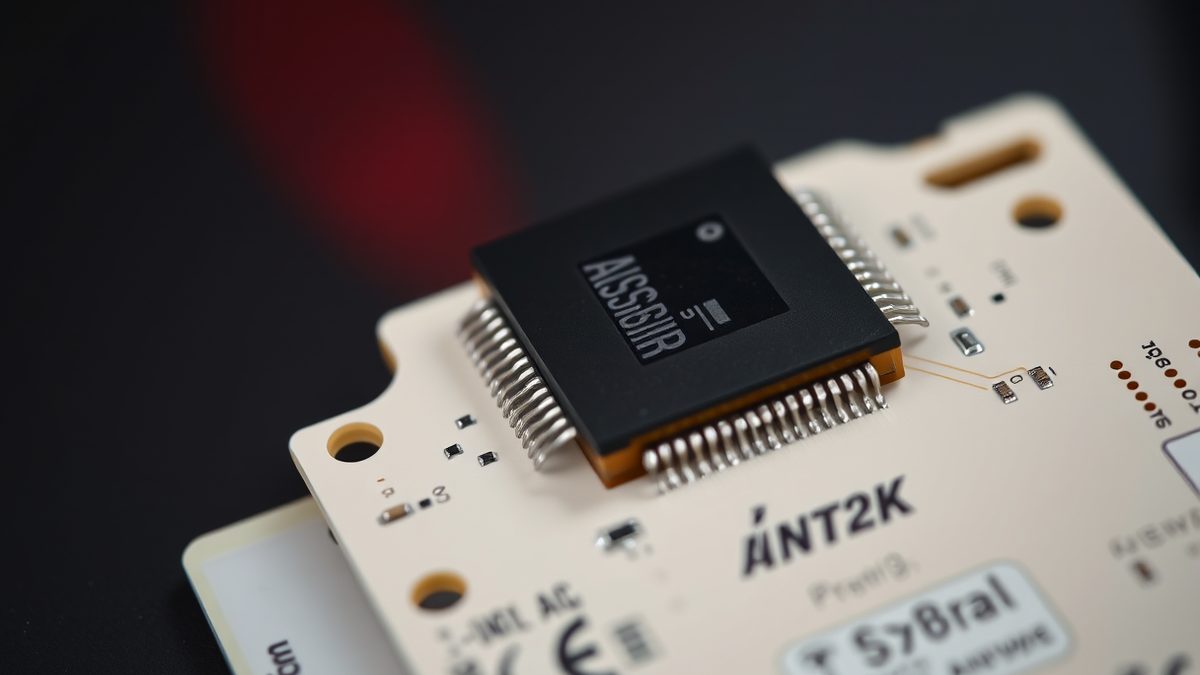
Nvidia's Rubin Ultra puts two GPUs and 16 HBM stacks in one socket, and TSMC's CoWoS roadmap reaches 9 reticles of interposer area. Only four 9-reticle interposers fit on a 300 mm wafer, TechInsights says, so 2027 leadership will be decided by yield, qualification and second sourcing rather than headline capacity. TSMC now targets a 9.5 reticle equivalent area for CoWoS-L in 2027.
For buyers of AI compute the consequence is simple. Fewer accelerators ship than the logic wafer supply would suggest, and the reported 10% to 20% packaging increase would reach cloud and server customers through Nvidia and AMD systems.
The interposer has grown for a decade. TSMC's CoWoS silicon interposer went from about 1.5x reticle, roughly 1,287 square millimetres, in 2016 to 3.3x, about 2,831 square millimetres today, according to an IDTechEx report cited by 36Kr. The next step is 5.5x, about 4,719 square millimetres, planned for 2026. Nvidia's Blackwell GPU already reaches a package area of about 3.3x the reticle limit, and Rubin is expected to rise to 4x, 36Kr reported. TrendForce expects CoWoS-L to stay the mainstream route for AI chips through 2028 on maturity and yield, the same report said.
Prices follow scarcity
Taiwan's Commercial Times reported on 27 October 2026 that foundries and outsourced assembly and test providers were preparing CoWoS price increases of 10% to 20%, citing industry sources. Equipment lead times have stretched to six to eight months from three to six, the report said. TSMC has not confirmed the increase.
The money is smaller than the signal. Advanced packaging was about 8% of TSMC revenue in 2025 and management expects slightly over 10% this year, so a full 20% increase would add only around 2% to sales, TIKR calculated.
Capacity is why the price can move. TSMC's CoWoS monthly capacity is expected to exceed 130,000 wafers in 2026 and reach 200,000 in 2027, according to analyst estimates cited by the Commercial Times.
Tools and substrates lag behind
ASMPT's third-quarter revenue rose 49% to HK$5.25 billion, about $669 million, driven almost entirely by advanced packaging, while its semiconductor solutions unit missed analyst estimates. Thermo-compression bonding revenue, from the tools that stack HBM onto accelerators, grew 146% in the most recent period covered by its disclosures. The company has said the TCB tool market could top $1.6 billion by 2028, and guided fourth-quarter revenue to $670 million to $730 million.
Substrates are the other lag. Counterpoint Research estimated in March 2026 that the ABF carrier board supply-demand gap could reach around 20%, with new capacity not released in batches until 2027, 36Kr reported.
Equipment makers are adding capacity where they can. Applied Materials plans to double its Singapore manufacturing capacity, headcount and research activity, and will announce an expansion of an innovation centre focused on advanced packaging, according to the Singapore Economic Development Board. It employs more than 2,500 people in Singapore today.
Customers are paying in advance
Amkor's Computing revenue rose 37% year on year to 26% of sales, from 19%, with gross margin at 18.3% against 14.3%. About a dozen customers are paying in advance for capacity, management said. At ASE, computing went from 22% of packaging and test revenue in early 2025 to 30% in the second quarter of 2026, and gross margin reached 21.0%, above fiscal 2022's 20.1%. Buyers do not prepay for capacity they expect to be plentiful.
The wafer split shows where the queue forms. Nvidia alone is expected to need around 1.2 million CoWoS wafers in 2027, while AMD's needs are projected to jump roughly 308%, from about 130,000 wafers in 2026 to 530,000 in 2027.
Concentration makes it worse. Nvidia controls about 60% of CoWoS packaging, and TSMC's advanced-node capacity is booked through 2028, with a single N2 wafer costing near $30,000 against roughly $18,000 to $20,000 for N3. SK Hynix has committed roughly $12.85 billion to a new advanced packaging facility in Cheongju, South Korea.
New entrants aim at the mature end, not at 9-reticle interposers. Tata Electronics is building a ₹270 billion, about $3.25 billion, OSAT plant in Assam with approved capacity of 48 million units a day, against Sahasra's stated 60 million units a year, about 164,000 a day, EE Times reported.
The next hard date is TSMC's fourth-quarter report and 2027 guidance in mid-January, which TIKR calls the test of the pricing story.
Sources
28- 01Advanced Packaging Outlook 2027: Five Trends Reshaping CoWoS, HBM and Chiplets - TechInsightsEN
- 02Packaging Substrate, Fierce Battle - 36KrEN
- 03TSMC to raise advanced chip packaging prices by up to 20%, report says - Yahoo FinanceEN
- 04TSMC Gains 3% on Reported 20% Price Hike for AI Chip Packaging - TIKR.comEN
- 05AI Chip Packaging Sizes Approach 4x Reticle Limit as 2.5D Roadmap Battle Extends to 2028 - BigGo FinanceEN
- 06ASMPT sales jump 49% on AI chip packaging as core equipment unit misses - Startup FortuneEN
- 07ASE Technology Gains 5% as Packaging Rival Amkor Touts "Expanding Customer Commitments" - TIKR.comEN
- 08US chip gear giant Applied Materials to double Singapore manufacturing, R&D and headcount - Singapore EDBEN
- 09Is There Room for Small-Scale OSATs in India's Chip Packaging Boom? - EE TimesEN
- 10The AI boom has made memory chips the star of the show; Singapore stakes its role in advanced packaging - Singapore Economic Development Board (EDB)EN
- 11AI Chip Suppliers Push Capacity Despite Downturn WarningsEN
- 12Bosch gives chips their own division, eyeing €5bn in sales by 2030EN
- 13Waaree doubles Texas solar module manufacturing capacity to 3.2 GWEN
- 14Huawei tells customers to find their own AI chip memory, effectively outsourcing procurement to the black marketEN
- 15Venture Kick backs Apolarion with €164K to advance plasma-based seed treatmentEN
- 16Apple warns of ‘unprecedented’ rise in memory chip pricesEN
- 17AI, fuelled by advanced chips, set to power semiconductor manufacturing: industry veteranEN
- 18Li Auto launches 2026 i6 with unchanged starting price, upgraded in-house chip and batteryEN
- 19Cloud Revenue Hits $168B as AI Capacity ExpandsEN
- 20Marvell Snaps Photonics Chipmaker Lumentum to Bolster AI ConnectivityEN
- 21China’s CXMT defends bet on risky new DRAM architecture to circumvent US chip curbsEN
- 22AWS Capacity Largely Sold out through 2027, with On-Demand Headroom ReservedEN
- 23As AI cyber risks grow, Chinese chip expert urges shared ethics standards with US rivalsEN
- 24Chinese AI chipmaker Iluvatar CoreX says new GPU matches Nvidia’s H200 as chip gap closesEN
- 25GitHub Launches npm Firewall to Block Malicious Packages Before InstallationEN
- 26Oracle Cloud to Offer Google TPUs and New AI ChipsEN
- 27Huawei’s Tau Scaling Law roll-out reaches base stations in blow to US chip curbsEN
- 28Craft Prospect kicks off PERSEUS project to advance optical communications for spaceEN
All figures and quotations in this text come from the sources listed below.
Content prepared by the editorial team with AI assistance.
Grace Okonkwo
Comments
0- No comments yet — be the first.