An AI-generated fake protest spread across TikTok. Poland has just gained a watchdog
A video of a protest in Warsaw, styled to look like television news footage, drew more than 200,000 views before anyone confirmed the event never happened. In the same period, the president signed a law implementing the EU's AI act.
 Grace OkonkwoAI, models and technology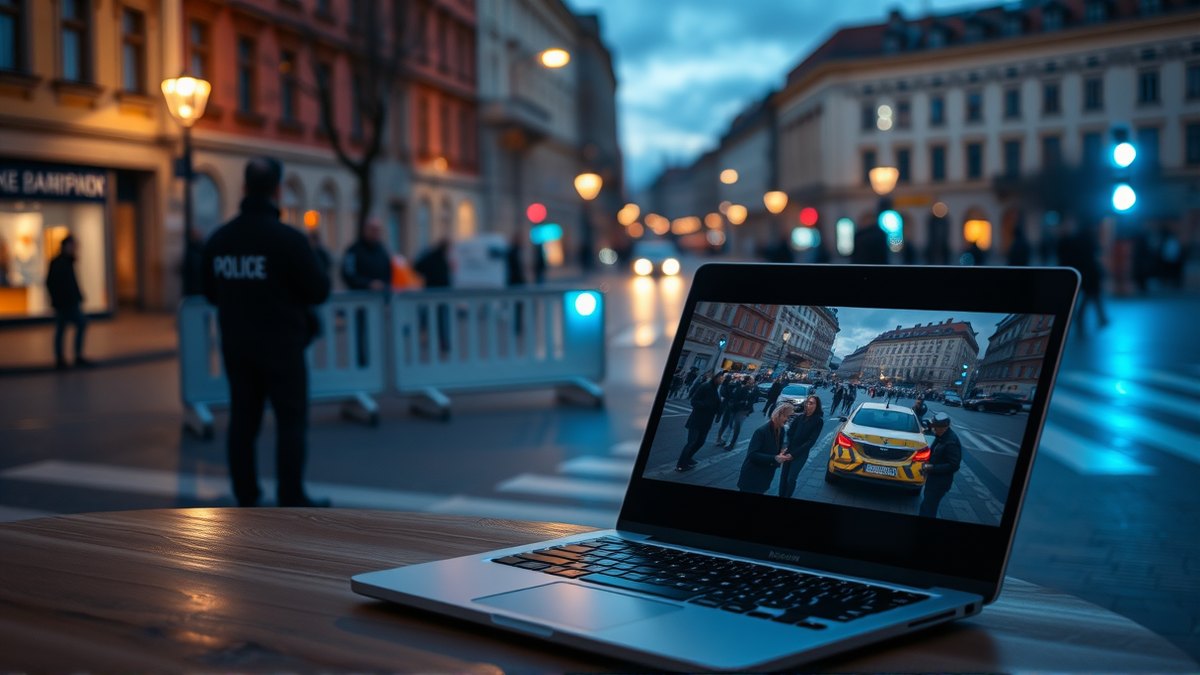
The footage looked like a reporter's dispatch: a street, banners, passers-by, a news ticker with a television station's logo. The problem was that the protest never took place, and the station had never produced such a recording. An analysis with Hive Moderation put the probability that the entire clip was generated by artificial intelligence at 75.4 percent.
The same video appeared from several dozen TikTok accounts, in versions differing in small details. The most popular post passed 204,000 views. The recording was not an isolated experiment. The analytics service Euronews described nearly identical material in Portugal, France, Germany, Ireland, Italy and the United Kingdom. The Portuguese version used the likeness of an RTP journalist. The broadcaster said the person had never worked for it.
Why it works
Such material does not work because of its technical quality. Small flaws give away the synthesis, if you look closely. It works because of context. A well-known station's logo, a news ticker, the familiar colour scheme and the pace of the edit create an impression of credibility before the viewer even asks about the source. Algorithmic distribution further rewards content that provokes emotion, and a fake protest supplies a great deal of it.
Polish rules enter into force
The regulatory answer arrived in July 2026. The president signed the act on artificial intelligence systems, which implements the EU regulation on AI. The act creates a new market supervision body, the Commission for the Development and Safety of Artificial Intelligence (KRiBSI). It is responsible for accepting complaints, issuing permits for high-risk systems and imposing fines.
The rules also provide for so-called regulatory sandboxes, controlled environments in which companies can test AI systems under the authority's supervision without the full formal burden. The first such mechanism is to launch very soon, which is meant to encourage Polish companies to develop their own models and tools. The EU regulation on AI has applied since 1 August 2024, but most obligations for high-risk systems and general-purpose models were spread over the following years.
A gap the act will not close
Even the best institutional supervision will not solve the problem the fake protest points to: the moment of publication. Material gains reach within hours, while verification takes days. In that window, fines, lawsuits and labelling duties do nothing. Only the speed of newsrooms and fact-checking outlets counts.
That is why the most important conclusion for the Polish market is practical. Deepfake detection has to become a permanent part of newsroom work, not an occasional project. It is also a challenge for local outlets, which have no fact-checking teams. Their material, the most credible on local matters, becomes at the same time the easiest target for fakes posing as the local press.
Sources
2- 01Sztuczna inteligencja stworzyła protest w Warszawie. Nagranie wyglądało jak materiał TVP InfoPL
- 02Polska wdraża AI Act. Nawrocki podpisał ustawę o systemach sztucznej inteligencjiPL
All figures and quotations in this text come from the sources listed below.
Content prepared by the editorial team with AI assistance.
Grace Okonkwo
Comments
0- No comments yet — be the first.