NYT seeks sanctions against OpenAI as the US government backs the company
Publishers want a court to penalize OpenAI for withholding training data. The US Department of Justice argues that training models on other people's texts counts as fair use. The case is entering its decisive phase.
 Rachel NwosuAI, models and technology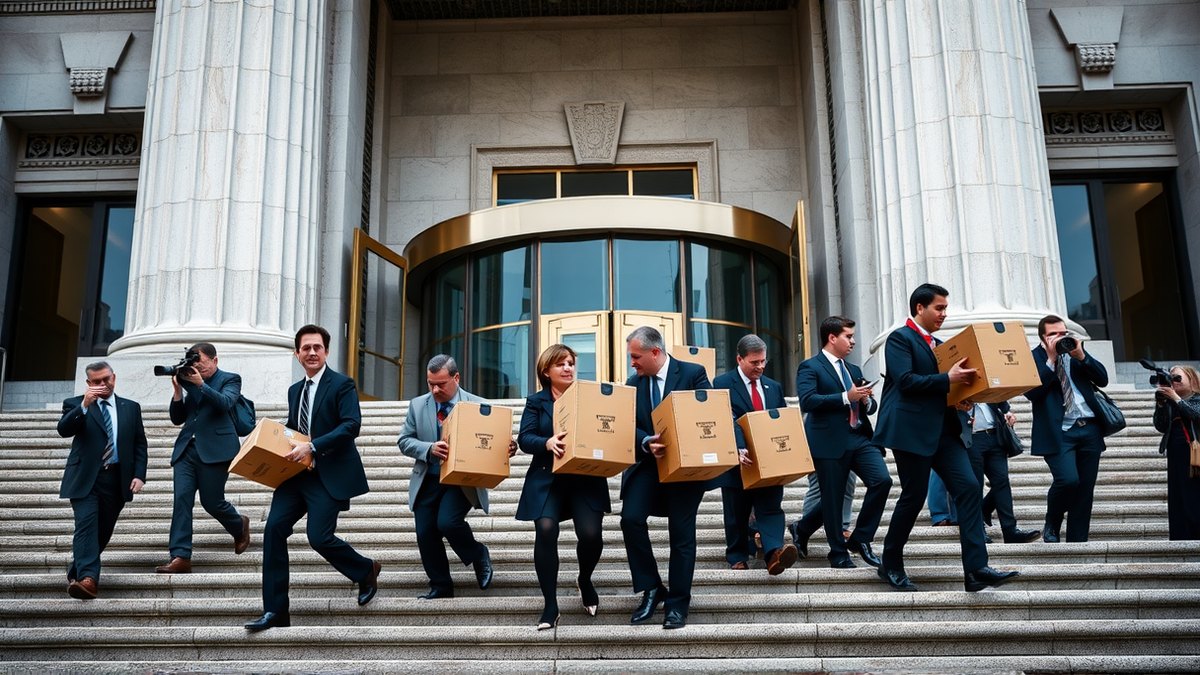
The New York Times, the New York Daily News and other newsrooms have asked a federal court in Manhattan to sanction OpenAI. The complaint is not about the training itself, but about discovery. The publishers say the company "chose obstruction" and is withholding the datasets and ChatGPT logs that would show how the system used articles protected by copyright.
Steven Lieberman, a lawyer for the Daily News, speaks plainly of "misleading" conduct over two years about whether OpenAI can search its training sets for specific works. According to the filing, testimony from one of the company's employees contradicts earlier statements. OpenAI spokesperson Drew Pusateri responded that the limits on sharing logs are meant to protect user privacy, and called the allegations false.
The government sides with the lab
A few days earlier, on 1 September 2026, the US Department of Justice formally joined the case. In a document filed with the federal court in Manhattan, it stated that using protected material to train large language models falls within fair use. The argument runs along two tracks. The first is legal: training is "transformative". The second is national security. According to the department, rules that would significantly hinder the building of models in the US would weaken the country against foreign competitors.
The document, described as a statement of interest and signed among others by Deputy Attorney General Stanley Woodward Jr., also refers to the policy of "removing barriers" to AI development. Graham James, a spokesperson for The New York Times, said the government had taken the side of a few trillion-dollar companies at the expense of creators. "AI and creators can grow together, if companies pay for content," she said.
More plaintiffs
The front of lawsuits is widening independently of this case. On 4 September 2026, The Seattle Times and Newsday sued OpenAI and Microsoft in the Federal Court for the Southern District of New York. They say their services were scraped along with content kept behind paywalls, and that articles ended up in the training sets behind ChatGPT, Copilot and Bing search. They are seeking the destruction of copies of the works as well as the datasets and models that contain them. Microsoft responded that the case came as a surprise to it, but that it takes local journalism seriously.
The scale of the costs is striking too. Documents filed with regulators show that The New York Times alone has already spent more than 28 million dollars on litigation with AI companies. Judge Sidney Stein set a deadline of 4 September for the parties to file motions for summary judgment. The ruling in this case could determine whether training models on other people's texts is legal in the US without the publishers' consent.
Sources
3- 01News outlets urge a judge to sanction OpenAI in a high-stakes AI copyright fightEN
- 02纽约时报诉 OpenAI 案升级:美国司法部首次就 AI 版权问题公开表态ZH
- 03两家美国媒体起诉 OpenAI 和微软,指控其 AI 训练侵犯版权ZH
All figures and quotations in this text come from the sources listed below.
Content prepared by the editorial team with AI assistance.
Rachel Nwosu
Comments
0- No comments yet — be the first.