Airport biometrics win passenger approval as regulators hold the gate
Passengers have warmed to airport face-scanning faster than governments have written rules for it. IATA's 2026 Global Passenger Survey found 87% of travellers satisfied with biometrics and 78% willing to share biometric data to skip passport and boarding pass checks.
 Daniel FisherSport, cars and travel
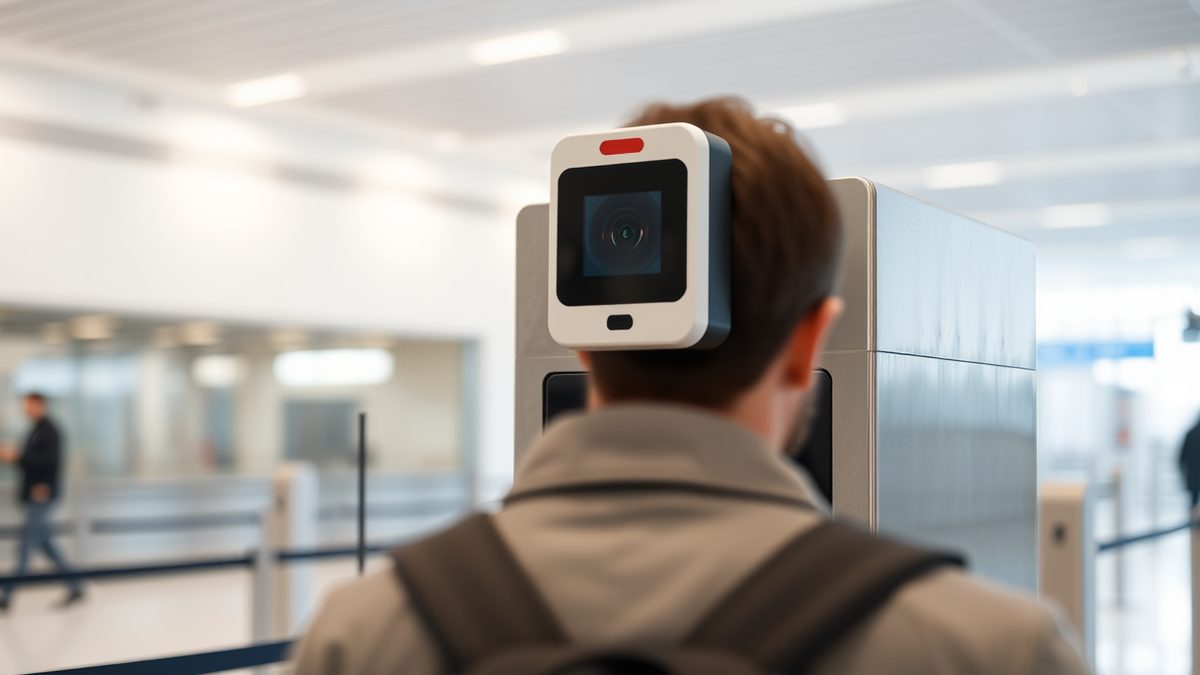
Travellers will meet face-scanning gates at more airports. The checks stay optional and uneven because each country sets its own border rules. Certification and trials let airports prove the technology while regulators catch up. Whether a government will accept a digital credential in place of a passport at a border remains unknown.
What the survey found
IATA's 2026 Global Passenger Survey drew 10,000 responses from passengers in more than 200 countries. Of those, 87% said they were happy with their biometric experience, the highest satisfaction level the survey has recorded. A further 78% said they would share biometric information if it removed the need to show a passport or boarding pass at checkpoints. Interest in digital passports ran higher still. 84% said they were interested in using one for online check-in. The survey also found that 58% of respondents had encountered airport biometrics in the previous 12 months.
The enthusiasm has limits. 59% worried about data breaches, 49% about sharing with other organisations and 41% about unclear handling. European travellers were least satisfied and most cautious about digital adoption.
The first certifications
On 28 October 2026, Hong Kong International Airport and Air New Zealand became the first organisations certified under IATA's One ID programme. Certification covers only defined operational scopes. It does not let an airline or airport override another country's border rules. Hong Kong's operator says more than 93 million passengers have used its Flight Token system since 2021. It also says more than 80% of departing passengers are eligible to use it at all key departure checkpoints. Air New Zealand ran an April trial between Auckland and Hong Kong. Passengers there shared verified identity data using digital credentials, with biometric checks at selected points.
Nick Careen said trust is the binding constraint. He is IATA's senior vice-president operations, safety and security. Digital identity can simplify travel, he said, only if every organisation involved trusts how the others verify data and protect privacy.
Airports are not waiting
Kempegowda International Airport in Bengaluru began a three-month Digi Yatra international trial on 1 November 2026. The trial runs with SITA. It is open to Indian citizens holding e-passports who fly Air India or IndiGo. The Digi Yatra platform already serves more than 26.5 million domestic users. The trial covers terminal entry and security gates, with a possible extension to boarding on selected flights. Avram Iancu International Airport in Cluj-Napoca installed 12 automated border control gates supplied by SITA, a project worth RON 12,084,739 excluding VAT. One Border Police operator can monitor six of those gates at once.
Neither project replaces a border check. Both airports say passengers must still carry physical documents and pass through immigration and security.
The regulatory gap
Careen said the industry has already shown digital travel credentials work in practice. Governments now need to change regulations to allow it. He put meaningful use of digital travel credentials somewhere between now and 2030, with wider adoption in three to five years if the rules change. A workshop held by the Cambridge DPI Regulatory Programme and the Alan Turing Institute reached a similar conclusion. Cross-border digital ID could be widely implemented now on technical grounds. Governance and regulation are the hold-up.
European lawmakers and civil society groups told POLITICO that proposed Frontex powers threaten free speech. The plan would let the EU border agency monitor social media for content that aids or encourages illegal border crossings.
What to watch
The Bengaluru pilot runs 90 days from 1 November 2026. It will test hardware reliability, passenger processing speed and data synchronisation. Hong Kong's 93 million figure and its 80% eligibility rate are the operator's own reported numbers, not an independent measurement of time saved. IATA has also reported tests with Japan Airlines and IndiGo that connected different wallets and travel systems. Those were proofs of concept rather than rollouts.
Sources
12- 01Passengers embrace technology to improve their journeyEN
- 02Digital Passports and Airport Biometrics: What Changed in 2026—and What Travelers Still NeedEN
- 03Kempegowda International Airport launches Digi Yatra trials for international departuresEN
- 04Bengaluru Airport Trials SITA SmartPath for International Digi YatraEN
- 05Avram Iancu International Airport deploys automated border control system, CAT III landing technologyEN
- 06Feature: Is the touchless airport tied in red tape?EN
- 07Biometrics and standards bring cross-border digital ID closerEN
- 08EU lawmakers slam new border force powers to surveil social mediaEN
- 09Shaping the future of aviation security: advanced technology delivering greater security, efficiency and passenger comfort at Munich Airport - International AirEN
- 10How Beta Technologies Is Clearing the Runway for Electric FlightEN
- 11Inside Automotive DMS & OMS: Technology, Challenges & Power Solutions EN
- 12TechnoMile Recognized as a 2026 Inc. Power Partner Award WinnerEN
All figures and quotations in this text come from the sources listed below.
Content prepared by the editorial team with AI assistance.
Daniel Fisher
Comments
0- No comments yet — be the first.