AstroForge plans a 2027 mission that flies itself, with no commands from the ground
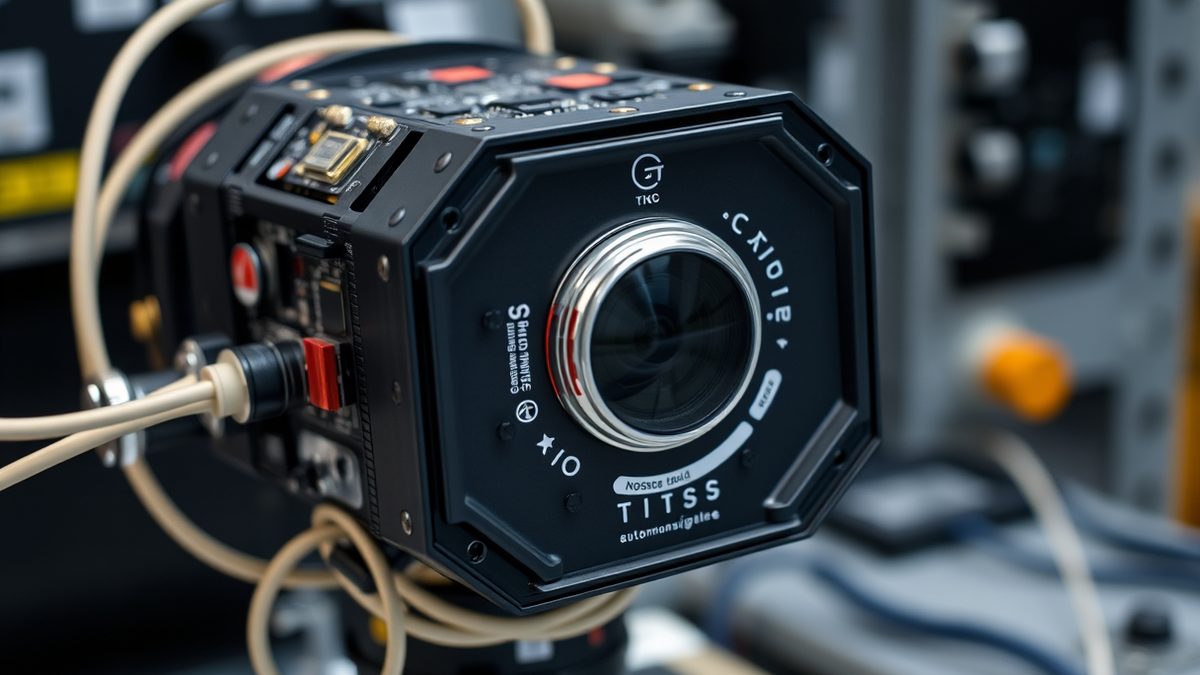
AstroForge says its Autonomy-1 mission will fly its entire mission after separation with no commands from the ground. It will ride the first launch of Stoke Space's Nova Pathfinder rocket in early 2027.
 Sofia MarchettiScience and health
The California asteroid-mining company announced the plan in a blog post by CEO and co-founder Matt Gialich, dated Tuesday 22 September. Space.com reported the mission details on 4 October.
Autonomy-1 will fly on the first flight of Stoke Space's Nova Pathfinder rocket, scheduled for early 2027. What changes is who flies the spacecraft. Until now every deep-space probe has needed a ground crew to plan and send each command. AstroForge wants to take that crew out of the loop. Software would make the calls in real time. The company has not said what payload Autonomy-1 will carry, nor how much the mission costs.
The software is called Solo. The company describes it as a model designed to coordinate a spacecraft's onboard functions. Gialich wrote that it sits on top of AstroForge's existing physics-based flight software. The spacecraft can then make decisions during flight rather than wait for instructions. He called full mission autonomy the "holy grail of spacecraft engineering." He said the company will get there in steps rather than in one leap.
"Autonomy-1 will be the first space mission to complete its entire mission after separation without a single command from the ground," Gialich wrote in the post. "Using Solo, we will remove the human operator from the loop."
The first step is not Autonomy-1. Solo will fly first on DeepSpace-2, according to Space.com. That craft is booked on the same SpaceX Falcon 9 that will send Intuitive Machines' third robotic lunar lander toward the moon.
Only after that flight does the fully autonomous mission get its turn. AstroForge was founded in January 2022. Its stated goal, quoted in the same blog post, is "to unlock the resources of the solar system."
Why a mining company wants a self-driving probe
Metal extraction is the business case. AstroForge plans a fleet of spacecraft spread across the solar system. The company argues that steering a large number of probes by hand would be slow and expensive. Autonomy is a cost argument before it is a science argument. For anyone watching the commercial space sector, that is the part worth noting. The mission tests whether a small company can run deep-space operations without a standing flight team.
It also matters for Stoke Space. Nova Pathfinder is a new rocket, and AstroForge is trusting a first flight with a mission it bills as a first. Neither company has said how much the launch contract is worth. Neither has published a date more precise than early 2027.
Autonomy claims are easy to make and hard to check. A spacecraft that decides for itself needs software that fails safely. The public record so far is a blog post and a press description, not a test report. Space.com's account gives no details on how Solo handles a fault mid-flight. AstroForge has not said whether the mission carries a backup mode that hands control back to the ground.
The other science in the same week
Elsewhere on the research side, the most concrete number of the week came from a preprint server rather than a spacecraft. arXiv will cap submitters at two submissions per month, a policy announced by Kat Boboris and reported by Unite.AI on 4 October. The reason is volume. arXiv received 40,363 submissions in September 2026, almost double the 20,569 in September 2024 and more than four times the 9,869 in September 2016.
Boboris also said the month's submissions generated almost 9,000 support tickets for staff and moderators. Moderators are seeing more thin papers of narrow scope. They also see more "salami" papers split from a single work, and more dense, AI-written papers. The site had already imposed a one-year ban for unchecked AI content in May, according to Unite.AI. In October last year it began requiring peer backing for survey and position papers.
Researchers are now trying to measure the problem rather than just complain about it. A collaboration between Seoul National University and the University of Minnesota has produced a paper titled "Science or Slop?: Benchmarking and Mitigating Scientific Slop in AI-Generated Papers." It scores papers on whether their claims are supported by their arguments, evidence and citations, not just on how the text reads. Unite.AI reported the work on 4 October.
The two stories share a shape. Automated systems are producing more output than the people who check it can handle. That output may be a paper or a spacecraft command. The response in both cases is to push judgement into software. arXiv's cap is a blunt instrument; Solo is an ambitious one.
A space plane and a mystery object
China's Shenlong space plane appears to have released an unknown object in orbit, according to the commercial tracking firm LeoLabs. Space.com reported on 4 October that LeoLabs detected the object at 02:30 UTC on 22 June 2026 near the reusable space plane. It first spotted the object with its Tracker radar in New Zealand. It later catalogued it with high confidence as having come from Shenlong.
"This activity is consistent with sub-satellite deployments conducted by the space plane in previous missions," LeoLabs posted to X, according to Space.com.
Shenlong launched on its fourth mission on 6 February 2026 atop a Long March 2F from the Jiuquan Satellite Launch Center. Its objectives were undisclosed, as on earlier flights. Space tracker Jonathan McDowell noted on X that the U.S. Space Force has now catalogued the object. What the object does is not public.
Further out, Live Science reported on 4 October on fusion propulsion. Pulsar Fusion, a U.K. startup, hopes to launch a demonstration mission to space in 2027. Princeton University and Helicity Space continue work on their own drives. Stephane Lintner, CEO and co-founder of Helicity Space, told Live Science that on the current trajectory, "everything we know about space travel is going to change within a decade." The piece is candid that commercial fusion remains unproven.
Where the sugar came from
Not every result this week needed a rocket. Writing in Nautilus on 4 October, Martin Van Kranendonk, Albert Fahrenbach and Luke Steller described a study in Scientific Reports. It looked at how ribose, a fragile sugar, may have helped create the conditions for its own survival on early Earth. Ribose breaks down when heated, but borate binds to it and protects it. The team used real minerals, including borate crusts from hot springs at Puga in India. They found that ribose helps borate minerals dissolve, keeping more boron in the water for the chemistry that may have preceded life.
The result is a small, careful step in origin-of-life research, and it rests on field samples rather than a model. That is the kind of science that rarely makes a headline but tends to hold up.
Back on orbit, the week's software news is worth a mention for anyone who runs a Mac. RemoveMacAI is a utility that turns off Apple Intelligence features and deletes their models. GitHub lists it as a native app and command line tool with an undo history. Its own page says The Verge, Ars Technica, The Register, MacRumors, AppleInsider and Help Net Security have written about it, and that Daring Fireball linked to it. The app is not notarized, so macOS blocks it on first open until the user allows it in Privacy and Security settings.
Two smaller items round out the week's science-adjacent reading. A GitHub project by pakompom has recovered the Delphi source of Space Rangers 1 through decompilation, using GPT-6 Astra with some human steering. It says the recovered source compiles to a byte-for-byte identical Rangers.exe for version 1.7.2 of the English Steam release. Separately, an interactive page at walk-in-hyperbolic.space explains why tree-shaped data fits poorly in flat space. It shows how hyperbolic search re-ranks candidates by true distance.
None of that puts a probe around an asteroid. AstroForge's bet is that it eventually will, and that the probe will not need anyone on Earth to tell it what to do next.
Sources
8- 01Asteroid-mining company to launch first autonomous space mission in 2027EN
- 02China's space plane appears to have released a mystery object in orbitEN
- 03The fusion breakthrough that could unlock a path to the starsEN
- 04Fighting AI slop in science papersEN
- 05How Sugar from Outer Space Became One of the Backbones of Life on EarthEN
- 06RemoveMacAI: turn off Apple Intelligence on macOS 27EN
- 07A matching Delphi decompilation of Space Rangers 1EN
- 08A Walk in Hyperbolic SpaceEN
All figures and quotations in this text come from the sources listed below.
Content prepared by the editorial team with AI assistance.
Sofia Marchetti
Comments
0- No comments yet — be the first.