Atoco promotes shipping-container device that makes drinking water from air
Atoco, co-founded by Nobel laureate Omar Yaghi, is promoting a shipping-container-sized device that it says can produce up to 1,000 litres of drinking water a day from air, Education Times reported.
 Sofia MarchettiScience and health
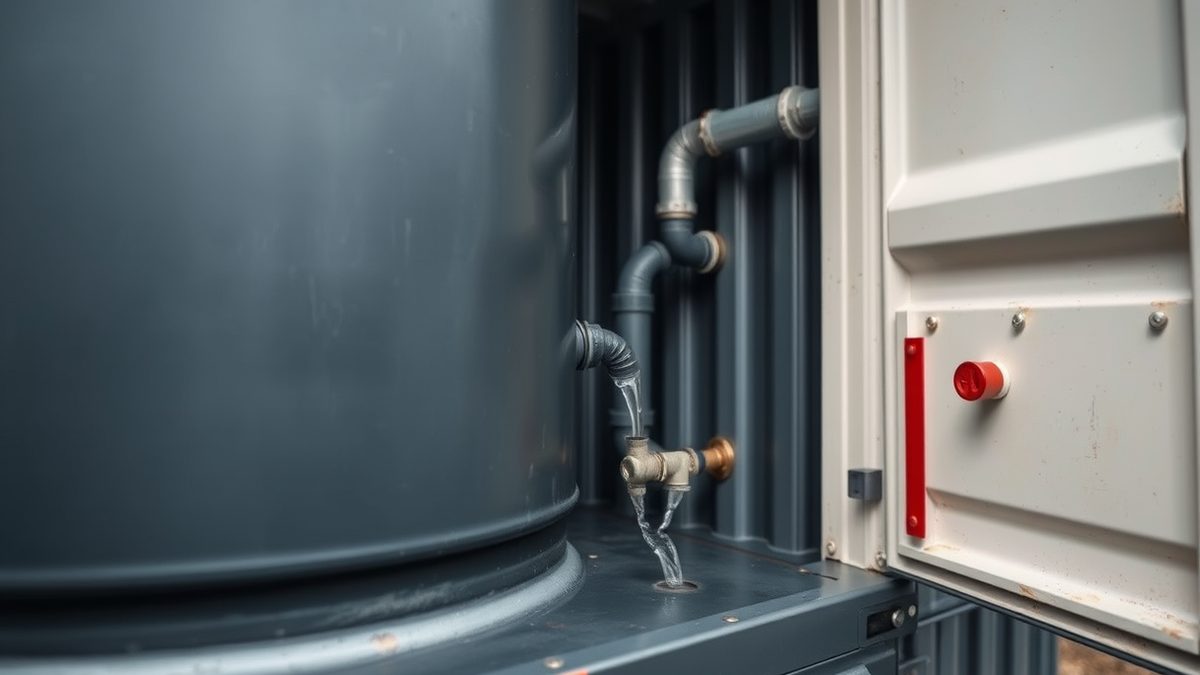
Education Times reported that Atoco is promoting a unit about the size of a 6-metre shipping container. The company says it can produce up to 1,000 litres of pure water a day, enough to meet the basic drinking water needs of roughly 300 to 500 people. The device uses metal-organic frameworks to absorb water vapour from the air, then releases and treats that moisture to make clean drinking water. It draws very little electricity and does not need a central power distribution network, according to the report. Atoco says the unit pulls water straight from the atmosphere, with no seawater intake and no treatment plant upstream.
Output is not fixed. Education Times notes the yield can depend on humidity, temperature and other environmental factors.
If it works at scale, the device could give remote villages, island states and disaster zones a water source that does not depend on desalination or a central grid.
Why the material works
Metal-organic frameworks are built by joining metal ions with organic molecules, producing a structure with countless microscopic pores. The Conversation describes them as crystalline scaffolds, with metal joints linked by organic bridges in a repeating pattern. It puts the scale plainly: one gram of a MOF can expose as much internal surface area as a soccer field. The European Commission goes further: a few grams of MOF powder have an internal surface area the size of a football pitch. It calls MOFs the most porous solid material known.
Pore size and chemistry can be tuned, so one framework can be built to admit a molecule that another rejects. The Conversation describes some MOFs as molecular sieves that selectively capture carbon dioxide from industrial exhaust or directly from air. The Nobel committee, for its part, cited the potential for separating PFAS, the so-called forever chemicals, from water.
The Conversation reported that scientists have synthesized over 90,000 MOFs, and computational chemists have predicted hundreds of thousands more.
From Nobel lab to product
Yaghi shared the 2025 Nobel Prize in Chemistry with Susumu Kitagawa and Richard Robson for developing metal-organic frameworks. The Royal Swedish Academy of Sciences said the laureates gave chemists new opportunities for solving some of the challenges we face. Yaghi is a chemistry professor at the University of California, Berkeley. He has announced he will leave the US to become director of the AI Materials Research Institute at Tsinghua University in China and will become a full-time professor there, Gigazine reported. MOFs are already in clinical trials for cancer radiation treatment and are being sold to contain carbon dioxide captured from cement, according to Scientific American. Atoco's pitch is narrower: sell the water device where clean drinking water is scarce. Yaghi also co-founded WaHa, a separate company developing devices that convert moisture in the air into pure water.
What is still unproven
Atoco has said it will run field tests to determine whether the device can deliver a viable potable water resource at larger scale. Education Times reported that the production figures are company claims and that large-scale performance will need to be demonstrated through field trials.
The competition matters. Many island nations depend on desalination, which can require significant energy and produces concentrated brine that may harm marine ecosystems if not managed properly, Education Times reported. Atoco's argument is that districts could run smaller, decentralized water units instead of relying solely on large treatment plants or imported water. Education Times tied the pitch to storm damage: Hurricane Beryl hit the Caribbean in 2024, and Hurricane Melissa in 2025 highlighted communities' susceptibility to extreme weather. Until field results are public, the 1,000-litre figure is a company specification.
Sources
19- 01Nobel prize-winning chemist develops device that makes drinking water from air without electricityEN
- 02Metal-organic frameworks: Nobel-winning tiny 'sponge crystals' with an astonishing amount of inner spaceEN
- 03Nobel Prize 2025: Award-winning chemistry for a cleaner planetEN
- 04Research on metal-organic frameworks gets the chemistry Nobel PrizeEN
- 05Trio wins chemistry Nobel Prize for metal-organic frameworkEN
- 062025 Chemistry Nobel Goes to Molecular Sponges That Purify Water, Store Energy and Clean Up the EnvironmentEN
- 07Research on metal-organic frameworks gets the chemistry Nobel Prize - College of Chemistry (Berkeley)EN
- 08A scientist who won the Nobel Prize in Chemistry for the development of 'metal-organic frameworks (MOFs)' has left the United States to become the director of aEN
- 09Kitagawa, who found a use for the useless, wins the Nobel PrizeEN
- 10All Nobel PrizesEN
- 112026 Nobel Prize in Chemistry: live coverage from StockholmEN
- 12Forscher setzen KI zur Erzeugung von Legierungen aus Metallschrott einEN
- 13Toward a Compositional Knowledge Architecture for a Shared Organizational CortexEN
- 14Autonomy and Coordination in Intelligent Manufacturing: A Recursive Autonomous Agent FrameworkEN
- 15Scientists discover metals that defy the deep freeze at -424°FEN
- 16Tokenised gold bar to advance Hong Kong’s ambitions as digital, metal trading hubEN
- 17Fact-check: RFK Jr’s claim that Arabs do not produce science or win major prizes is false - fish4news.co.ukEN
- 18Chinese Hackers Use AI-Powered ARTEX to Target Over 200 Organizations WorldwideEN
- 19Annie Ernaux still feels like an outsiderEN
All figures and quotations in this text come from the sources listed below.
Content prepared by the editorial team with AI assistance.
Sofia Marchetti
Comments
0- No comments yet — be the first.