Bengaluru extends face checks to international departures as IATA certifies One ID
Kempegowda International Airport in Bengaluru began a 90-day facial-recognition trial for international departures on 1 November 2026, the first such pilot in India. It follows the first certifications under IATA's One ID programme, awarded to Hong Kong International Airport and Air New Zealand on 28 October.
 Peter LindqvistSport, cars and travel
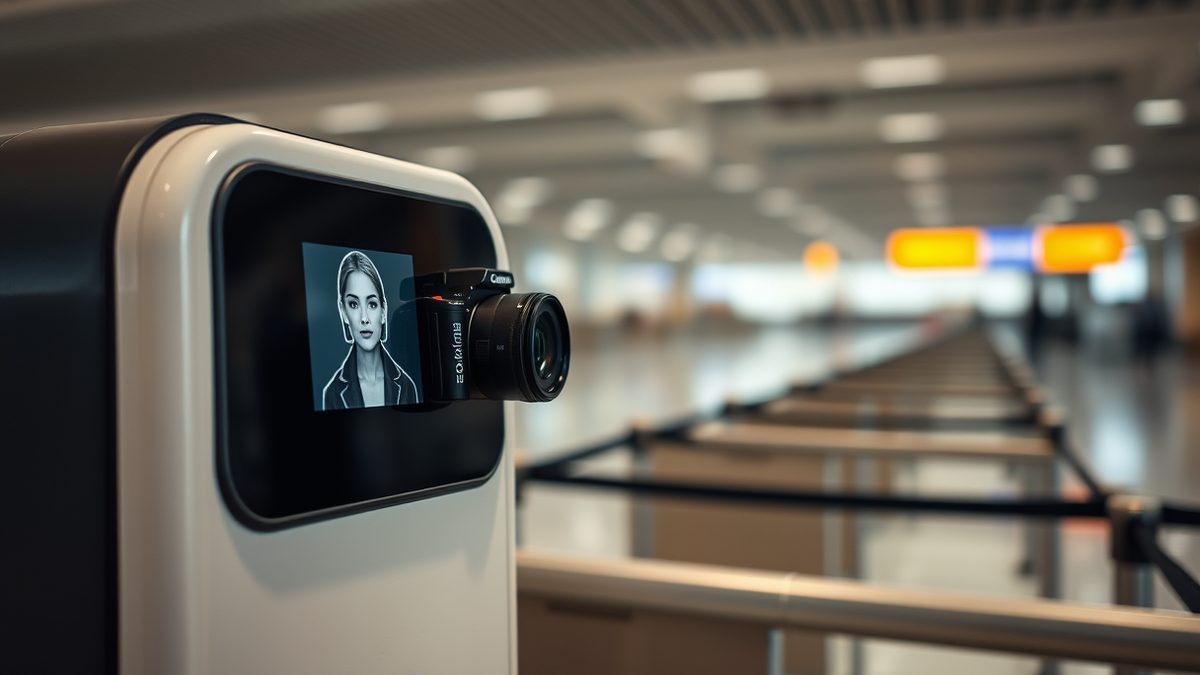
Bengaluru takes face checks to international departures
Kempegowda International Airport began a 90-day facial-recognition trial for international departures on 1 November 2026. Nomad Lawyer reported the pilot's details on 31 October.
For travellers the pitch is simple: verify once, then reuse that check at terminal entry, at security and, eventually, at the gate. Airports and airlines get throughput. Regulators get a question nobody has answered: whether one country's verified identity will ever satisfy another country's border agency, and no framework settles that yet. That third question decides how far this goes. A match made in Bengaluru is a convenience inside the terminal. It becomes infrastructure only when a border officer in another country accepts it, and nothing in the current rules requires that.
Eligibility is narrow. Only Indian citizens holding machine-readable e-passports qualify, and only on international flights operated by Air India or IndiGo.
The pilot links SITA SmartPath facial-recognition cameras to India's Digi Yatra ecosystem and to airline departure control systems. The first phase covers terminal entry and security gates, with a possible extension to boarding on selected flights. Digi Yatra already serves more than 26.5 million domestic users, Planet Biometrics reported. The international trial therefore starts from a large domestic base and a deliberately small eligible pool, since only e-passport holders on two airlines can use it.
None of this removes a border check. Passengers must still present physical passports and visas at Bureau of Immigration counters and at CISF security checkpoints.
BIAL chief technical officer George Fanthome said the launch involved government authorities, Digi Yatra, SITA, IndiGo and Air India. He called it a step towards more digitally enabled travel.
The first One ID certificates go to Hong Kong and Air New Zealand
Hong Kong International Airport and Air New Zealand became the first organisations certified under IATA's One ID programme on 28 October 2026. It is the first certification of its kind.
Hong Kong's Flight Token system has carried more than 93 million passengers since it launched in 2021, according to the airport operator. The operator also says more than 80% of departing passengers are eligible to use Flight Token at all key departure checkpoints. No independent measurement backs either figure. IATA's certification covers defined operational scopes and does not give an airline or airport permission to override another country's border rules. The limits matter more than the badge. A certified airport can move people faster inside its own terminal, and still cannot decide who enters the country at the other end.
The framework assesses contactless travel, biometric handling, privacy governance and the digital checking of travel eligibility. The groundwork came earlier. An April trial between Auckland and Hong Kong had passengers share verified identity through digital credentials, and IATA ran separate proofs of concept with Japan Airlines and IndiGo. Those were tests, not rollouts to all passengers or routes.
The vocabulary of passportless travel hides three different things. An ePassport is a physical passport with an electronic chip. A Digital Travel Credential is a standardised digital representation of passport data, and a wallet is only a way to hold or present it.
The queue is not the bottleneck
IATA released its 2026 Global Passenger Survey on 28 October in Macao. Its sharpest finding is not about queues.
43% of international travellers said they had avoided a destination in the past 12 months because of complex entry requirements. That is up from 33% a year earlier, and it is the highest level in the survey's history. Among those deterred, 53% named process complexity, while cost and privacy concerns each accounted for 17%. The barrier sits in government visa systems, before the first checkpoint, where airport investment does not reach. Airports can shorten a queue. They cannot shorten a visa process.
Adoption of the technology itself keeps climbing.
58% of travellers said they had gone through a biometric process at an airport in the past year. That compares with 50% in 2025, 46% in 2023 and 2024, and 34% in 2022. Among those users, 87% said they were satisfied or very satisfied, and 78% would share biometric data to skip document checks. Willingness runs from 84% in the Middle East to 70% in Europe. 75% want a single biometric record recognised at every airport and across a whole trip.
Geopolitical issues discouraged 59% of respondents from visiting a destination. Of that group, 72% cited security concerns.
IATA senior vice president for Operations, Safety and Security Nick Careen said at the Macao symposium that more passengers are meeting biometrics as they travel. They "like it and want more", he said.
Vendors and smaller airports buy in
Vendors are selling the same story. Thales says more than 600 airport touchpoints run its Fly to Gate system. The company says it delivers an average recognition time of two seconds and cuts boarding time by up to 30%. It says the system complies with IATA's One ID concept.
Smaller airports are buying too. Cluj-Napoca's Avram Iancu International Airport installed 12 SITA automated border control gates for RON 12,084,739 excluding VAT, six in departures and six in arrivals. One Border Police operator can monitor six gates at once, the Cluj County Council said.
Trust and governance remain unresolved
A workshop held by the Cambridge DPI Regulatory Programme and the Alan Turing Institute concluded that cross-border digital ID is technically feasible now. Governance and regulatory gaps are the hold-up.
Governance is particular to each country, which makes alignment with neighbours difficult. Security failures keep the trust question live. A cyberattack on Moldova's digital government infrastructure exposed data tied to about 750,000 national ID numbers. A breach of more than 41,000 personnel records at the U.S. Department of Homeland Security reportedly originated in an Okta identity management environment.
Political resistance is forming too. The European Commission's proposal to give border agency Frontex a social media monitoring mandate drew criticism from MEP Brando Benifei. He told POLITICO that a broad surveillance mandate "goes much further, placing online speech under a border agency's watch".
IATA's certification does not change any of that. A successful identity match still cannot replace a visa or an immigration decision.
Sources
14- 01Digital Passports and Airport Biometrics: What Changed in 2026—and What Travelers Still NeedEN
- 02Airport biometrics hit record high as visa complexity deters 43% of international travelersEN
- 03Kempegowda International Airport launches Digi Yatra trials for international departures - Planet BiometricsEN
- 04Thales redefines the airport journey with AI-powered biometrics - Singapore Economic Development Board (EDB)EN
- 05Avram Iancu International Airport deploys automated border control system, CAT III landing technologyEN
- 06Bengaluru Airport Trials SITA SmartPath for International Digi Yatra: Biometric Travel Guide 2026EN
- 07EU lawmakers slam new border force powers to surveil social mediaEN
- 08Biometrics and standards bring cross-border digital ID closer - Biometric UpdateEN
- 09Shaping the future of aviation security: advanced technology delivering greater security, efficiency and passenger comfort at Munich Airport - International AirEN
- 10How Beta Technologies Is Clearing the Runway for Electric FlightEN
- 11Inside Automotive DMS & OMS: Technology, Challenges & Power Solutions EN
- 12How smart airports are turning digital transformation into operational reality - International Airport ReviewEN
- 13Feature: Is the touchless airport tied in red tape? - Aviation Business NewsEN
- 14TechnoMile Recognized as a 2026 Inc. Power Partner Award WinnerEN
All figures and quotations in this text come from the sources listed below.
Content prepared by the editorial team with AI assistance.
Peter Lindqvist
Comments
0- No comments yet — be the first.