Spain's high-speed crash puts EU rail funding and maintenance under scrutiny
Spain's transport minister Óscar Puente was due before parliament on 3 November to answer for the Madrid-Seville high-speed corridor. A collision there on 28 October killed 69 people and injured more than 200.
 Peter LindqvistSport, cars and travel
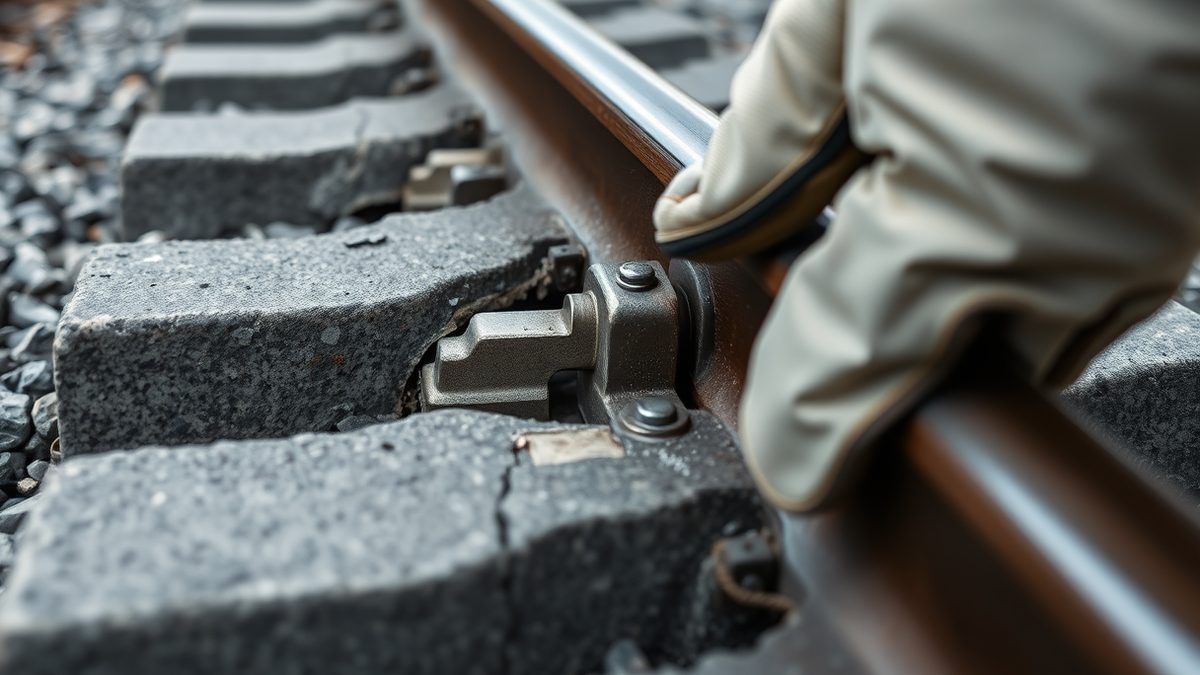
The 28 October crash near Urda involved a Renfe AVE train and an Iryo convoy. It was Spain's second fatal high-speed accident this year. 46 people died near Adamuz on 18 January.
Spain held three days of mourning and deployed more than 900 civil guard personnel from specialist units. Emergency workers kept searching the wreckage for missing people and for remains. Leaked audio of exchanges between drivers and the control centre appeared to show one train cleared to move while another had stalled ahead. Fátima Báñez, a former employment minister, was among the dead. Preliminary findings say the legacy German LZB signalling failed at 8.31am, 22 minutes before the collision. ERTMS Level 2, the system meant to replace it, was physically installed by June 2026. It still needs testing and authorisation, and will not be operational until early 2027, according to Puente.
For passengers, the practical question is what protects them on the corridor now. The money trail matters too.
Spain qualified for EU payment under Target 85 by proving it had awarded contracts, not delivered them. The €93.8 million ERTMS contract went to Thales España in October 2021, with a 52-month execution timeline that expired in February 2026. Under Milestone 87, Spain must certify contracts covering 1,400 km across the core trans-European transport network before execution-phase financing can flow. Those completion funds have not yet cleared the Commission's assessment. Puente rejected reports that Madrid had told Brussels the corridor was further along than it was. "The European Union is not deceived, it is provided with certificates of completion of works," he said. He has ruled out resigning. The opposition People's Party has demanded he go.
The crash has also pulled spending priorities into view.
Between 2018 and 2022 Spain allocated an average of €1.5 billion a year to high-speed rail infrastructure. That was more than France or Germany spent, according to European Commission data cited in a Politico analysis reported by Spotmedia. Only about 16% of the total went to maintenance, renewal and modernisation of existing lines. In France, Germany and Italy the share was between 34% and 39%. Adif, the state infrastructure manager, says maintenance has been adequate and it always met safety requirements.
Jaime Tamarit, a former European rail signalling certification laboratory director, was blunt. "If you have more train lines, you need more staff and have to spend more on maintenance," he said.
Cost pressure is shaping decisions elsewhere. On 3 November Trafikverket picked the cheapest of the alignments it studied for a stretch of the Norrbotniabanan. The 270 km coastal line aims to close a missing link in the EU's Scandinavian-Mediterranean corridor. The northern section has a budget of SKr37.6bn at 2025 prices and will be single track, a condition the government attached in July when it ordered cost cuts. Consultation on the Öjebyn to Rosviksbodarna stretch runs until 16 November, with a railway plan due in autumn 2027. The lobby group Norrbotniabanegruppen warned in August that passing loops may need to be closer together where demand is highest. "Today's savings must not create tomorrow's bottlenecks," it said.
In Spain, the political calendar adds pressure. Spain holds snap elections on 29 November.
Sources
28- 01EU funding for Spanish rail safety under scrutiny after latest high-speed crashEN
- 02What's wrong with Spain's high-speed rail network? Fatal crashes expose problems overlooked for yearsEN
- 03At least 68 killed in Spanish high-speed train crashEN
- 04Sweden selects lower-cost Norrbotniabanan route as budget tightensEN
- 05RFE/RL: EXPO, Belgrade on the Water and High-Speed Rail - What will happen to the projects of the former government? - vijesti.meEN
- 06The ETS Investment Engine: Scaling Europe’s Strategic E-fuel Market for Shipping & AviationEN
- 07Railway Bearings Market To 2035: High-Speed Rail and Urban Transit Drive Growth - News and Statistics - IndexBoxEN
- 08 Dimorphos in sight: Europe's Hera probe gets its 1st look at battered space rock (photo) EN
- 09Tesla cuts FSD’s speed margin from 50% to 10% over the limit in EuropeEN
- 10Food suppliers in UK hit by cyber-attacks after freezers targeted in EuropeEN
- 11Hanwha Q-Cells shifts focus to research and development in EuropeEN
- 12Supermarket fridges hit with cyberattacks across Europe — here's what's happeningEN
- 13Slovenia tenders solar-plus-storage projectEN
- 14Mercedes-Benz Is Giving Up On Its EV Charging Network In EuropeEN
- 15Portuguese AI startup Granter bags €1.6M to expand across EuropeEN
- 16Mistral CEO: Europe faces ‘complete trap’ without frontier AIEN
- 17How Europe’s battery passport could have a big impact on US e-bikesEN
- 18Record Demand Catches (Some) OEMs with Their Pants Down — Europe September 2026EN
- 19Bull and Schwarz Digits Sign MOU to Develop European AI InfrastructureEN
- 20Analysis of a cheap Android projector that ships with a malware loader for c2EN
- 21European tech weekly recap: Over €1.3B invested across 60+ dealsEN
- 2230,000-year-old DNA reveals Ice Age Europeans were far more connected than we thoughtEN
- 23Hyundai IONIQ 3 Named European Car of the Year 2027 FinalistEN
- 24New Wave of Refrigeration Cyberattacks Hits Supermarkets Across Europe, Forcing Stores to Pull FoodEN
- 25Eurostar announces next Chief Executive Officer - Railway Gazette InternationalEN
- 26Forget AI, Europe has a plan to win the next tech revolutionEN
- 27Scaling European Battery Recycling via the Circular Economy ActEN
- 28What Europe Can Learn From China If It Wants To Save Its IndustryEN
All figures and quotations in this text come from the sources listed below.
Content prepared by the editorial team with AI assistance.
Peter Lindqvist
Comments
0- No comments yet — be the first.