China's battery plan targets solid-state scale in 2030 as export fight widens
China's Ministry of Industry and Information Technology released a five-year battery industry plan on 28 September that aims for initial large-scale use of all-solid-state batteries by 2030, CnEVPost reported.
 Dr. Amara PatelEconomy, business and world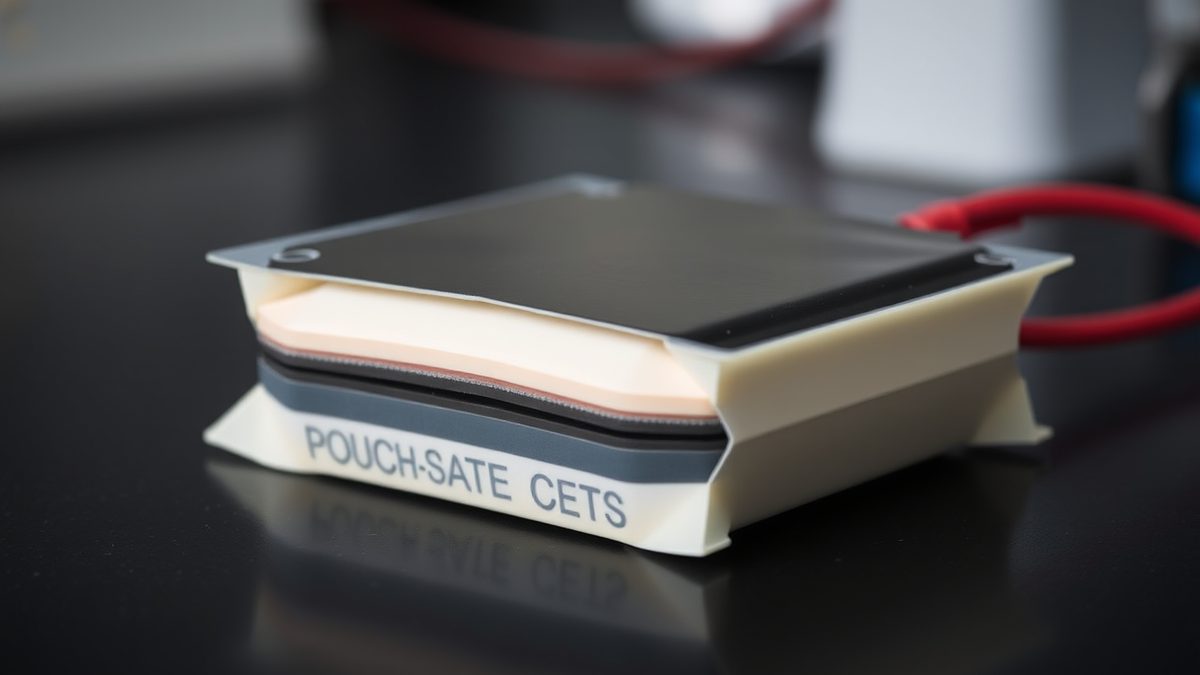
Seven government agencies issued the document, dated 14 September. They include MIIT, the National Development and Reform Commission and the Ministry of Transport. It covers 2026 through 2030 and sets targets for advanced electrode materials, new electrolytes and high-end auxiliary materials, according to CnEVPost.
Two numbers stand out. Long-life lithium batteries are to reach 15,000 charge-discharge cycles, and leading manufacturers are told to hold product defect rates at parts-per-billion level.
Those are factory goals, not laboratory ones, and that is the point. On solid-state cells, the plan calls for faster breakthroughs in ionic conductivity and cycling stability while bringing costs down. CnEVPost lists the specific measures: better interfacial contact, longer cycle life, pressure-system engineering and larger production runs of high-performance solid electrolytes. The document also wants high-voltage, high-capacity cathode materials paired with new lithium-metal anodes and anode-free designs, plus equipment such as isostatic presses.
China wants a supply system built on lithium batteries, with sodium and flow batteries alongside. Sodium gets attention for cost, safety and resource availability, and the plan asks for cold-resistant, high-energy-density power cells and long-cycle energy storage units. Consolidation is on the table too: the document backs corporate mergers and restructuring, and faster development of domestic lithium and cobalt resources.
Recycling and traceability come with teeth. Companies must build used-battery collection systems sized to their sales volumes, and are encouraged to build recycling capacity in major export markets where conditions permit. The plan proposes a digital identity management system for products including new energy vehicle power batteries, and floats internationally accepted battery passport arrangements and mutual recognition of carbon footprint data.
The battery plan follows China's 11 September release of a five-year development plan for the intelligent connected NEV industry, which targets a 70 percent share for NEVs in domestic new passenger vehicle sales by 2030. That earlier automotive plan also called for tighter management of power battery production capacity. The new document sharpens the technology and manufacturing priorities.
Not everyone expects a fast march to solid-state. CATL's chairman said solid-state batteries must still clear three main hurdles before mass production, CnEVPost reported in June. The same outlet noted that Li Auto's solid-state timeline points to limited vehicle use in 2027 or 2028.
So the 2030 goal is about industrial scale, and the intervening years are where the arguments sit. The policy lands in a broader fight over technology and exports. On 10 September, a US prosecutor opened the Huawei trial in Brooklyn federal court by describing the company as a criminal enterprise that stole trade secrets from five American firms, including router operating system source code from Cisco and a phone-testing robotic arm from T-Mobile. Huawei's lawyer, Brian Heberlig, told jurors the case was "about competition, not conspiracy. Innovation, not theft", and said the Cisco and T-Mobile incidents were actions by individual employees.
"Theft, lies, cover-up," Taylor Stout, a trial attorney from the US Department of Justice, said in the government's opening statement. "For 20 years, that's how Huawei, a massive Chinese telecommunications company, victimized American companies and abused the American financial system."
The Guardian reported that a Chinese foreign ministry spokesperson said Beijing "firmly opposes the US side's suppression and containment of Chinese enterprises" and supports Chinese firms in safeguarding their legitimate rights and interests. The trial is expected to last three months.
Batteries are the quieter half of this contest. China already dominates refining and production of battery minerals including lithium, cobalt, manganese and graphite, and the RNZ analysis notes it accounts for 90 percent of world battery production. A plan that pushes solid-state cells from research to factory floors is a bid to keep that position as the next chemistry arrives.
Sources
3- 01China unveils 5-year battery plan targeting large-scale all-solid-state use by 2030EN
- 02How China won the car wars with cheap EVs loaded with technologyEN
- 03China's Huawei branded a criminal enterprise as tech firm's US trial opensEN
All figures and quotations in this text come from the sources listed below.
Content prepared by the editorial team with AI assistance.
Dr. Amara Patel
Comments
0- No comments yet — be the first.