China's tech export machine: cars, batteries, code and drugs
China's technology exports are no longer just cheap goods. They now span electric cars, batteries, open-source software and licensed drugs, and the countries receiving them are split between buying and blocking.
 Dr. Amara PatelEconomy, business and world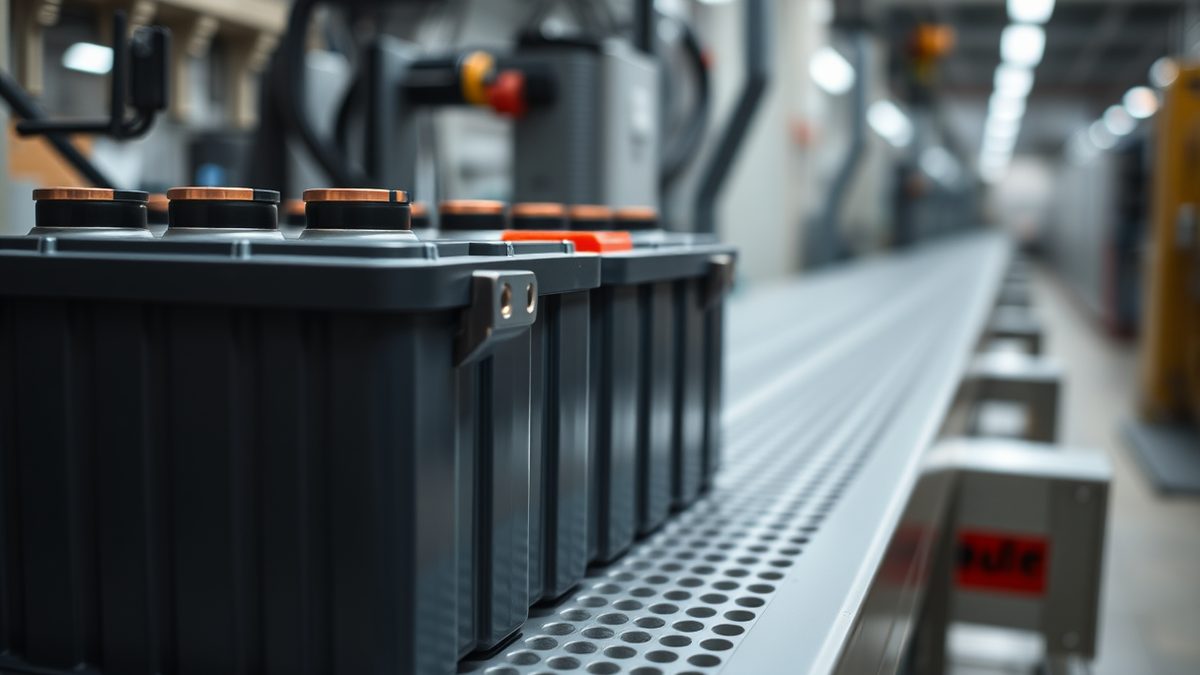
In June, the BYD Zhengzhou docked at the Port of Melbourne carrying 5,000 newly built electric vehicles. Ian Verrender, chief business correspondent at ABC News, writing for RNZ, called it the largest single EV shipment ever sent to Australia.
Australia matters here because it has no domestic car industry and few trade barriers. That makes it a clean test of what consumers actually buy. In the first half of this year, Toyota's Australian sales fell 21 percent, Mazda's 17 percent, Subaru and Mitsubishi 25 percent each and Nissan 32 percent, Verrender reported. Over the same period, BYD rose 124 percent, Chery 77 percent and Geely 495 percent, all from much smaller bases. The ship arrived as Chinese brands were already rewriting the country's sales tables. The numbers show how quickly the tables turned.
The shift is not only about price. Riz Akhtar, founder of the research group carloop, told ABC News he drives one himself: "It costs around $40,000. It's quiet, it's comfortable, drives well and is loaded with technology." An equivalent Japanese or European model would cost more than 25 percent more, he said, adding: "Consumers aren't stupid. They're not going to spend money they don't need to."
How the car lead was built
Verrender traces the strategy back decades. China pushed battery firms such as BYD into automobiles, subsidised the shift and built a domestic supply chain for lithium, cobalt, manganese and graphite, plus almost all of the world's anode and cathode production. South Korea chose the more expensive nickel-magnesium-cobalt chemistry. China went with cheaper lithium-iron-phosphate. The same piece reports that China now accounts for 90 percent of global battery production.
Japan's response has been public and bleak. Toyota vice-chairman Koji Sato told an annual supplier meeting in March: "Unless things change, we will not survive," and called for more cooperation between Japanese producers. In Europe, Volkswagen chief Oliver Blume has flagged possible lay-offs of up to 100,000 workers. VW's share price has halved since his predecessor was removed four years ago, the article says.
"Unless things change, we will not survive." Koji Sato, Toyota vice-chairman, at a supplier meeting in March
Australia also shows how fast the fuel mix can move. Last month, almost a quarter of all cars sold there were fully electric, up from 7 percent a year earlier. Hybrids now put EVs level with petrol and diesel. Steve Bragg of Pitcher Partners told ABC News the Iran war helped shift the dial. Five years ago, he noted, most EV buyers were motivated by the environment.
Open source as a sanctions workaround
The export story extends well beyond hardware. Writing in The Conversation, a China expert and open-source researcher argues that Beijing has folded open-source development into national technology strategy, and that Chinese companies are now shaping how such technology is licensed and deployed.
Early efforts were defensive. A government-run institute built Red Flag Linux as an alternative to Windows, and a military university later created Kylin for the People's Liberation Army. After Washington blacklisted Huawei, Google pulled its licensed Android services. Huawei used Android's open-source code to keep its phones running, then built HarmonyOS NEXT and released an open-source version, OpenHarmony.
Today the state-guided OpenAtom Foundation backs domestic platforms, and Gitee offers a Chinese alternative to GitHub. Domestic systems such as openKylin and openEuler are described as central to securing China's IT infrastructure. Work on the RISC-V chip standard is meant to cut dependence on foreign intellectual property.
The licensing details matter for anyone outside China. The article notes that bilingual licences developed under government guidance, including the Mulan Permissive Software License 2.0 and the OpenAtom Model License 1.0, are written in English and Chinese. They state that the Chinese version prevails where interpretations conflict, especially in Chinese jurisdictions.
Washington argues with itself
Chinese AI models have turned that technical question into a political fight inside the White House. MIT Technology Review reported on 20 July that Moonshot's free model Kimi, released the week before, appeared to rival paid models from OpenAI and Anthropic, and that it split advisers to President Donald Trump into factions.
David Sacks, Trump's AI and crypto "czar" until March, called Anthropic's models "lobotomized" and "woke". On 19 July he criticised AI companies that "want the government to eliminate their open source competition". Emil Michael, a top Pentagon official, called OpenAI's new head of strategic futures a "supreme village idiot", after former Trump adviser Dean Ball described a new White House review of model security as a "de facto licensing regime for frontier AI".
According to the same report, export controls have loosened. Trump has allowed Nvidia to sell more chips to China in exchange for a government cut, and officials allege some smuggling. It is not clear which chips trained Kimi. OpenAI and Anthropic have accused Chinese firms of distillation, training on other models' outputs. In April, the administration announced efforts to curb the practice.
Batteries, and the cost of cutting China off
Batteries are where the policy bite is sharpest. MIT Technology Review reported on 10 September that a late-August executive order declared a national emergency and effectively banned Chinese batteries from grid-scale storage. It covers "any foreign-produced bulk-power system electric equipment" that poses a national security risk, including inverters and transformers.
Shan Tomouk of Benchmark Mineral Intelligence called an outright ban "a bit of a surprise" that "does create a bit of concern for domestic players in the US". BloombergNEF expects near-term delays as developers wait for Department of Energy guidance due by the end of the year. Isshu Kikuma of BloombergNEF said some projects may need pricier cells from elsewhere and that "worst case, those projects could get canceled".
Earlier tools are still in force. Import taxes on batteries rose to 25 percent in January from 7.5 percent. Legislation requires that from 2026, 55 percent of the cost of materials for new storage projects come from outside China and other restricted countries to qualify for tax credits. The US may have enough domestic capacity around 2030, the article says, though supply may not fully meet demand until later in the 2030s.
Drugs and the next export wave
Health technology is following the same path. Rest of World reported on 24 September that more clinical trials are now run in China than in the US, and that China accounts for half of global drug licensing deals. Pfizer is among the Western firms committing billions to license cancer candidates from Chinese companies such as 3SBio and Innovent Biologics.
Ruby Wang, a physician and consultant whose book China Cure is forthcoming, told Rest of World that China's advantage came from decades of investment, tax incentives and returning talent, plus a patient population where "no disease is rare". She said China's share of global out-licensing deals could reach 60 percent this year, and that Chinese firms remain weaker at commercialising drugs, which is why they license to partners like Pfizer.
She also pushed back on the security framing. "According to World Trade Organization agreements, medicines ethically and legally should not be subject to tariffs because access to them is a human right," she said, calling the normalisation of security-focused language "very dangerous".
One more front is already open. China's new Five-Year National Health Plan calls for breakthroughs in brain-computer interfaces, and the broader plan lists BCI as a "future industry". In March 2026, Neuracle's NEO system won the world's first commercial approval for an invasive BCI medical device, Wang said. Meanwhile, Huawei's US trial opened in Brooklyn federal court in September. A Justice Department attorney described the company as a criminal enterprise that stole trade secrets from five US companies, and its lawyers replied that the case is "about competition, not conspiracy".
Sources
6- 01How China won the car wars with cheap EVs loaded with technologyEN
- 02China is shaping the future of open-source technology, including AIEN
- 03China's AI models have Trump's AI world at war with itselfEN
- 04Can the US battery market untangle from China?EN
- 05China is excelling in health tech. That's good news for the worldEN
- 06China's Huawei branded a criminal enterprise as tech firm's US trial opensEN
All figures and quotations in this text come from the sources listed below.
Content prepared by the editorial team with AI assistance.
Dr. Amara Patel
Comments
0- No comments yet — be the first.