China Signals It May Let Alibaba and ByteDance Buy Nvidia's RTX Pro 5500
China's tech ministry has told some companies it intends to approve purchases of Nvidia's new RTX Pro 5500 workstation chip, according to a report from The Information published on Sunday, 27 September.
 Dr. Amara PatelEconomy, business and world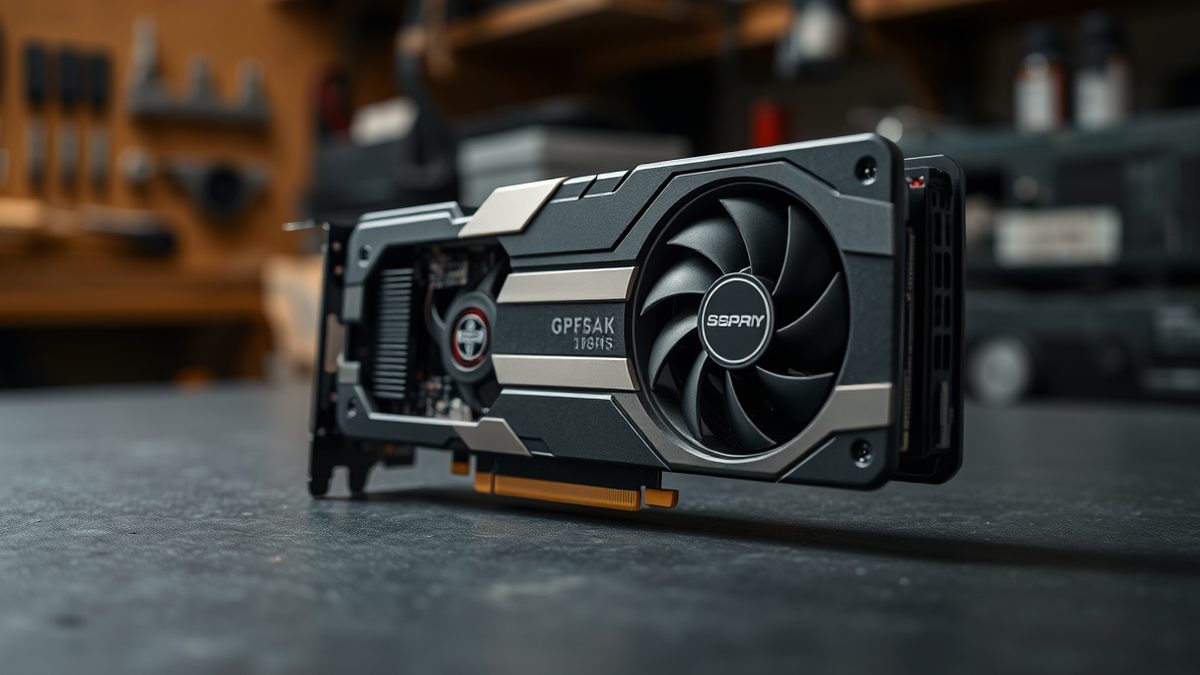
The Next Web relayed the report on 27 September. It cites two people familiar with the matter. The ministry recently asked some firms how many of the chips they plan to buy and what for, then told those companies it intends to approve the purchases. Reuters said it could not immediately verify the report. TNW said it had not independently verified it either. By Sunday, none of Nvidia, Alibaba, ByteDance or the ministry had commented publicly.
The RTX Pro 5500 is a workstation graphics card Nvidia unveiled this month. It is built on the company's Blackwell design and carries 84GB of memory. That specification matters for how the chip sits against export rules. It is a workstation part, not a datacenter accelerator, and TNW describes it as a chip expected to dodge US curbs.
A narrow opening, not a reversal
Context matters here. Two separate sets of rules have limited Nvidia's sales in China: US export controls and Chinese government curbs designed to support domestic chipmakers. The RTX Pro 5500 report, if accurate, would loosen only the second set. It says nothing about Washington changing its position.
There is precedent for the awkward middle ground. Earlier this year, the US cleared sales of Nvidia's H200 chips to Chinese firms. But ByteDance and Tencent were told to keep the first shipments in Hong Kong rather than bring them into mainland China, TNW reported in August. That is not a ban and not a green light. It is a holding pattern, and it explains why a report about workstation cards is being read as a signal rather than a policy.
The Information reported the news on Sunday, citing two people familiar with the matter. Reuters said it could not immediately verify the report.
The timing is not accidental. US export controls were not a key topic at the Xi-Trump summit, according to the South China Morning Post, which reported on 26 September that the issue took a back seat. A day later, Chinese firms were being asked how many RTX Pro 5500s they wanted. Beijing has reason to keep the pressure on Washington without making chip policy the headline of a diplomatic meeting.
China's own targets are aggressive. SemiEngineering's Chip Industry Week In Review, published on 25 September, reports that the SIA says China is targeting 80% chip self-sufficiency by 2030. That target requires chipmakers to use at least 50% domestic semiconductor manufacturing equipment and gives qualifying domestic products a 20% price advantage in government procurement. The SIA urged US officials to address those barriers through negotiations and coordinated action with allies. Read that alongside the RTX Pro 5500 report and the picture is not one of surrender. It is one of selective buying while domestic capacity scales.
Domestic alternatives keep arriving
Alibaba is not waiting. The same SemiEngineering roundup reports the company unveiled its Zhenwu V900 AI accelerator, with 216GB of memory and 1,200GB/s inter-chip bandwidth. Alibaba says the chip delivers 3 times the performance of its M890 predecessor, with mass production planned for Q1 2027. The launch expands China's domestic options for large-scale AI training and inference amid tighter access to leading US chips.
Memory is moving too. CXMT announced that its fifth-gen G5 DRAM technology entered mass production, along with a new LPDDR5X product line. The company says the process reaches an 11.95nm active-area half-pitch and yields at least 50% more dies per wafer than its previous generation, though it did not disclose actual manufacturing yields. CXMT is also preparing an R&D production line for NAND flash in Beijing, according to Reuters. That could expand the DRAM maker into a market led domestically by YMTC. YMTC reportedly could begin LPDDR5 trial production as early as year-end.
None of that makes an RTX Pro 5500 purchase contradictory. A workstation card for engineers and researchers is a different product category from a training accelerator. Buying one does not undercut the other.
The enforcement problem next door
The same week brought a reminder of how hard these controls are to police. On 24 September, Tom's Hardware reported that Dylan Patel, head of semiconductor analysis firm SemiAnalysis, said China's Puzhi Electronic Technology is crowdfunding development of a system based on AMD's Zynq UltraScale+ XCZU47DR RFSoC, a US export-controlled dual-use component. Patel called for a treason investigation into AMD.
"AMD found a business opportunity in dumping U.S. military chips for 1/4 of the cost in China," Patel wrote in an X post, according to Tom's Hardware. "U.S. list price is $36K for this chip, with $4K to 5K to U.S. companies at volume, but it is getting quoted $1K in China to crowdfunding campaigns."
AMD denied selling or shipping the chips directly into the restricted region. "AMD is committed to full compliance with all U.S. and global export regulations and has a clear policy requiring our distributors, resellers, and customers to do the same," a spokesperson told Tom's Hardware. "Any shipment into restricted regions is a direct violation of our policy. This recent instance is unrelated to any direct AMD sales or shipments." The company said it investigates all suspected diversion cases and will report any violation of law to relevant authorities and cease all business with the company.
That case is unresolved and contested. It also shows why a report about a Chinese ministry asking companies for purchase volumes is being treated cautiously by everyone involved.
Design work continues regardless
Further from the policy fight, the technical pipeline keeps moving. SemiEngineering reported on 25 September that researchers at TU Munich, the University of Modena and Reggio Emilia, and Applied Materials published a paper titled "System-Technology Co-Evaluation of A7 CFET and A10 NSFET Technologies from Cell Parasitics to Chip Reliability." The work models parasitic resistance and capacitance, thermal behaviour and bias temperature instability aging across an AI accelerator design flow.
Separately, SemiEngineering reported on 24 September that EDA vendors are reworking mature tools for 3D-ICs and multi-die systems, with agentic AI adding a layer of analysis on top. "Today, nearly every AI accelerator has a process threshold where the hardest problems no longer live inside the chip. They live at the system boundaries," Artour Levin, vice president of AI silicon engineering at Microsoft, told the publication. The tools and the chips are being redesigned on the assumption that access to any single vendor's silicon will remain constrained. That assumption has not changed this week.
What changed is narrower: Beijing appears willing to let two of its largest firms buy a workstation card. The Information's report is unverified, and every company named has stayed silent. But for Nvidia, whose China sales have been squeezed from both sides, even a partial reopening of the door is the first piece of good news in months.
Sources
5- 01China reportedly may let Alibaba and ByteDance buy new Nvidia chipsEN
- 02Analyst Calls for AMD Investigation over Restricted Chips in ChinaEN
- 03Chip Industry Week In ReviewEN
- 04Comparing A7 CFET and A10 Nanosheet FETs From Parasitics to Chip Reliability (TUM, UNIMORE, Applied Materials)EN
- 053D Chips Push EDA Into New TerritoryEN
All figures and quotations in this text come from the sources listed below.
Content prepared by the editorial team with AI assistance.
Dr. Amara Patel
Comments
0- No comments yet — be the first.