Copyright fights in 2026: Fender in court, CanLII settles, and a skater's Minions reprieve
A German retailer is suing Fender over its Stratocaster cease-and-desists. A Canadian legal database and an AI startup have settled their own copyright case. Both stories landed within months of each other.
 Helen MarshCulture, food and lifestyle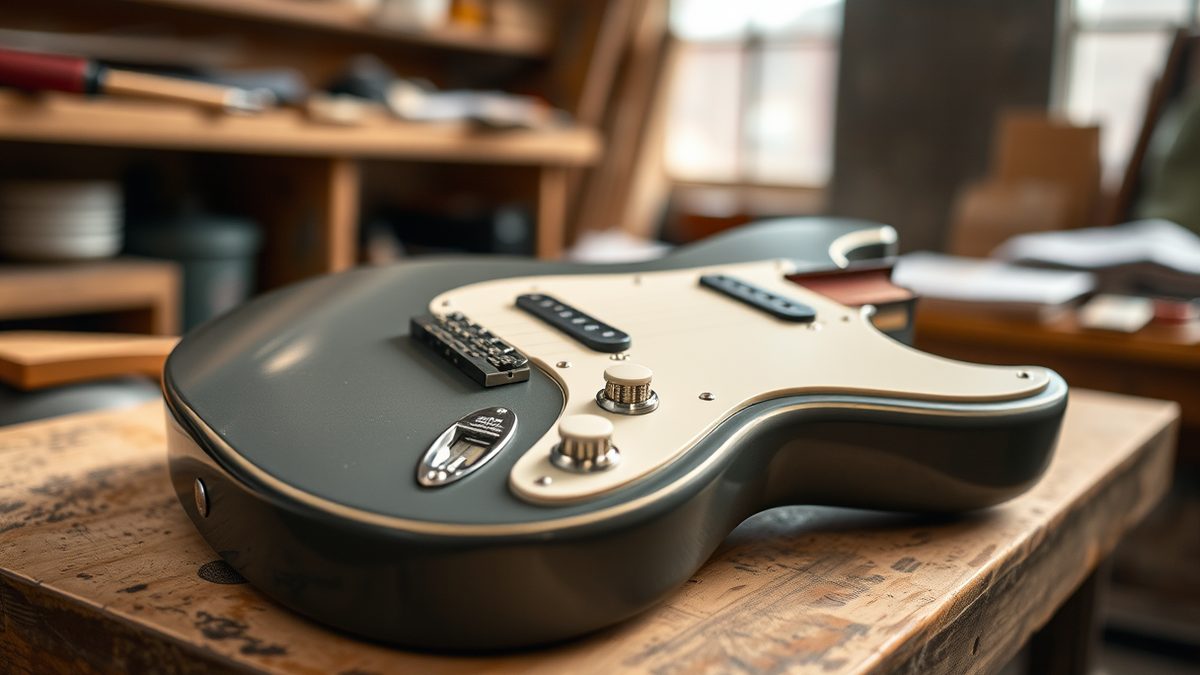
Thomann calls itself the world's largest music retailer. It is now taking Fender to court over the guitar maker's recent wave of cease-and-desist letters. Guitar World reported on 22 June that Thomann is the first company to sue Fender in the ongoing Stratocaster copyright dispute.
The retailer's in-house brand, Harley Benton, was among the recipients of a cease-and-desist. Thomann says it is acting for other brands and smaller manufacturers too. It named Tyler, Tom Anderson, Suhr, LsL, Maybach, Pensa, FGN and PRS as companies it believes are now at risk. The retailer was founded in 1954, the same year Fender launched the Stratocaster, and has carried the brand for more than 70 years. "We used to be a small music store ourselves and know exactly where we have come from," CEO Hans Thomann said in a statement on the company blog. "Diversity, fairness and respectfully dealing with each other have always been part of our philosophy. Many of those affected do not have the financial and legal means to conduct such a legal dispute."
Dusseldorf ruling behind the letters
The cease-and-desists followed a default ruling from the Regional Court of Dusseldorf in March. According to Guitar World, that ruling granted "enforceable rights against any guitars using the Stratocaster body shape" in the EU. In May, Fender sent letters to firms it believed were producing Strat copies, among them family-owned LsL Instruments and PRS Guitars. Fender has since framed its actions as "working directly with companies to find practical paths forward." Guitar World reported backlash from the guitar community, with several prominent YouTubers criticising the company and some cutting ties.
Thomann's legal argument tracks that of industry lawyer Ronald Bienstock: the Stratocaster is not a copyrightable work of art, as the Dusseldorf court has ruled. The design and its subsequent success come down to ergonomics instead, and that is what led to the many variations that followed. "The history of the Stratocaster has not been written by one company alone," Thomann's statement reads. "We urge Fender to stop issuing cease and desist demands against manufacturers, distributors and dealers and to return to a fair, cooperative partnership."
That case is still running. A separate one has closed.
CanLII and Caseway settle
The Canadian Legal Information Institute and Vancouver-based AI startup Caseway AI have settled their copyright dispute, BetaKit reported on 26 March. CanLII filed the lawsuit in the British Columbia Supreme Court in November 2024. It alleged that Caseway built a business by wrongfully taking CanLII's work through a bulk and systemic download from its online database, without permission or compensation. Caseway launched in late 2024 with an AI chatbot pitched as a legal research assistant that could fetch, explain and summarise Canadian legal information and court decisions.
The settlement terms are confidential. A CanLII blog post said the organisation "continues its work providing broad public access to primary legal information," while Caseway "continues developing technology solutions for organizations that operate in complex, document-heavy environments." The post added that each side will move forward independently and both consider the matter fully and finally resolved, and that it would serve as the only public comment from either organisation. Caseway, in its own news release, put a different frame on the outcome. "The settlement resolves all outstanding claims and establishes a path forward that reflects the realities of modern AI development," the company said. "For the first time in the legal tech space, a dispute of this scale between a legal data institution and an AI company has concluded with a forward-looking resolution rather than a prolonged legal battle."
Caseway CEO Alistair Vigier had said in January that the parties had "resolved the major issues" in the case. BetaKit noted that the dispute was one of many legal actions against AI companies. Canadian news publishers are suing OpenAI over ChatGPT training, and Canadian LLM developer Cohere faces a separate suit from another group of publishers.
Music rights disputes have also been landing in unusual places.
Minions on ice
Spanish figure skater Tomàs-Llorenç Guarino Sabaté was spared a last-minute scramble to redesign his Olympic short programme. A copyright dispute had threatened to block his use of music from the Minions franchise at the Milano Cortina Winter Games, the Guardian reported on 3 February. The six-time Spanish national champion, set to make his Olympic debut in the men's singles, said he learned late last week that the routine he had performed throughout the 2025-26 season would not be cleared for Olympic use. He had submitted the music through the International Skating Union's recommended rights-clearance process months earlier, and he had competed with the programme without issue during the season, including at last month's European championships in Sheffield.
On the Tuesday, the 26-year-old thanked fans after Universal gave him permission to use the Minions soundtrack. "Huge THANK YOU to everyone who reposted, shared and supported. Because of you Universal Studios reconsidered and officially granted the rights for this one special occasion," he wrote on Instagram. "There are still a couple things to be tied up with the other 2 musics of the programme but we are so close to accomplishing it!"
The Guardian reported that the routine, built around music from the animated film franchise, had become a signature for the Barcelona native, who regularly performed in a yellow shirt and blue overalls reminiscent of the Minions characters. The skater will compete in the men's singles event, scheduled to begin on 10 February at the Milano Ice Skating Arena.
His case fits a pattern. The ISU director-general, Colin Smith, told the Guardian at last year's world championships in Boston that the problem is structural. "It's a complex issue, frankly, because the music industry has no common clearance platform," Smith said. "There are multiple buckets of rights, and within those buckets the clearance process isn't done on a single platform. Tracking tools have improved, but the facilitated process just isn't there."
Smith said he had held direct discussions with major rights-holders about building something more workable. He said the ISU was pursuing a "multi-pronged approach" that included work with an existing platform handling rights issues across other sports. Asked whether the ISU could coordinate with sports such as gymnastics and artistic swimming, he said: "Absolutely, figure skating is one of many affected sports. We are one of the largest in terms of the Winter Olympics, and we are working with the IOC as well, together with the music industry, to find a solution."
The Canadian ice dancers Marie-Jade Lauriault and Romain Le Gac learned late last year that two Prince songs planned for their 1990s-themed rhythm dance could not be cleared for Olympic use, despite being approved for the rest of the season. At the Beijing Olympics in 2022, the American pairs champions Alexa Knierim and Brandon Frazier were hit with a copyright lawsuit over their use of a cover version of House of the Rising Sun. The case was later settled privately for an undisclosed sum understood by the Guardian to be around $1.4m.
Not every dispute needs a courtroom. Some end with a bulk download, a default ruling, or a post on Instagram.
Sources
3- 01Music retailer sues Fender over C&Ds in Stratocaster copyright disputeEN
- 02Online legal database CanLII and AI startup Caseway settle copyright disputeEN
- 03Figure skater saved from scrapping Olympic routine after Minions music copyright disputeEN
All figures and quotations in this text come from the sources listed below.
Content prepared by the editorial team with AI assistance.
Helen Marsh
Comments
0- No comments yet — be the first.