Data centre power and cooling costs move to the centre of site approval fights
US states opened a coordinated push in late September 2026 to make data centre developers pay for grid upgrades and disclose water use, according to Data Center Knowledge, ending the era when a power contract alone could green-light a project.
 Grace OkonkwoAI, models and technology
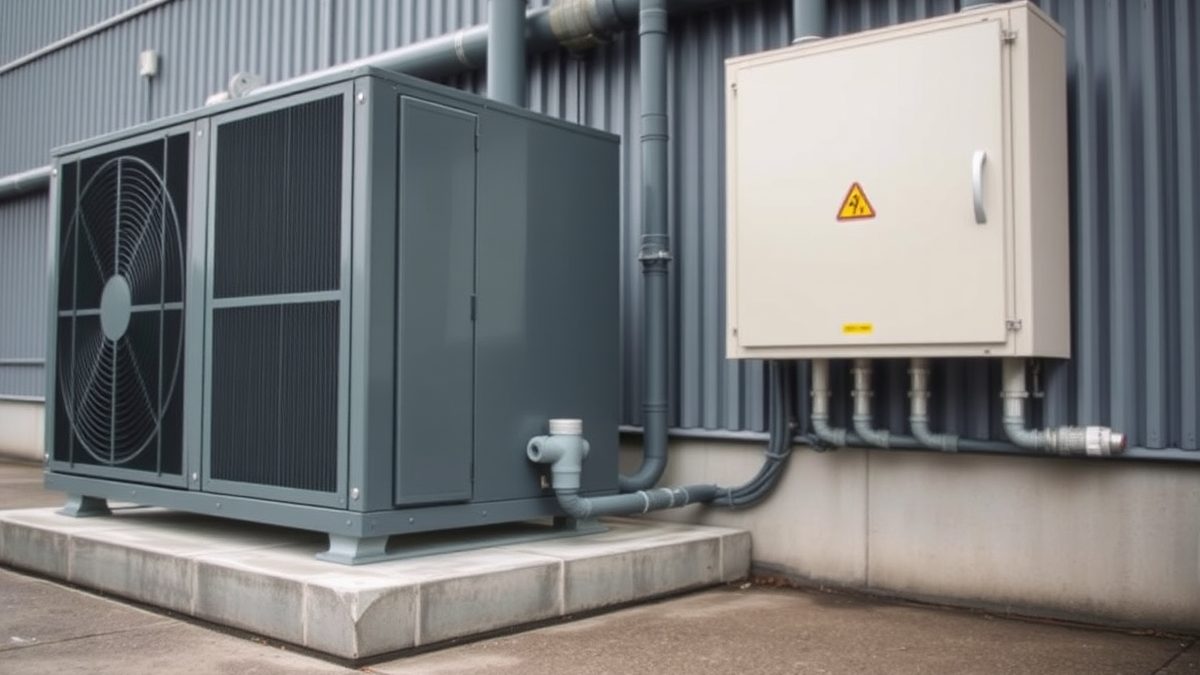
The change landed across five states at once. Governors, utility commissions and environmental regulators in California, Texas, New York, Massachusetts and New Jersey moved in late September, Data Center Knowledge reported on 5 October. Their message: a utility power commitment no longer guarantees approval.
For anyone building, buying or regulating capacity, the price of a site now includes grid upgrades, water reporting and local consent. What the new rules cost in practice is not yet public. No state has published a per-megawatt figure.
California's package, which includes AB 1577, AB 2383 and SB 887, requires developers to cover the full incremental cost of the grid upgrades their facilities need. It also shields low-income residential ratepayers from the resulting rate increases. Massachusetts Governor Maura Healey's Executive Order 658 applies to large data centres with peak demand above 25 MW. It makes them bear all associated energy infrastructure costs, plus fund ratepayer protection if they do not meet clean power obligations directly. In Alabama, the Public Service Commission has opened proceedings requiring Alabama Power to show that large-load contracts recover incremental costs before they are approved. Pennsylvania's Public Utility Commission is revisiting ratemaking and emergency load-control rules amid a capacity shortfall in the PJM market. Large energy users on Portland General Electric in Oregon already face an average 29% rate increase under the state's POWER Act.
Water is the faster trigger. Data Center Knowledge reported that water consumption has become the most immediate statutory cause of project halts. Cooling is resource-intensive, and the numbers are now public.
Design choices are part of the argument. Microsoft first applied what it calls biomimicry at a site in Noord-Holland in 2022, planting 150 native trees and more than 2,000 square metres of shrubs and grasses. It has since extended the practice to more than 20 sites in the US and Europe, Data Center Knowledge reported on 5 October. Kaitlin Chuzi, Microsoft's director of global land strategy, told the publication the aim is "healthier soil, better stormwater management, and stronger habitat for local species" alongside a better viewshed. The UK government announced a national Data Center Design Challenge with the Royal Institute of British Architects on 11 June.
Power supply is tightening at the same time. Canary Media reported on 5 October that about 50 million electric motors in US buildings draw electricity equal to nearly a third of national demand. Only 16% of industrial motor systems and 4% of commercial motors use variable frequency drives, according to a 2021 Lawrence Berkeley National Laboratory market report. Neal Elliott of the American Council for an Energy-Efficient Economy told Canary Media the controllers can cut a motor's energy use by around 40% to 60%. Toyota installed them on more than 200 motors at its Georgetown, Kentucky plant in a $1.25 million pilot in 2015 and saved more than $700,000 a year in electricity, the publication reported.
Builders are also testing whether density beats sprawl. A proposed 20-storey data centre tower in downtown Kansas City, designed by Skidmore, Owings & Merrill for Revitalization Unlimited, would sit on about 0.23 acres and support 24 MW of IT load, Data Center Knowledge reported on 5 October. Steve Austin, the developer's founder and CEO, put total development cost at $183 million, or roughly $1,300 per square foot. About $107 million of $167 million in hard construction costs would go to mechanical, electrical, plumbing and fire protection. Only two of the 20 floors would hold computing equipment.
Supply chains are moving too. Nikkei Asia reported on 5 October that Toshiba plans to double hard disk drive production capacity for AI data centres within fiscal 2027 from its 2025 level. The expansion of its Philippine plant would be its first major HDD investment in about five years.
None of this settles who pays. The state rules target grid costs, the water rules target disclosure, and the local fights target appearance. A developer can now clear all three on paper and still lose a year to appeal.
Sources
9- 01Beyond the Megawatt: Why Data Center Site Selection Is Now a Three-Front BattleEN
- 02Can Data Center Design Choices Change Public Acceptance?EN
- 03Vertical Data Centers Face Cost-Proximity Trade-OffsEN
- 04This hidden device could free up gigawatts of power for the US gridEN
- 05Toshiba to double hard-disk drive supply to fill AI chip memory gapEN
- 06Google Accused of Felling 300 Hectares of Forest for a Finnish Data CentreEN
- 07Equinix data center spills thousands of gallons of diesel in Hackensack RiverEN
- 08Omfattende uautoriseret adgang til borgeres CPR-oplysningerEN
- 09CPR data breach exposes personal details of 8.8 million people in DenmarkEN
All figures and quotations in this text come from the sources listed below.
Content prepared by the editorial team with AI assistance.
Grace Okonkwo
Comments
0- No comments yet — be the first.