Energy prices force Playmobil to end German production as Europe's industry feels the heat
The Horst Brandstätter Group is ending production of Playmobil figures at its Dietenhofen plant in Bavaria, cutting around 350 jobs. The company blames high energy prices.
 Dr. Amara PatelEconomy, business and world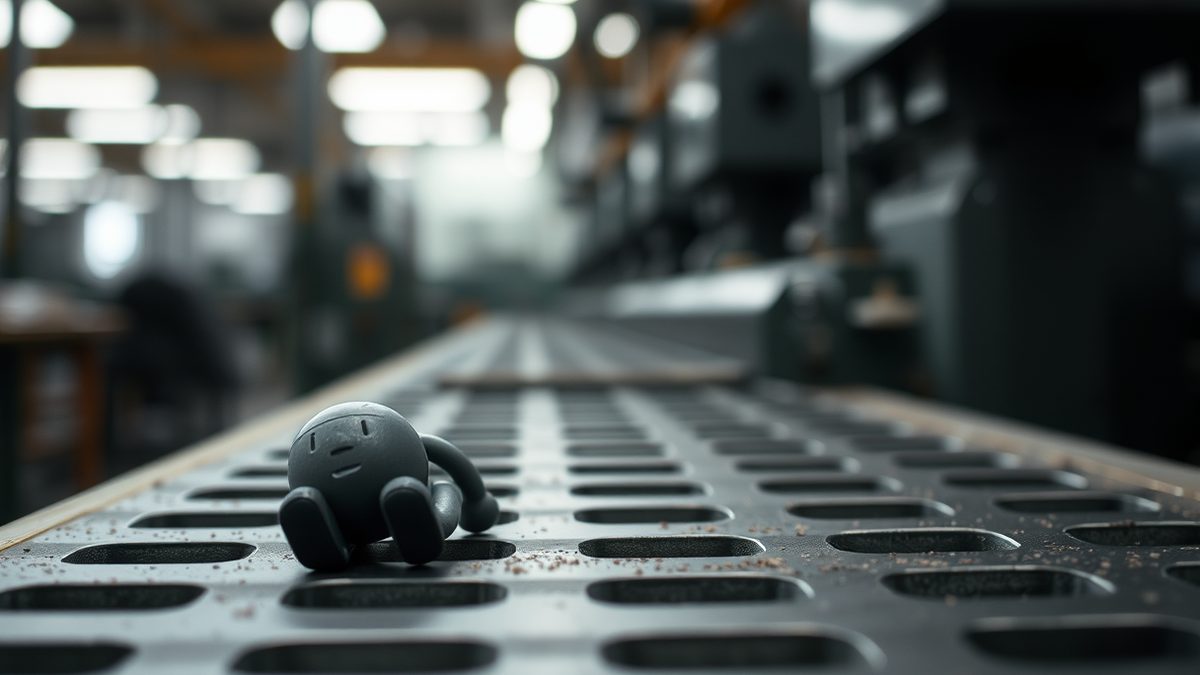
Production of the plastic figures will move to existing facilities in Malta and the Czech Republic, Brussels Signal reported on 24 June 2026. The final shift ended this week. Remaining employees are on paid leave ahead of the official shutdown at the end of June.
The company called sharply rising production costs in Germany the decisive factor. It named high energy prices, along with elevated wages and ancillary labour costs.
Administrative and logistical functions will stay in Germany. The figures themselves will now be made entirely outside the country that created them. Playmobil was long marketed as a proudly "Made in Germany" product. It now joins a growing list of companies moving operations abroad in search of lower costs.
The closure is small in headcount terms but large in symbolism. Dietenhofen specialised in making the toys, and around 350 jobs are affected at the site. Management made clear that the cost environment in Germany had become unsustainable for labour-intensive plastic injection moulding. Sales have also been falling and finances tightening in recent years, so energy costs landed on a business already under strain.
Why Germany's electricity bill matters
Germany's household electricity prices remain among the highest in the world: fifth most expensive globally and second highest among major industrial nations, according to Brussels Signal. Energy-intensive processes have been especially exposed since the 2022 energy crisis, despite partial government relief schemes.
The country moved away from nuclear and coal quickly, without enough baseload alternatives. Add bureaucracy and wage pressures, and you get what some economists call creeping deindustrialisation. The Playmobil decision sits inside that frame, and the frame keeps being redrawn.
Unions have called the move a "catastrophe" for the region. Business groups note it as the latest example of a once-thriving mid-sized enterprise forced to relocate.
The closure comes amid ongoing warnings from German industry about structural competitiveness problems. German auto giants face a deepening crisis as global rivals pull ahead. Volkswagen will slash its model range in half and cut production by 10 per cent. Porsche is announcing up to 4,000 additional job cuts amid industry pressures. Volkswagen also plans to double job cuts to 100,000 and close four German plants, according to Brussels Signal's coverage.
The wider European picture
Playmobil is not an isolated case. INEOS idled Europe's last world-scale Acetyls plant as energy prices hit 12 times US level, the INEOS Group said on 22 September 2026, according to a recent headline. That is a chemical plant, not a toy factory, and the gap cited is stark.
Brussels warned capitals to tackle the energy crisis or see the far right take power, the Financial Times reported on 25 September 2026. The EU warned that US diesel export curbs could deepen Europe's energy price pressures, according to a 24 September 2026 report. EU countries backed carbon market changes to curb price spikes, diplomats said, in a Reuters report dated 23 September 2026.
Those headlines are context rather than facts this article can verify independently. Still, they sketch the political and market weather in which companies are making location decisions.
Households have also been adjusting. Residential heat pump sales rose 17 per cent year on year across 11 European countries in the first quarter of 2026, with France, Germany, and Poland averaging 25 per cent growth. That followed a sharp jump in gas and oil prices after Iran closed the Strait of Hormuz in March, the European Heat Pump Association said, as reported by pv magazine on 4 May 2026. Around 575,000 residential heat pump units were sold across those 11 countries from January to March 2026, up from 494,000 in the same period in 2025.
Austria held the overall average down, with sales falling 30 per cent due to the absence of government subsidies. The EHPA's director general, Paul Kenny, said: "If your streaming service doubled its price then blocked its movies you'd find a better one." He added that "consumers have realized heat pumps are the solution when gas and oil are erratic in price and supply." Kenny said the European Commission has outlined steps to support heat pump adoption in its energy crisis plan, including VAT and tax reductions and social leasing schemes for lower-income households. He called on EU governments to implement these measures rapidly.
Where the electrons go
The other side of Europe's energy bill is demand growth, and datacenters are the loudest new customer. Prices in the United States' largest wholesale power market, PJM Interconnection, rose 75.5 per cent year over year in the first quarter of 2026, from $77.78 per megawatt-hour in the first three months of 2025 to $136.53 in the same period this year, according to Monitoring Analytics, the official market monitor for the Interconnection, as reported by The Register on 15 May 2026.
PJM serves all or parts of 13 states and the District of Columbia, including Northern Virginia, which has the densest cluster of datacenters in the world. Monitoring Analytics identified datacenter load growth as the main driver of recent capacity market conditions and rising prices in PJM.
"Data center load growth is the primary reason for recent and expected capacity market conditions, including total forecast load growth, the tight supply and demand balance, and high prices," the report reads. "But for data center growth, both actual and forecast, the capacity market would not have seen the same tight supply demand conditions."
The watchdog also warned that the price impacts on customers have been very large and are not reversible. They will be even larger in the near term unless the issues associated with data center load are addressed in a timely manner. It said the current supply of capacity in PJM is not adequate to meet demand from large data center loads and will not be adequate in the foreseeable future.
Monitoring Analytics argued that the currently proposed backstop auction structure would generally shift significant risk to other PJM customers, a temptation it said should be resisted. "Other PJM customers, whether residential, commercial or industrial, should not be treated as a free source of insurance, or collateral, or financing for data centers," the report continued. "Yet that is what most of the proposals related to a backstop auction actually do."
The group's preferred answer is bring-your-own power: datacenters should be required to bring their own new generation, with fast-track interconnection options for those that do. Otherwise they should join a queue that would only connect them when there is adequate capacity to serve them.
PJM told The Register it was fully aware of the impact of electricity cost increases on its customers. "PJM is working with states and member companies to address these consumer impacts on multiple fronts, including extending market caps put in place since the 2025/2026 auction, authorizing multiple transmission expansion projects that are now in development, and reforming wholesale electricity market rules," the Interconnection said. Monitoring Analytics did not respond to questions.
Americans have become increasingly hostile to new datacenter projects driven by the AI boom. In a Gallup survey, 71 per cent of respondents said they opposed DC projects in their neighborhoods, according to The Register. Projects in multiple states have been abandoned recently due to pushback from locals. Many of those locals worry not only about electrical price increases, noise, and eyesores, but environmental harm as well.
The software layer
Energy is not the only place where Europe's tech industry is pushing back on a narrative it thinks is misshapen. Amid fears that AI models could destroy humanity, top European tech leaders and cybersecurity experts have an increasingly loud response: ignore the hype, and get on with the hard work of keeping the digital world safe, POLITICO reported on 24 September 2026.
James Wise, a partner at Balderton Capital and chair of the UK government's sovereign AI fund, said of the current narrative: "Sadly, it has jumped up to the Terminator is coming." He added: "I don't think the Terminator is coming at all."
Alexandru Voica, policy lead at UK-based AI firm Synthesia, said: "We should spend more time making the rules and standards we have work at scale, and less time focusing on fears about theoretical risks or news reports from the Silicon Valley AI doomer bubble." Marcus Hutchins, a cyber threat researcher and former hacker best known for stopping the WannaCry ransomware attack in 2017, said the doomer stuff is very counterproductive. He cited disaster fatigue that prevents essential steps from being taken, such as security updates that could actually help.
Vincent Strubel, who leads French cybersecurity agency ANSSI, wrote recently on LinkedIn that AI creates significant risks and tremendous opportunities. Managing those risks and seizing those opportunities will require a lot of serious work under a major time constraint. "What it does not require, however, is starting a new panic every other week, because you generally don't get much done by running around, flailing your arms and/or screaming about the cyber apocalypse," he wrote.
Back in Bavaria, the practical version of all this is a plant that made toy figures for decades going quiet. The energy bill did not have to be the deciding factor. It was.
Sources
4- 01High energy prices force Playmobil to end production in GermanyEN
- 02Datacenters slurping juice help drive 75% jump in PJM power pricesEN
- 03Heat pump sales rise 17% across Europe in Q1 as energy prices surgeEN
- 04Don't believe the doomers: Europe's tech industry slams AI panicEN
All figures and quotations in this text come from the sources listed below.
Content prepared by the editorial team with AI assistance.
Dr. Amara Patel
Comments
0- No comments yet — be the first.