Energy prices push Playmobil out of Germany as Europe's industry split deepens
Playmobil has stopped making its plastic figures in Germany. The company closed its Dietenhofen plant in Bavaria and moved production to Malta and the Czech Republic, affecting around 350 jobs, as high energy prices keep reshaping where European manufacturing can survive.
 Dr. Amara PatelEconomy, business and world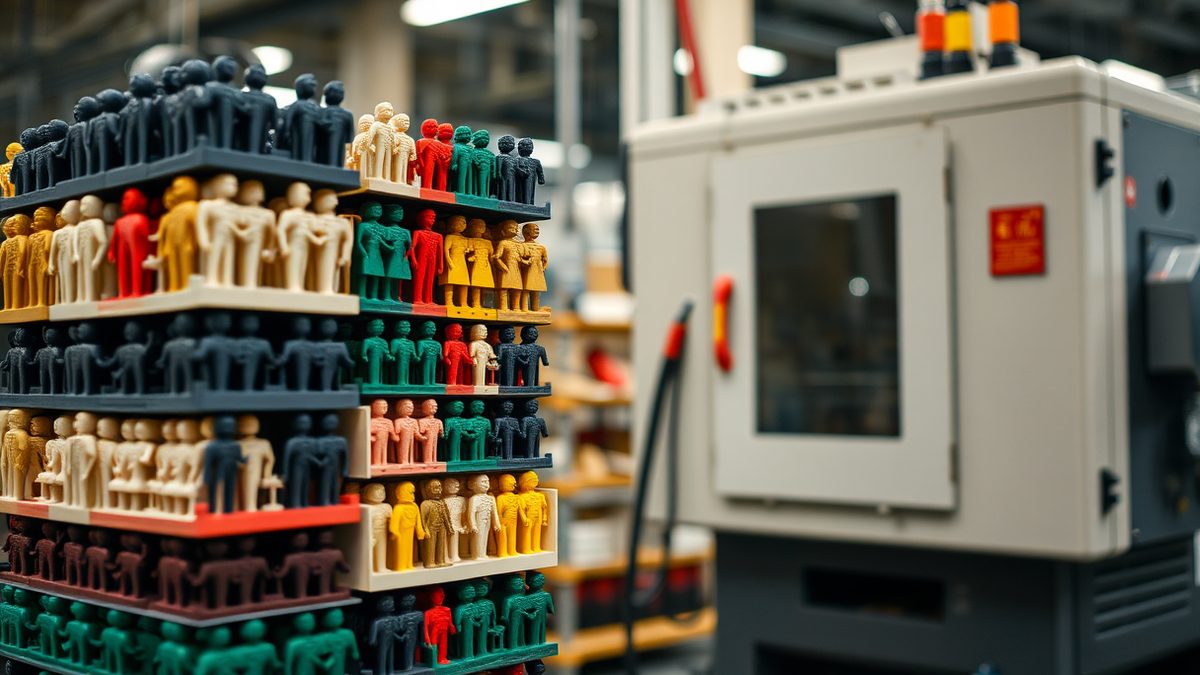
The final shift at Dietenhofen ended this week. Around 350 jobs are affected at the site, which specialised in making the toys, according to Brussels Signal.
The Horst Brandstätter Group, which owns Playmobil, confirmed it is consolidating production at existing facilities in Malta and the Czech Republic. The company blamed sharply rising production costs in Germany. It named high energy prices explicitly, alongside elevated wages and ancillary labour costs, and said the cost environment had become unsustainable for labour-intensive plastic injection moulding. Administrative and logistical functions stay in Germany. The figures do not.
That is one factory, and one brand, and it would be easy to file it under nostalgia. Germany's household electricity prices remain among the highest in the world, currently the fifth most expensive globally and the second highest among major industrial nations, Brussels Signal reported on 24 June. Energy-intensive processes have been exposed since the 2022 energy crisis, despite partial government relief schemes. Unions called the move a "catastrophe" for the region. Business groups described it as the latest example of a mid-sized enterprise forced to relocate.
What the price data actually shows
If you want a number that explains the mood, look at the largest US wholesale power market instead. PJM Interconnection serves all or parts of 13 states and the District of Columbia, including Northern Virginia, home to the densest cluster of datacenters in the world.
According to the Q1 2026 state of the market report from Monitoring Analytics, the official market monitor, the total cost per megawatt-hour of wholesale power rose from $77.78 in the first three months of 2025 to $136.53 in the same period this year. That is a 75.5 percent increase year over year. Monitoring Analytics did not spread the blame around. It identified datacenter load growth as the main driver of recent capacity market conditions and rising prices in PJM.
"Data center load growth is the primary reason for recent and expected capacity market conditions, including total forecast load growth, the tight supply and demand balance, and high prices," the report says. "But for data center growth, both actual and forecast, the capacity market would not have seen the same tight supply demand conditions."
The watchdog also warned that the damage is already locked in. "The price impacts on customers have been very large and are not reversible," it said, adding that they "will be even larger in the near term unless the issues associated with data center load are addressed in a timely manner." PJM told The Register it is working with states and member companies on consumer impacts, pointing to market caps in place since the 2025/2026 auction, transmission expansion projects and wholesale market rule reform. Monitoring Analytics did not respond to questions.
Read those two stories side by side and a pattern appears. In the US, the fight is about who pays for new demand from datacenters. In Europe, the fight is about whether energy-intensive manufacturing can stay at all. Both are distributional conflicts dressed up as technical ones.
Europe's demand side is moving
Not every response to high prices is a closure. Residential heat pump sales rose 17 percent year on year across 11 European countries in the first quarter of 2026, according to the European Heat Pump Association, which pv magazine reported on 4 May. Around 575,000 units were sold from January to March, up from 494,000 in the same period in 2025.
France, Germany and Poland averaged 25 percent growth, with national experts citing rising energy prices and energy insecurity concerns. The EHPA tied the surge to a sharp jump in gas and oil prices after Iran closed the Strait of Hormuz on 2 March. Austria was the outlier, with sales falling 30 percent due to the absence of government subsidies.
"If your streaming service doubled its price then blocked its movies you'd find a better one," said Paul Kenny, director general of the EHPA. "Consumers have realized heat pumps are the solution when gas and oil are erratic in price and supply." Kenny said the European Commission has outlined VAT and tax reductions and social leasing schemes for lower-income households in its energy crisis plan, and called on EU governments to implement them quickly.
Cheaper running costs are the point, but the upfront cost is the barrier, and that is where subsidy design decides who switches and who does not. Austria's 30 percent decline is the cleanest evidence in the dossier that policy, not price alone, moves the number. High prices create the incentive. Subsidies decide whether anyone can act on it.
Supply gets built, slowly
On the generation side, Google-backed Fervo Energy achieved first power this week at its Cape Station plant in Beaver County, Utah, The Register reported on 25 September. The first of three 33 MW GeoBlocks has begun supplying electricity to the grid and is expected to reach commercial operation next week, with another 66 MW due online by New Year.
Fervo says the station could eventually scale beyond four gigawatts. For now it is working toward 900 MW of contracted capacity, with 100 MW expected by 1 January and half a gigawatt by 2028. The method borrows from oil and gas: two parallel wells go down around 8,000 feet, the rock is fractured to let water pass between them, and the water is heated to 190 degrees Celsius.
Google has been an early backer of geothermal, going back to at least 2008, and has also agreed to buy power from Ormat Technologies' competing operations, including a 150 MW deal with Ormat and Nevada's NV Energy announced earlier this year. Meta partnered with Sage Geosystems in 2024 for up to 150 MW. Think tank Rhodium estimates geothermal could meet up to 64 percent of datacenter demand by the end of the decade, though those facilities could pay a 20 percent premium. That premium matters. Datacenters can absorb it. A toy factory cannot.
The politics of the bill
In Washington, the argument has taken a different shape. The Department of Transportation says it is ready to announce fuel economy standards that would raise gas prices by 76 cents a gallon and fuel use by 45 percent, Electrek reported on 26 September. The proposal would cut the 2031 target average from 50.4 mpg to 34.5 mpg. NHTSA says the change would raise fuel costs by $185 billion and carbon emissions by 5 percent. The vast majority of 68,294 public comments opposed the plan.
Department of Energy analysis cited by Electrek put the pump price effect at 76 cents per gallon. Congress could not muster votes to eliminate Corporate Average Fuel Economy standards outright, so it used procedural manoeuvring to set CAFE fines to zero, which leaves the rules effectively unenforced. Lawsuits are expected.
Europe's version of this argument is less about efficiency targets and more about who absorbs the cost of electrification. Brussels Signal notes the shift away from nuclear and coal without sufficient baseload alternatives, combined with bureaucracy and wage pressures, is accelerating what some economists call creeping deindustrialisation. That is a contested phrase, but the direction of travel is not in dispute. The heat pump numbers show households adapting. Fervo shows new supply can be built. Playmobil shows what happens when a business cannot wait for either.
Sources
5- 01Datacenters boosted prices 75% in largest US energy marketEN
- 02High energy prices force Playmobil to end production in GermanyEN
- 03Heat pump sales rise 17% across Europe in Q1 as energy prices surgeEN
- 04Google-backed energy outfit brings 33 MW of 4 GW geothermal potential online in UtahEN
- 05Trump plans to raise gas prices MondayEN
All figures and quotations in this text come from the sources listed below.
Content prepared by the editorial team with AI assistance.
Dr. Amara Patel
Comments
0- No comments yet — be the first.