Zhejiang opens grid storage to spot market as US AI hiring data splits
China's Zhejiang province will let independent grid-side batteries trade in its electricity spot market under a notice issued on 23 September, with price-and-quantity bidding from 1 January 2027, covering 40 projects totalling 2.54 GW/5.1 GWh.
 Dr. Amara PatelEconomy, business and world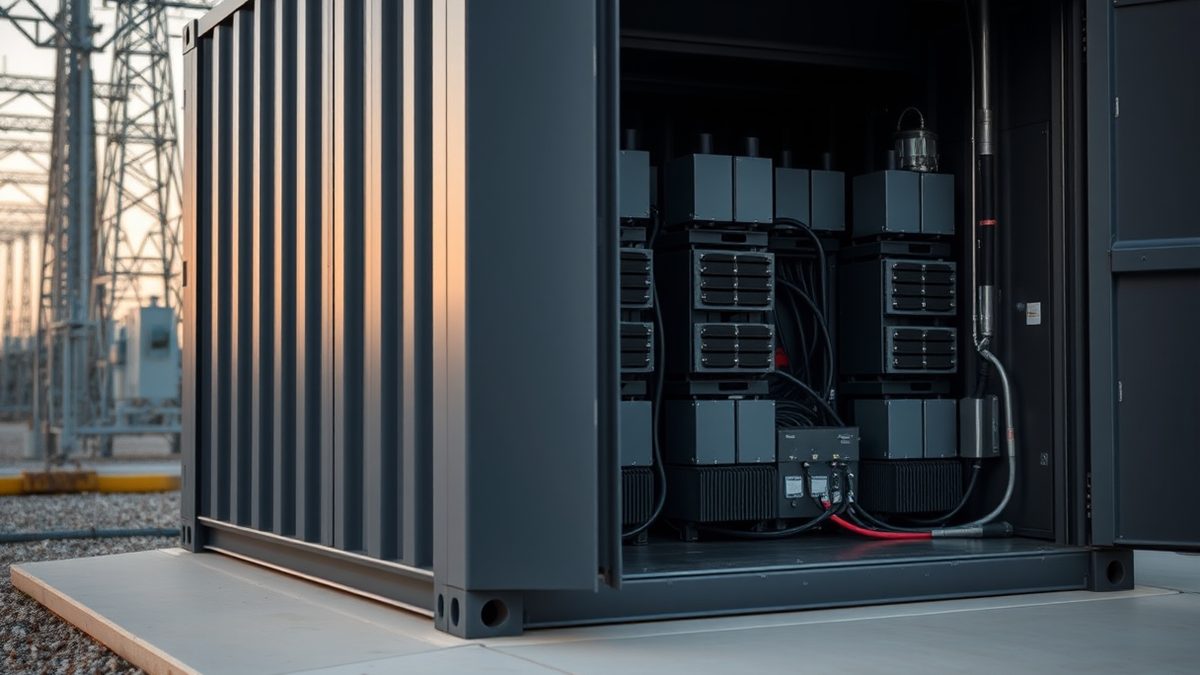
Three bodies issued the Zhejiang notice: the provincial office of China's National Energy Administration, the provincial development and reform commission and the provincial energy bureau. Under the rules, independent grid-side storage can choose each day between the energy market and the frequency-regulation ancillary services market. Storage projects still tied to retail electricity contracts can leave through the trading platform before they enter. pv magazine reported the rules on 26 September.
Forty projects are listed. Twenty-eight of them, 2.13 GW/4.27 GWh, already run commercially and are centrally dispatched. Six more, 0.11 GW/0.22 GWh, can trade energy only.
Projects not registered as storage will, in principle, not be dispatched in normal grid operation, the regulator said. It will keep monitoring participation and press market operators on oversight. The shift follows China's 2025 decision to scrap the storage mandate for renewable plants and the capacity price floor for grid-scale storage set in February, according to pv magazine.
American data centre demand looks different
On the other side of the Pacific, the labour story around AI infrastructure runs through construction sites, not market rules. CNBC reported on 26 September that welders, plumbers, HVAC technicians and electricians are in high demand for data centre buildouts, though many of those construction jobs are temporary. The same report flags a political risk: moves by states including New York and Texas to slow development, and local freezes across the US after public backlash, could hit that labour market trend.
The pay numbers in CNBC's piece are unusually specific. Maria Flynn, president and CEO of the nonprofit Jobs for the Future, told the network an apprentice-level technician can take home $40,000 to $60,000, with experienced electricians above $100,000. Nicole Bachaud, labour economist at ZipRecruiter, said the mean minimum salary for data centre jobs rose 125.1% year over year to nearly $208,000. She attributed that to highly specialised engineering roles pulling the average up.
Postings for welders and pipefitters are up 164% year over year, Bachaud said. She cautioned that a small sample size may be part of the explanation. Houston and Birmingham have seen the strongest growth, she added, because land and lighter regulation make development easier there than in coastal hubs.
Justin Sinkovich of Columbia College Chicago pointed CNBC to Louisiana, where Amazon has committed $12bn to a new data centre with 540 on-site jobs, including 1,700 electricians, technicians and security personnel, and Meta's Hyperion project is valued at $27bn. Those jobs cannot be offshored or done remotely, he said.
Graduates face a different hiring market
The entry-level picture is less buoyant. CNBC reported on 25 September that college graduates aged 22 to 27 had an unemployment rate of 5.7% as of June 2026, according to the Federal Reserve Bank of New York. That is a full percentage point higher than two years earlier for the cohort. The rate for all young workers was 7.2%. The underemployment rate, meaning graduates in jobs that do not require a bachelor's degree, reached 42% for recent graduates against 33.7% for all college graduates.
Automation is now part of the first filter. LinkedIn research cited by CNBC found 66% of recruiters planned at the start of 2026 to increase their use of AI for pre-screening interviews, while 81% of job seekers said they had used or planned to use AI in their search. Handshake, the early-career platform, found 2026 graduating seniors mentioned AI skills on resumes at twice the rate of the class of 2022, with 74% of those mentions tied to real-world projects rather than coursework.
The National Association of Colleges and Employers says AI skills appeared in 16.5% of job descriptions in the spring, up from 10.5% the previous autumn, and that 28% of employers are seeking early-career talent who can use AI. NACE describes a "striking disconnect" between some Gen Z candidates and the market.
The NY Fed is careful about causation. Based on job postings, it wrote that "while AI may be contributing to recent labor market developments, it is not the main driver of the slowdown in hiring." Its employer surveys found firms "mostly intend to incorporate AI mainly via retraining, with limited effects on hiring."
The academic literature is still catching up. An NBER conference paper posted on 22 September, "Artificial Intelligence and Labor Market Reallocation," tackles the reallocation question directly, but its full text sits behind a PDF that is not readable in the dossier. What can be said is that the paper exists and is dated, not what it concludes.
B2B marketing metrics as a labour-market side story
Away from the macro numbers, The Next Web published a piece on 27 September on why lead-based B2B marketing measurement keeps failing. It cites a survey finding that 87% of B2B marketers found it increasingly difficult to measure long-term campaign impact, while nearly half had to justify marketing spend to CFOs and CEOs every month. Gartner found in 2026 that buyers use an average of seven information sources, with 45% turning to generative AI during research and 67% preferring a sales-rep-free digital buying experience.
The piece is built around Waqas Khokhar, founder and CEO of ScalixAI, who spent nine years at Google. "The biggest issue is that companies don't understand how individual channels influence the end goal, which is revenue," he told The Next Web. The company cites client outcomes including Oneleet at 660 demos, more than $1m in closed revenue and more than $2m in active pipeline, Fyxer at more than 10,000 customers and 20x revenue growth within a year, and PAM AI at more than 3x ROI within months. Those are the agency's reported numbers, not independently verified ones, and The Next Web presents them as ScalixAI's evidence for its own argument.
Khokhar said the firm moved from zero to roughly 30 clients in 14 months and uses a flat retainer rather than a percentage of media spend. He also said he ended one client relationship days after it began because expectations were misaligned. "Protecting the team's energy is part of the job," he said.
What ties the threads
Three data points sit in tension. Chinese regulators are pushing batteries into competitive markets, a bet on price signals doing the work of dispatch. American data centre construction is pulling tradespeople into well-paid but often temporary work, with local resistance as the wild card. And the graduate labour market, at least in the US, is soft on the headline numbers even as employers say they want AI skills.
The common thread is timing. Zhejiang's price-and-quantity bidding does not start until 1 January 2027, so the market rules are being laid down before the money moves. Data centre construction jobs are here now. Entry-level hiring is the part that has already changed.
One thing worth watching: whether the state-level slowdowns CNBC mentions in New York and Texas turn into a measurable dip in trade job postings, or whether demand simply shifts to places like Houston and Birmingham where building is easier. ZipRecruiter's Bachaud expects the latter, but that is a forecast, not a number.
Sources
5- 01Chinese province moves grid-side batteries into spot marketEN
- 02The blue-collar AI job market is booming. Will data center backlash make it go bust?EN
- 03How recent grads and college students should be thinking about AI, the CV, and the job marketEN
- 04The inevitable problem with measuring B2B marketing by leadsEN
- 05Artificial Intelligence and Labor Market ReallocationEN
All figures and quotations in this text come from the sources listed below.
Content prepared by the editorial team with AI assistance.
Dr. Amara Patel
Comments
0- No comments yet — be the first.