Turbulent flow seals narrow fractures in Europa's ice within hours, simulations find
Turbulent water rising through narrow fractures in Europa's ice would freeze them shut in as little as 2 to 6 hours, a Rutgers-led study published in Nature Astronomy in late July finds, complicating Europa Clipper's search for shallow water.
 Sofia MarchettiScience and health
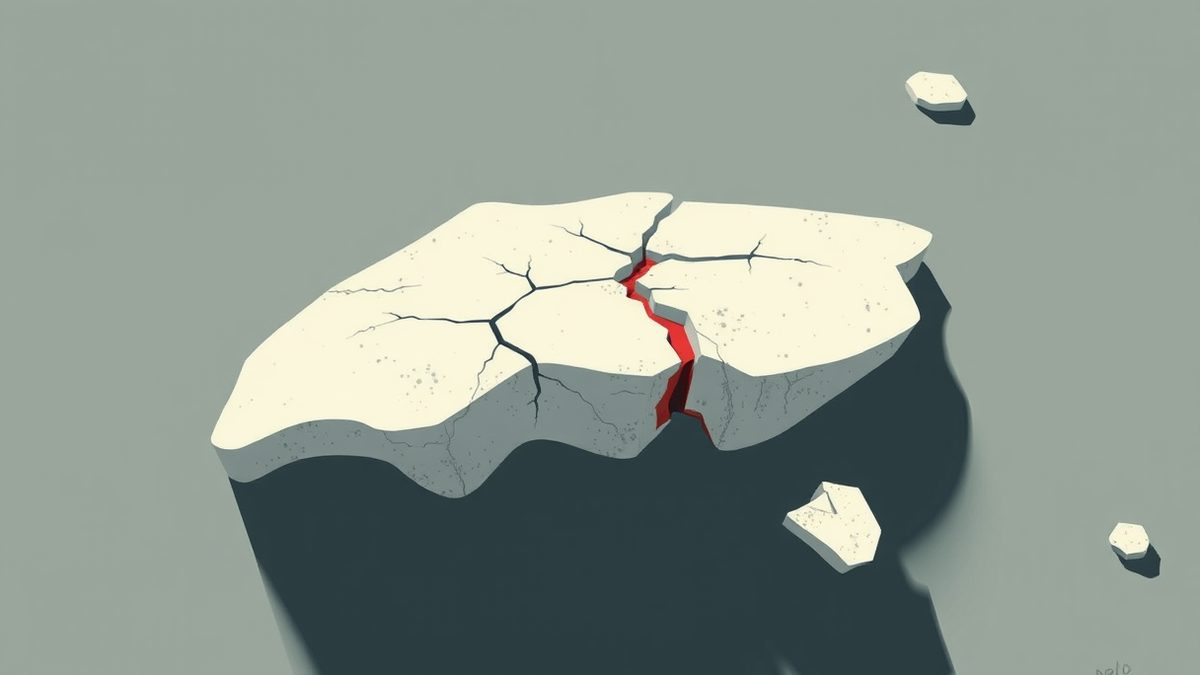
The study, led by Lujendra Ojha, an associate professor of Earth and planetary sciences at Rutgers University, appeared in Nature Astronomy in late July. Ankit Barik of Johns Hopkins University and Jacob Buffo at Dartmouth College's Thayer School of Engineering worked with him. The team ran high-resolution COMSOL Multiphysics simulations that coupled fluid flow with heat transfer, a pairing earlier models largely neglected. Earlier work treated rising water as if it moved in an orderly, laminar fashion through fractures called dykes. The new simulations put turbulence at the centre of the calculation.
Tech Times reported that the simulations put the ascent at roughly 5 to 20 metres per second (16 to 66 feet per second) in a chaotic, swirling flow. Churning water is forced continuously against the frozen walls of the fracture. The upper 1 to 2 kilometres of the channel sit inside ice at 140 to 200 kelvins, between minus 133 and minus 73 degrees Celsius. Heat drains away far faster than calmer models predicted. The water supercools, staying liquid below its freezing point, and begins to produce frazil ice: disc-shaped crystals about 1 millimetre across or smaller that form throughout the flow. The crystals build up and clog the channel.
Tech Times reported frazil ice is well documented in Earth's rivers and under Antarctic ice shelves, where it can clog hydroelectric intakes within hours. The same simulations show that even a seed crystal a fraction of a micrometre across can trigger runaway growth, and that an estimated 1 to 3 percent of the rising water converts to frazil. When even a small fraction of those crystals adhere to the fracture walls, the pathway seals.
Rutgers said the fractures can clog "sometimes within hours," and that wider channels would need to be "unrealistically long or occur in large numbers" to avoid complete freezing. Ojha said in a statement: "There's an icy shell, there's water underneath, and there's all this speculation about how that water can come from deep underground and make its way all the way up without freezing en route. That's really what we think we disproved." Tech Times reported that a 0.1-metre fracture could close in as little as 2 to 6 hours, while a 1-metre fracture could remain open for 1 week to 23 days under simpler conduction-only models, an estimate that collapsed once turbulence was included.
What it means for Europa Clipper
NASA's Europa Clipper carries an ice-penetrating radar instrument built specifically to locate shallow water pockets beneath the moon's surface. Those pockets were assumed to be accessible windows into the deep ocean. The study says that assumption is probably wrong. Rutgers said that if Clipper finds shallow liquid it is more likely localised melting inside the ice shell than an upwelling from below, that an isolated reservoir may offer little information about the ocean itself, and that radar may help determine whether shallow reservoirs are present and reveal their size and structure.
Clipper carries nine science instruments plus a gravity science investigation, so radar is one line of evidence among several. NASA says the mission is not a life-detection mission but is meant to establish whether Europa is a promising place to look.
What happens next
Clipper begins orbiting Jupiter in April 2030 and starts science flybys in 2031, NASA said. It will make 49 close flybys, coming as close as 25 kilometres (16 miles) to the surface. The European Space Agency's Jupiter Icy Moons Explorer, known as JUICE, launched in April 2023 and is due at Jupiter in July 2031 to study Europa, Ganymede and Callisto. Ojha said the work helps future missions interpret what they find and better understand where to look for signs of habitability. The findings come from computer simulations, not direct observation.
Sources
10- 01Europa Ice Cracks Freeze Shut in Hours, Complicating Clipper Science PlanEN
- 02The search for life on Jupiter's icy moon Europa just got more complicatedEN
- 03Jupiter's moon Europa may have signs of life in its buried ocean, but can we get to them?EN
- 04Journey to a Water World: NASA's Europa Clipper Is Ready to LaunchEN
- 05NASA launches satellite to investigate Europa, Jupiter's 'mysterious moon'EN
- 06Interstellar Comet 3I/ATLAS Shows Activity In ESA Juice Navigation Camera Image - Astrobiology WebEN
- 07Jupiter's Moon Europa Glows on Its Own, Unlike the Sun-Reflecting MoonEN
- 08 Jupiter and Mars are set for a breathtaking close approach later this week: Here's how to see it EN
- 09EU-Förderbank: Zehn Milliarden Euro für Europas Tech-UnternehmenEN
- 10Cosmic at SEMICON Europa 2026: Advancing High-Complexity Semiconductor Test SolutionsEN
All figures and quotations in this text come from the sources listed below.
Content prepared by the editorial team with AI assistance.
Sofia Marchetti
Comments
0- No comments yet — be the first.