Europe's night train map is being redrawn by tunnels and timetables
Europe's sleeper network is expanding again, with new direct night services linking Warsaw to Munich, Berlin to Paris and Salzburg to Kraków, according to timetables introduced on 10 December 2023.
 Daniel FisherSport, cars and travel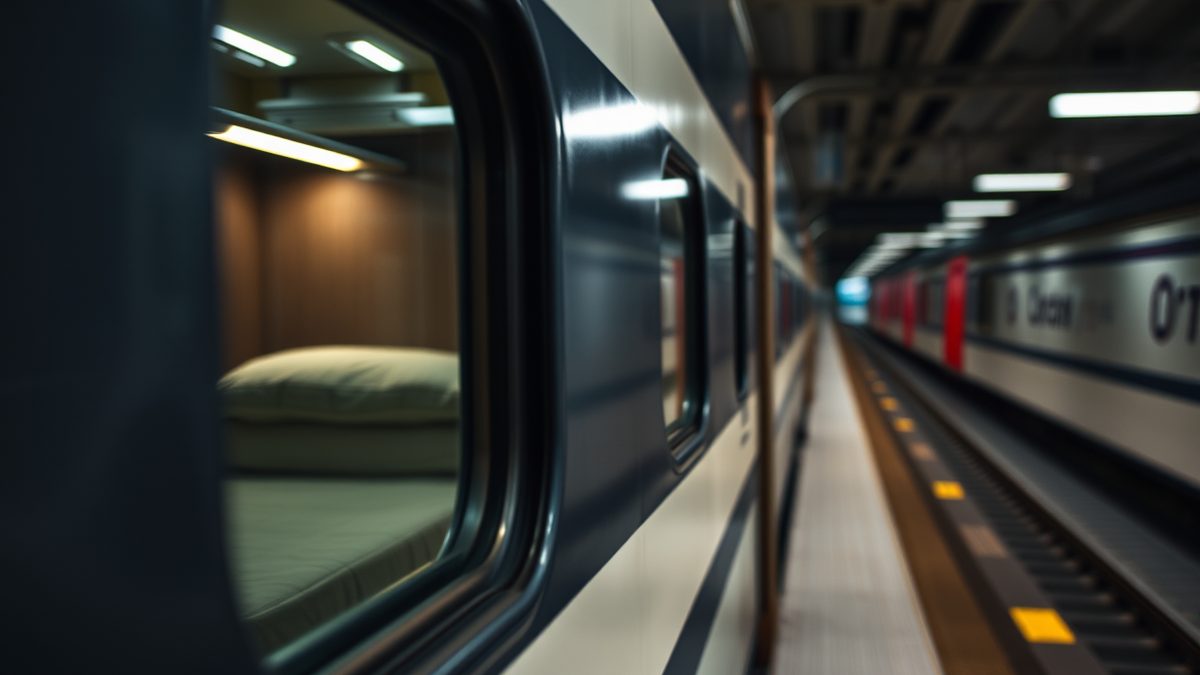
The new schedules, reported by The Guardian in December 2023, created direct overnight links between city pairs that had no direct daytime service at all. Warsaw moved closer to Munich. Berlin nudged towards Paris, and Aachen slipped nearer to Salzburg.
The most symbolic of these was the Munich to Warsaw night train. Its first departure from Bavaria to Poland on the evening of 10 December 2023 was the first direct service on that corridor since 2010. A separate new Nightjet left Aachen just after 9pm and reached Halle 10 hours later, linking two cities with deep German history.
Cat Jones, chief executive of the flight-free operator Byway Travel, told The Guardian that the changes were already feeding into holiday planning. "All these new trains across Europe are creating a real buzz at Byway. We're now able to pair places in holidays where direct trains didn't exist before," she said. She pointed to the new Euronight sleeper linking Salzburg with Kraków, a trip of almost 10 hours.
The pattern is not limited to night trains. The same timetable round trimmed 30 minutes from the Berlin to Amsterdam route, bringing it under six hours. It also doubled the number of direct daytime trains from Kraków to Vienna and Berlin, from one to two. Wrocław gained an early-morning direct train to Vienna with a late-afternoon return.
Short-haul flights are the target, but the map still has holes
Not every city won. Aarhus lost its twice-daily direct trains to Hamburg, replaced by a connecting service every two hours with a same-platform change at Kolding. Nuremberg, long a jumping-off point for Czech destinations, went from five direct trains a day to the Czech Republic to none.
Even in France, where Le Monde had proclaimed the night train finished in 2016, services returned. Béziers and Montpellier regained a direct link to Paris on some nights, and an Aurillac to Paris overnight service was added. The French trains offer no sleeping cars, only reclining seats or couchettes, with fares from €19 for seats and €29 for couchettes.
The capacity problem underneath all of this is geography. Europe's rail map still bends around the Alps, and the tunnels meant to straighten it are running late. In January 2026 the European Court of Auditors reported that the costs of delivering eight major Trans-European Transport Network projects had risen by an average of 82% over initial estimates, with an average delay of 17 years across five of them, according to CNN.
Switzerland's 35-mile Gotthard Base Tunnel, which opened in 2016 at a cost of $11.3 billion, shows what the finished product can do. It cut Zürich to Milan to two and a half hours, against four hours on the older, 25-mile-longer route. The Gotthard lies more than 7,500 feet beneath the Alpine peaks at its deepest point.
The next decade is meant to repeat that trick elsewhere. The 18-kilometre Fehmarnbelt tunnel between Denmark and Germany, an immersed link with a budget above €7 billion, is due to open in 2029. Femern A/S, the state-owned Danish builder, says the Copenhagen to Hamburg trip will fall from about four and a half hours to two and a half. The crossing itself drops from 45 minutes by ferry to seven minutes by train.
For now, the green argument does much of the work. Rail Delivery Group analysis published in February 2024 found that on average across the top 100 British business travel routes, a diesel or petrol car produced nine times more carbon than the train. Edinburgh to London Kings Cross emitted 116kg of CO2 by diesel car, 31.8kg by battery electric car and 12.7kg per person by train.
Campaigners were quick to note the catch. Single fares on LNER's Edinburgh to London route were £183 without pre-booking at the time, against roughly £50 in fuel for a small petrol car over the 400 miles. Michael Solomon Williams of the Campaign for Better Transport said train travel was getting greener as routes were electrified, but that it also needed to be cheaper.
The commercial picture is more mixed than the environmental one. Tunnel projects are years behind, national operators still favour domestic routes, and fares are rising. Rail fares across England were due to increase by 4.9% from the Sunday after the RDG published its figures. The night train revival is real, but it is arriving on a network that is still being rebuilt underneath it.
Sources
4- 01Night trains and border crossings: Europe's best new rail routesEN
- 02Electric cars produce twice as much CO₂ as trains, says rail group dataEN
- 03The audacious underground mega tunnels redrawing the railway map of EuropeEN
- 04World's longest road and rail tunnel is being built under the Baltic SeaEN
All figures and quotations in this text come from the sources listed below.
Content prepared by the editorial team with AI assistance.
Daniel Fisher
Comments
0- No comments yet — be the first.