Europe's night train map keeps expanding, but the tunnels are running late
Europe's overnight rail network keeps adding city pairs, with new direct sleepers and revived cross-border links appearing in the December timetables, while the base tunnels meant to carry more of that traffic are years behind schedule.
 Daniel FisherSport, cars and travel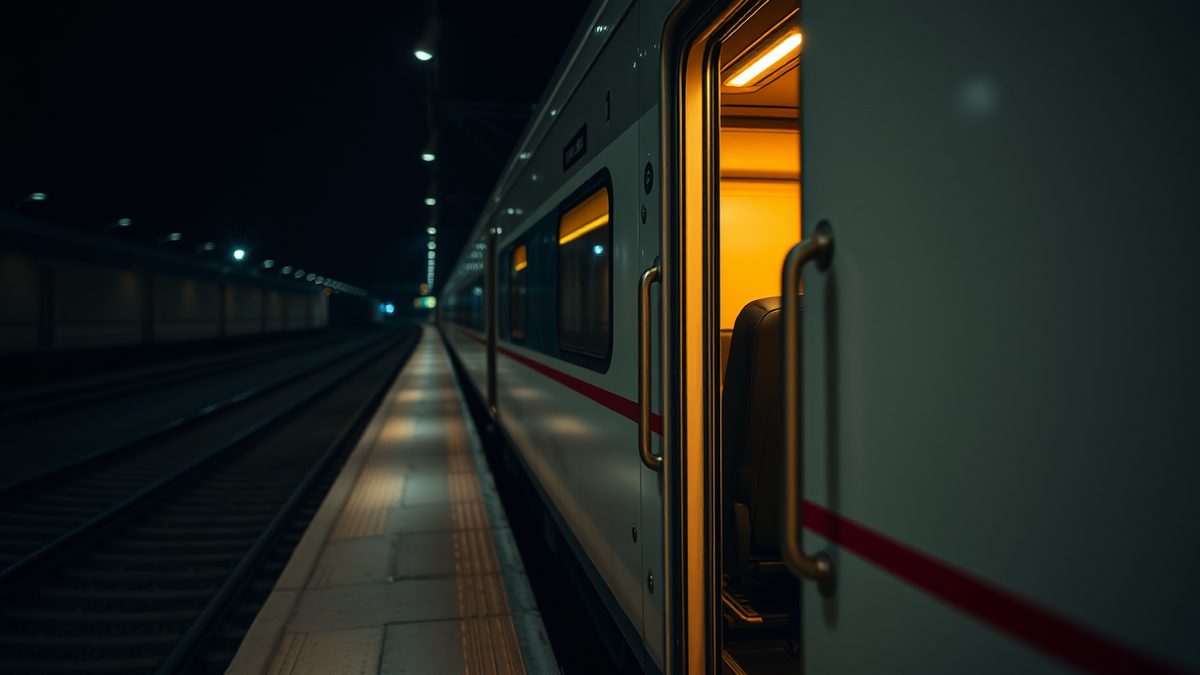
Night trains keep returning to the European timetable. The 2024 schedules introduced on 10 December created direct overnight links between cities that had not been connected for years. The pattern has held since: an operator reopens a route, tests demand, and adds another.
The Guardian's rail coverage from December 2023 put the clearest example in Munich. A new night train linked the Bavarian city with Warsaw, and the Warsaw-bound service that left Munich on the evening of 10 December was the first direct departure from Bavaria to Poland since 2010. That single train opened up a series of new city pairs, among them a Salzburg to Kraków link that takes almost 10 hours.
What actually changed in the timetable
The December 2023 changes were not one grand gesture. They were a collection of smaller moves that, taken together, redrew parts of the map. Paris and Berlin regained a direct night train, reinstating a link severed at the start of the pandemic, when the Russian Railways service from Paris to Berlin and Moscow ran for the last time. A new direct Nightjet connected Aachen and Halle, leaving just after 9pm and arriving 10 hours later. Dresden gained sleeping-car departures to Budapest, Vienna and Graz, three cities it already served by day.
Some places lost out. Aarhus had its twice-daily direct trains to Hamburg axed, though the compensation is a connecting service every two hours, with a same-platform change in Kolding that gets travellers to Hamburg faster than the old direct trains did. Nuremberg, long a jumping-off point for Czech destinations, went from five direct trains a day to the Czech Republic to none. Copenhagen, meanwhile, secured more direct services to Hamburg.
All these new trains across Europe are creating a real buzz at Byway. We're now able to pair places in holidays where direct trains didn't exist before. The new Euronight direct sleeper linking Salzburg with Kraków, for example, creates a real opportunity for culture vultures to combine [trips to] two very different cities.
That quote comes from Cat Jones, CEO of the flight-free operator Byway Travel, speaking to The Guardian. Her point is practical rather than romantic: new overnight links let tour operators build itineraries that were not possible the previous season. The Salzburg-Kraków sleeper is one example. The Munich-Warsaw service is another, and it also feeds the network of routes reaching Ukraine. From Vienna, a second direct train to Ukraine was added, complementing the longstanding Euronight service to Kyiv, with through-carriages to Chop in the Transcarpathia region. The Czech private operator RegioJet was said to be exploring a Prague to Chop overnight service from early 2024.
Britain barely features in this story. The Guardian noted that the 2024 timetable changes in Britain were hardly dramatic: many services were tweaked by a minute or two, extra weekday trains ran between Nottingham and Birmingham, and TransPennine Express schedules were thinned further. The interesting movement was across the Channel. Even France, where Le Monde had proclaimed in 2016 that the night train was finished, saw demand rise. Béziers and Montpellier gained a direct link with Paris on some nights, and a new Aurillac-Paris overnight service launched where no competing daytime train exists. French night trains offer little comfort, with no sleeping cars, just reclining seats and couchettes, but fares start at 19 euros for a seat and 29 euros for a couchette.
Cross-border frequency improved in other places too. Munich to Zürich gained more trains, following the November reinstatement of direct Stuttgart to Zürich services. Berlin to Amsterdam was trimmed by 30 minutes to under six hours. Kraków doubled its direct daytime trains to both Vienna and Berlin, from one to two, and Wrocław acquired an early-morning direct train to Vienna with a late-afternoon return.
The tunnels that were supposed to carry all this
More trains need more track, and through the Alps that means tunnels. CNN reported in May 2026 that the next decade will see the world's longest rail tunnels completed in Austria, France and Italy, aimed at improving rail connectivity between northern Europe and the industrial hubs of northern Italy. Billions are being invested in record-breaking tunnels and new approach lines to raise speeds and freight capacity on the long-established Alpine corridors.
The record so far belongs to Switzerland's Gotthard Base Tunnel, which opened in June 2016 at a cost of $11.3 billion. It runs 35 miles and connects the cantons of Ticino and Uri on the busy Zürich-Milan route. At its deepest, the twin tunnels lie more than 7,500 feet below the Alpine peaks, nearly a mile and a half down. Journey times between Zürich and Milan fell to two and a half hours, against four hours via the old Gotthard route, which is 25 miles longer and crosses the mountains at an altitude of 3,773 feet.
Denmark has taken a different approach, tunnelling under the sea rather than through rock. The Fehmarnbelt Fixed Link, under construction between the German island of Fehmarn and the Danish island of Lolland, will be 18 kilometres (11.1 miles) long and is being built as an immersed tunnel, with 89 concrete sections lowered into a trench beneath the Baltic Sea. CNN reported that the first element was inaugurated on 17 June by King Frederik X of Denmark, four years after construction began in 2020, following more than a decade of planning. The budget is over 7 billion euros ($7.1 billion), and the target opening date is 2029.
The payoff is measured in minutes. The current ferry crossing from Rødby to Puttgarden takes 45 minutes; by train through the tunnel it will take seven, and by car 10. Jens Ole Kaslund, technical director at the state-owned Danish company Femern A/S, said in 2022 that a train trip from Copenhagen to Hamburg currently takes around four and a half hours and will take two and a half once the tunnel is complete. He added that many people currently fly between the two cities but that in future it will be better to take the train. Freight also benefits: the tunnel creates a land route between Sweden and Central Europe that is 160 kilometres shorter than today's options.
Each tunnel section is 217 metres long, 42 metres wide and 9 metres tall, weighing 73,000 metric tons. Positioning them will take roughly three years, and up to 2,500 people will work directly on the construction project. The scheme dates back to 2008, when Germany and Denmark signed a treaty; it then took over a decade for legislation to pass in both countries and for geotechnical and environmental studies to be completed. In Germany, ferry companies, environmental groups and local municipalities appealed against approval over claims of unfair competition and environmental and noise concerns. In November 2020 a federal court dismissed the complaints, attaching conditions on monitoring noise and sediment spill during construction.
The delivery problem
Not every project is on track, and the numbers are stark. CNN reported that the European Court of Auditors found in January that the costs of delivering eight major Trans-European Transport Network projects had increased by an average of 82% over initial estimates, with an average delay across five projects of 17 years. That means the EU will not meet its deadline of completing the core TEN-T network, described as 10,850 miles of rail corridors across the continent, by 2030.
Nick Brooks, secretary general of the rail operator lobby group ALLRAIL, told CNN that mega-projects like the Brenner Base Tunnel, Lyon-Turin and the Fehmarn Belt can be game-changers for European rail. The claim is plausible, but the schedule is not. A 17-year average delay is not a rounding error; it is a generation of passengers who will not use the tunnels their governments promised them.
There is also the question of who the night trains are for. The Rail Delivery Group, which represents Britain's rail industry, published analysis in February 2024 showing that travelling by train on Britain's busiest business routes generates less than half the carbon emissions of a battery electric car. On average across the top 100 business travel routes, a diesel or petrol car produced nine times more carbon than going by train, four times more than a plug-in hybrid, and almost two and a half times more than a battery electric car. Edinburgh to London Kings Cross emits 116kg of CO2 in a diesel car, 31.8kg in a battery car and 12.7kg per person by train, according to the RDG data.
The greenest journey is not always the cheapest. The Guardian noted that single fares on LNER, the main operator on the Edinburgh to London route, were 183 pounds without pre-booking, though much cheaper advance fares exist, while average fuel costs for a small petrol car over the same 400 miles would be roughly 50 pounds. Jacqueline Starr, chief executive of the RDG, said the data would let businesses have the most accurate measure of emissions for the 100 most popular business rail journeys, and that rail is the green choice for travel between towns and cities. Michael Solomon Williams of the charity Campaign for Better Transport said travelling by train is always greener than driving and getting greener as more routes are electrified, but that the priority now is to make it cheaper.
That tension sits underneath the night train revival. New routes keep appearing, and each December brings another set of city pairs that were unconnected a year earlier. But the infrastructure that would make those routes fast, frequent and affordable is late, over budget, or both. The map is filling in faster than the track beneath it.
Sources
4- 01Night trains and border crossings: Europe's best new rail routesEN
- 02Electric cars produce twice as much CO₂ as trains, says rail group dataEN
- 03The audacious underground mega tunnels redrawing the railway map of EuropeEN
- 04World's longest road and rail tunnel is being built under the Baltic SeaEN
All figures and quotations in this text come from the sources listed below.
Content prepared by the editorial team with AI assistance.
Daniel Fisher
Comments
0- No comments yet — be the first.