Europe's night trains add routes, but tunnel delays push the 2030 rail deadline
Europe's rail operators introduced their 2024 timetables on 10 December 2023, adding direct night trains between Munich and Warsaw, Paris and Berlin, and Aachen and Halle, according to The Guardian.
 Peter LindqvistSport, cars and travel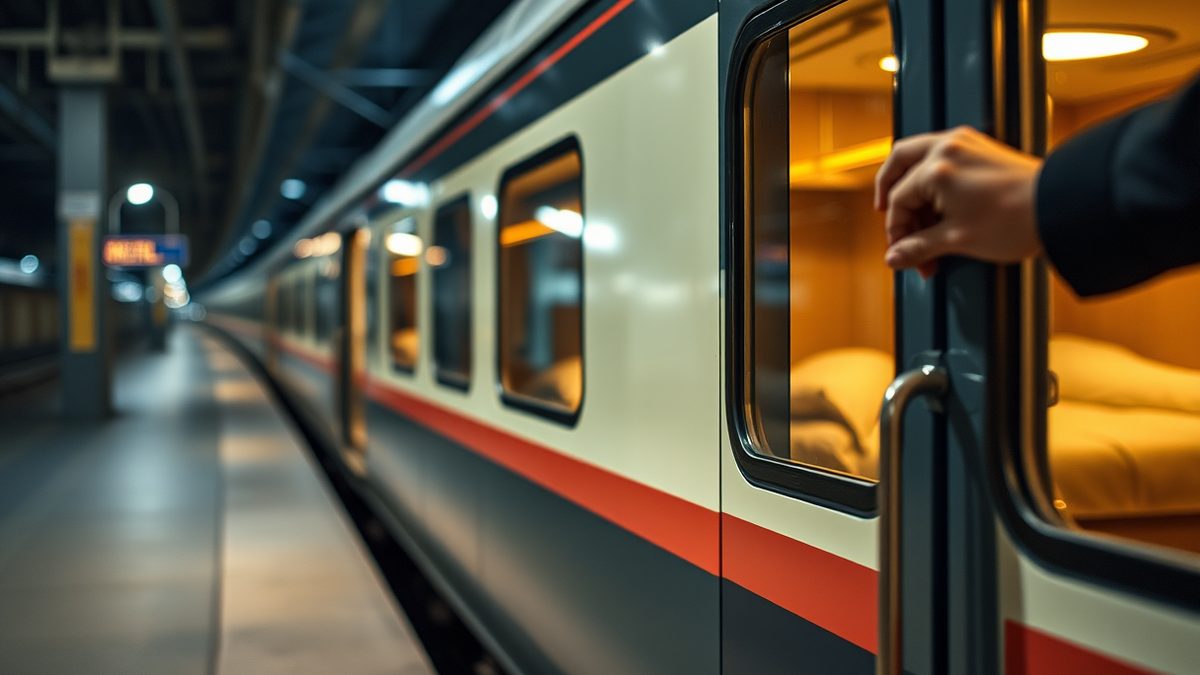
Europe's rail operators introduced their 2024 timetables on 10 December 2023, adding direct night trains between Munich and Warsaw, Paris and Berlin, and Aachen and Halle, according to The Guardian.
The Munich to Warsaw link matters because it is the first direct departure from Bavaria to Poland since 2010, the paper says. Salzburg and Kraków are now linked by a Euronight sleeper that takes almost 10 hours. Cat Jones, chief executive of Byway Travel, told The Guardian the route gives travellers a chance to combine two very different cities.
Warsaw has moved closer to Munich, Berlin nudged towards Paris, and Aachen slipped nearer to Salzburg. None of those three city pairs has a direct daytime train today.
The December 2023 timetable changes are uneven. Britain saw only minor adjustments: extra weekday services between Nottingham and Birmingham, and further thinning of TransPennine Express schedules. Spain opened a new high-speed line through the Cantabrian mountains in late November. New timetables for some routes in Poland and the Baltic states were delayed by another week or two.
Aarhus lost its twice-daily direct trains to Hamburg but gained a connecting service every two hours, with a same-platform change at Kolding. The Guardian says that gets travellers to Hamburg faster than the direct trains did. Nuremberg, long a jumping-off point for Czech destinations, lost its five daily direct trains to the Czech Republic. Copenhagen gained more direct services to Hamburg.
Other improvements are smaller but concrete. Berlin to Amsterdam journey times were trimmed by 30 minutes to under six hours. Direct daytime trains from Kraków to Vienna and Berlin doubled from one to two. Wrocław gained a new early-morning direct train to Vienna, and a second direct train from Vienna to Ukraine was added, with through-carriages to Chop in the Transcarpathia region. Czech private operator RegioJet is said to be exploring a Prague to Chop overnight service from early 2024.
Demand is a separate question from supply. The Rail Delivery Group, the British rail industry body, published analysis in February 2024 claiming that travelling by train on Britain's busiest business routes generates less than half the carbon emissions of a battery electric car.
Across the top 100 business travel routes, the RDG said a diesel or petrol car produced nine times more carbon than going by train. A plug-in hybrid was four times more polluting, and a battery electric car almost two-and-a-half times more. The group used government figures for average executive car emissions by distance.
We all have a responsibility to reduce our carbon footprint, and the data that we have published reveals that rail is the green choice for travel between our towns and cities.
That is Jacqueline Starr, chief executive of the RDG, quoted by The Guardian. The numbers look strong on paper. Edinburgh to London Kings Cross would emit 116kg of CO2 in a diesel car, 31.8kg in a battery car and 12.7kg per person by train, the RDG data says.
The cost side is harder. Single fares on LNER, the main operator on that route, were £183 without pre-booking at the time, though cheaper advance fares existed. Average fuel costs for a small petrol car over the same 400 miles would be roughly £50, and less for an electric car. Rail fares across England were due to rise 4.9% from the Sunday after the analysis was published. Michael Solomon Williams of the charity Campaign for Better Transport told The Guardian that train travel is greener than driving and getting greener as routes are electrified, but that it also needs to be cheaper.
Building new cross-border rail is slower than adding a timetable slot. CNN reported in May 2026 that the European Union will not meet its 2030 deadline for completing the core Trans-European Transport Network, a plan to upgrade 10,850 miles of rail corridors across the continent.
The European Court of Auditors reported in January 2026 that costs on eight major TEN-T projects had increased by an average of 82% over initial estimates, and that the average delay across five projects is 17 years. The same CNN piece quotes Nick Brooks, secretary general of the rail operator lobby group ALLRAIL, describing mega-projects like the Brenner Base Tunnel, Lyon-Turin and the Fehmarn Belt as potential game-changers for European rail.
The Gotthard Base Tunnel in Switzerland, which opened in 2016, shows what the finished product looks like. The $11.3 billion project connects the cantons of Ticino and Uri and lies on the Zürich to Milan route. It cuts journey times between the two cities to two and a half hours, from four hours via the old Gotthard route, CNN reported. At their deepest point, its twin tunnels run more than 7,500 feet below the Alpine peaks.
The Fehmarnbelt Tunnel under the Baltic Sea is still being built. CNN reported in June 2024 that the immersed tunnel linking Denmark and Germany is scheduled to open in 2029, with a construction budget of over 7 billion euros. It will be 18 kilometres long and carry two double-lane motorways and two electrified rail tracks. The current ferry crossing takes 45 minutes. By train it will take seven minutes, and by car 10. Copenhagen to Hamburg by train would fall from around four and a half hours to two and a half hours.
Some governments are pushing free or subsidised rail instead. The Croatian government confirmed in January 2026 that free public rail transport will continue for children, school pupils, full-time students, pensioners and citizens over 65, according to Croatia Week. From 1 January 2026, people with disabilities holding a National or European Disability Card marked eligible for train travel also qualify.
Eligible passengers living in Istria County can travel free on direct trains between Pula and Zagreb, even though the route passes through Slovenia via Ljubljana. Those services were reintroduced on 20 June 2025, running on Fridays from Zagreb to Pula and Sundays from Pula to Zagreb. HŽ Passenger Transport said the measure is expected to encourage greater use of public transport and improve rail connectivity for the county.
Not every corner of the rail story is a scheduled service. Train hopping remains a live subculture in the United States, NPR reported in February 2025, with content creators posting GoPro footage of rides on freight trains. Will, a 25-year-old software engineer who asked to use only his first name because the practice is illegal, told NPR that some cars are bad, like auto racks where there is nowhere to hide, while hopper cars, also called grainers, are better.
The Federal Railroad Administration tracks trespassing incidents, injuries and deaths, and all three categories have been climbing steadily since 2014, according to James Payne, staff director at the agency's Office of Safety. The data does not say why someone was trespassing, but Payne told NPR that social media mimicry is a growing concern.
Back in Europe, the immediate supply of new overnight trains is real but modest. The 2024 timetable changes added city pairs that had no direct daytime alternative, which is where night trains make the strongest case. Whether those routes survive depends on demand, on fares that can compete with a tank of petrol, and on tunnels that are years behind schedule.
Sources
6- 01Night trains and border crossings: Europe's best new rail routesEN
- 02Electric cars produce twice as much CO₂ as trains, says rail group dataEN
- 03Train hoppers ride the rails across America – and you can tag alongEN
- 04Croatia extends free train travel to more groupsEN
- 05The underground mega tunnels redrawing the railway map of EuropeEN
- 06Longest road and rail tunnel is being built under the Baltic SeaEN
All figures and quotations in this text come from the sources listed below.
Content prepared by the editorial team with AI assistance.
Peter Lindqvist
Comments
0- No comments yet — be the first.