NASA Writes Off Swift Rescue as Katalyst's LINK Stays Alive
NASA and Katalyst Space Technologies have abandoned the attempt to boost the Neil Gehrels Swift Observatory, a $500 million telescope that will now reenter Earth's atmosphere later this year. The LINK rescue craft cost $30 million and was built in nine months.
 Sofia MarchettiScience and health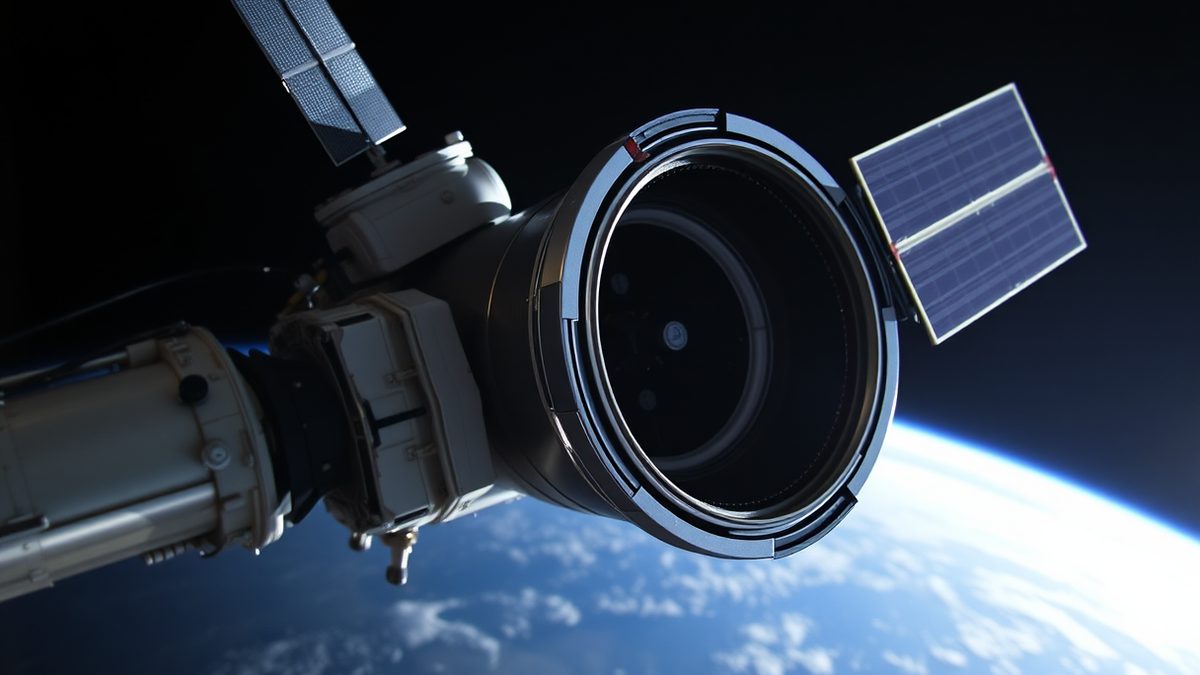
The announcement came on Wednesday, August 19. Scientific American and Ars Technica both reported it. Katalyst said in a LinkedIn post that "ongoing attitude control issues" mean "the mission will not include the capture and boost of NASA's Neil Gehrels Swift Observatory." The telescope launched in 2004, was designed for a two-year life, and has now operated for nearly 22 years.
Swift is not simply old. It is falling. Every satellite in low Earth orbit loses altitude to atmospheric drag, but the Sun's activity since 2024 has heated the upper atmosphere and sped up that decay. NBC News reported that NASA awarded the $30 million contract to the Arizona company in 2025. The deadline was hard: LINK had to launch by this summer to reach Swift before it burned up.
Nine months from contract to launch
Katalyst made it. LINK launched on July 3 aboard Northrop Grumman's Pegasus XL rocket. The spacecraft is about the size of a refrigerator, with two solar arrays, three xenon-fueled electric thrusters and three robotic arms meant to grab Swift and lift it to a higher orbit. Ars Technica noted that first-of-their-kind satellites normally take several years to prepare. Katalyst did it in nine months, and the schedule forced trade-offs engineers might not otherwise have accepted.
The first weeks went well, according to both Ars Technica and NBC News. Then, in late July, LINK spun out of control. NASA said on July 28 that attitude control systems had malfunctioned, "causing the spacecraft to spin and resulting in sporadic communications." NBC News reported the spin rate at about 9 degrees per second. Ars Technica, citing the hardware, said two of the satellite's three reaction wheels stopped working. Cold gas thrusters used for fine pointing also had problems. That left three low-impulse plasma thrusters as the only way to regain orientation.
"We took on this high-risk, high-reward challenge and are proud of the milestones we reached along the way," Katalyst CEO Ghonhee Lee said.
Mission managers did slow the spin this month by firing thrusters, but not enough. NASA called it off. The observatory had already paused science operations ahead of the rendezvous, so the failure leaves a gap in high-energy astronomy. Swift is unusual. It combines multi-wavelength instruments with agile pointing, and astronomers use it to detect gamma-ray bursts and then hand coordinates to other telescopes for follow-up. It has no thrusters of its own, which is why a rescue craft was the only option.
NASA administrator Jared Isaacman struck a defensive tone in his statement. "This is not the outcome we were working toward, but it does not change why this mission was worth attempting," he said. "NASA should be willing to move quickly and take smart risks when the potential return is worth it, and that is exactly what we did." Shawn Domagal-Goldman, director of NASA's astrophysics division, said the mission was "a first-of-its kind attempt, developed on an unprecedented timeline driven by the Sun's activity."
LINK still has a job
The spacecraft is alive. Katalyst and NASA say it will try to approach Swift for a demonstration of its close-in navigation system. That technology matters for a satellite servicing industry that does not yet exist at scale. Ars Technica reported that Katalyst is one of several US companies working on servicing missions that could one day refuel, repair or upgrade satellites.
Ars Technica also noted the mission's cost asymmetry: $30 million spent trying to save a $500 million observatory, on a nine-month schedule, with a spacecraft that had never flown. The failure does not settle whether rapid, low-cost rescue attempts are worth repeating. It does show how little margin there is when the Sun sets the deadline rather than a launch window.
Sources
3- 01NASA calls off rescue mission for its falling Swift space telescopeEN
- 02NASA mission to save its sinking space telescope failsEN
- 03NASA calls off mission to rescue Swift gamma-ray observatoryEN
All figures and quotations in this text come from the sources listed below.
Content prepared by the editorial team with AI assistance.
Sofia Marchetti
Comments
0- No comments yet — be the first.