Container port congestion sets 4.31m teu record, 12.6% of global fleet
Global container port congestion reached a record 4.31m teu in late August, above the roughly 4m teu peak of 2022, Linerlytica data show. The backlog equals 12.6% of the 34.4m teu fleet, below 2022's 15.7%.
 Peter LindqvistSport, cars and travel
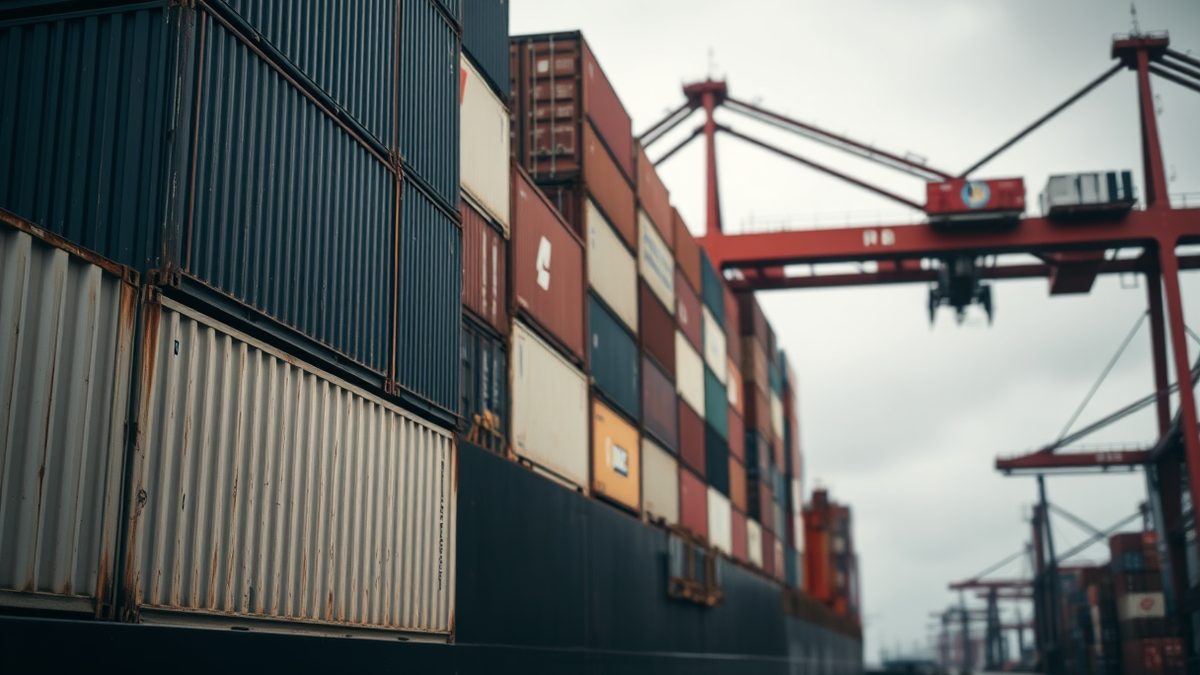
Queues above the 2022 record
Linerlytica put 4.31m teu of containership capacity waiting to berth worldwide in late August, above the previous peak of around 4m teu reached in 2022. Its latest update this week showed congestion still absorbing more than 4m teu. The record comes with a qualification: the backlog was 12.6% of the 34.4m teu global fleet, against 15.7% of a 25.3m teu fleet at the 2022 peak.
Sea-Intelligence estimates delays are removing about 1.7m teu of effective capacity, equal to 5.0% of global deep-sea capacity against an average of 2.2% between 2011 and 2019. Chief executive Alan Murphy said the extra 2.8 percentage points above that baseline equals 1.0m teu of absorbed capacity.
Typhoons leave Shanghai and Ningbo behind
Repeated typhoons since July stopped Shanghai and Ningbo-Zhoushan from clearing one backlog before the next storm arrived.
Typhoon Saudel closed Shanghai's Yangshan and Waigaoqiao terminals for 54 and 48 hours respectively, while Ningbo lost 78 hours of operations. Portcast counted 139 vessels waiting at Shanghai and 77 at Ningbo in late August, levels not seen during 2025 or 2026. Kuehne+Nagel put average waits at Shanghai at 4.72 days and Ningbo at 3.58 days, with individual terminals recording seven to nine days or more. Hapag-Lloyd reported Yangshan waits of five to six days for Gemini Cooperation services and seven to eight days for other carriers. Maersk chief executive Vincent Clerc said Shanghai waits had reached as much as 12 days.
Carriers responded by skipping calls. At least 320,000 teu of Gemini Cooperation capacity avoided Shanghai in the two weeks before 18 August, and another 70,000 teu skipped Ningbo, according to Hapag-Lloyd's operational update.
Rates rise as spare capacity runs out
Linerlytica calculates the Shanghai Containerized Freight Index at around 3,355 points, 156% higher than when the Iran conflict began.
Drewry's World Container Index stood at $4,526 per 40-foot container on 20 August. Spot rates from Shanghai to New York reached $9,507 per 40-foot container and Shanghai to Los Angeles $6,802, both 9% higher week on week.
S&P Global's Platts Container Index jumped to $7,565 per feu on 21 August, its highest level this year, with analysts citing typhoon-related Asian port delays, space shortages and Panama Canal restrictions. Schedule reliability has not recovered either. Sea-Intelligence puts it at 60-65%, against 70-80% between 2011 and 2019, and late ships now arrive five to five-and-a-half days behind schedule instead of three to four. Global fleet idling was just 0.5% in August.
Strikes and Panama restrictions add to delays
Europe added its own disruption. A 48-hour warning strike hit Hamburg, Bremerhaven, Wilhelmshaven and other German gateways, leaving Bremerhaven at 88% yard occupancy. Rotterdam saw separate industrial action on 4 September, with some terminals approaching 90% utilisation.
Panama will cut Neopanamax transit slots to nine a day from 3 September after below-normal rainfall.
The World Bank and S&P Global's Container Port Performance Index describes burst congestion: vessels arrive in clusters after rerouting or delay, overwhelming even well-equipped ports. ICIS said China's September-October export peak threatened to prolong the disruption.
Sources
23- 01Perfect storm sends global port congestion beyond pandemic peakEN
- 02Container port congestion smashes covid-era recordEN
- 03China Port Delays Push Stranded Container Capacity Above Covid PeakEN
- 04Port Delays and Congestion Absorb 5% of Industry's TEU CapacityEN
- 05Container Port Queues Shatter Covid Record: Typhoon Saudel Intensifies CrisisEN
- 06Disruption reshapes the rankings rather than derailing growthEN
- 07Why Port Efficiency Matters More Than Ever Amid Global Shipping DisruptionsEN
- 08How Ambi Robotics helps its customers prepare for peak seasonEN
- 09Toyota updates the 2027 RAV4 PHEV with an NACS port and up to 52 miles of EV rangeEN
- 10SonicWall Global Management System verwundbar, bekommt aber keine Updates mehrEN
- 11 Early Black Friday beginner telescope deal — this portable Celestron is now 25% off at Amazon EN
- 12The 2027 Chevy Silverado EV Gets A Power Bump And A NACS PortEN
- 13How GlobalLogic helped Haystack Robotics build a UV disinfection robotEN
- 14 Nvidia tells data center operators to limit business from Chinese customers with new global restrictions, report claims EN
- 15Short-Term Forecasting of Heterogeneous Wind Power Fleets: Global Temporal Fusion Transformer Leveraging Static CovariatesEN
- 16Jackery Launches Explorer 100D Portable Power Station. Maximum Capability For Carryon CompatibilityEN
- 17Nio's flagship ES9 SUV reaches 3,000 deliveries in its global headquarters cityEN
- 18Global EV battery market share in January-September 2026: CATL 39.1%, BYD 15.2%EN
- 19Scientists confirm global warming is accelerating faster than ever recordedEN
- 20Beyond the follower count: What the world’s most marketable athletes have in commonEN
- 21AI sell-off would rattle global economy, EU watchdog warnsEN
- 22Securing a Global Giant: HKSTP Lands Merck to Power Hong Kong’s I&T AmbitionsEN
- 23Beijing pushes for UN-led governance of artificial intelligence at global forumEN
All figures and quotations in this text come from the sources listed below.
Content prepared by the editorial team with AI assistance.
Peter Lindqvist
Comments
0- No comments yet — be the first.