GM names Spring Hill as first LMR battery plant as BYD tests solid state sedan
General Motors will mass-produce prismatic lithium manganese rich (LMR) battery cells at its Spring Hill, Tennessee plant, its Ultium Cells joint venture with LG Energy Solution said on Tuesday, claiming a world first for the chemistry.
 Daniel FisherSport, cars and travel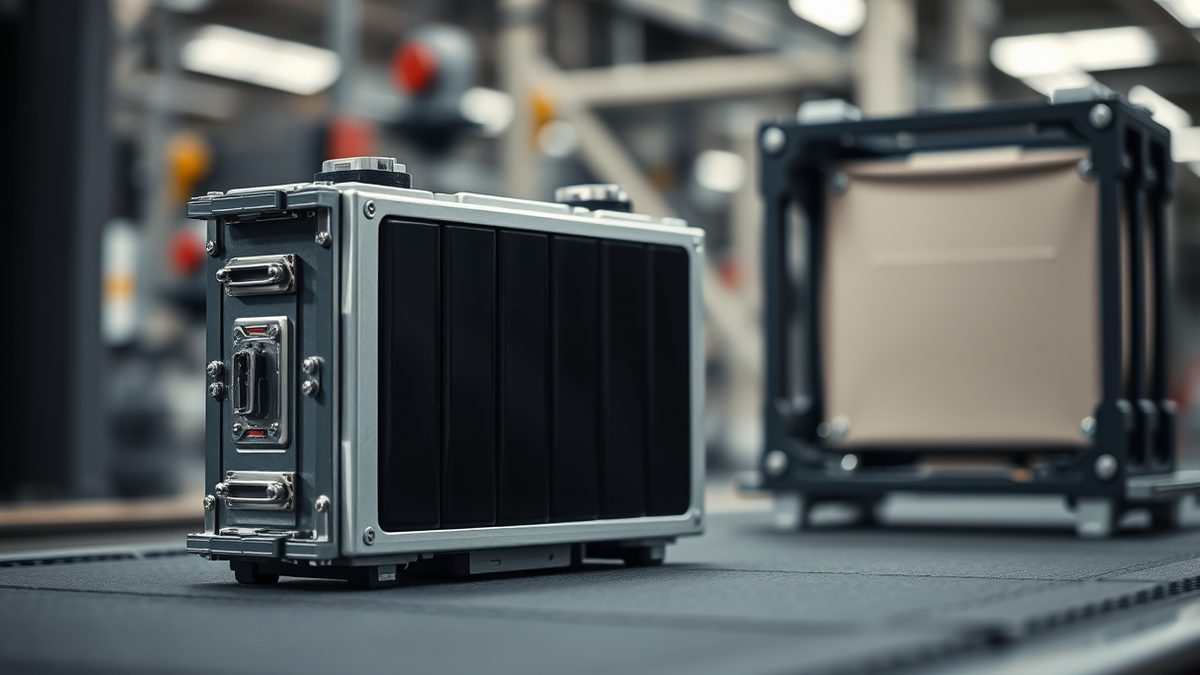
Ultium Cells announced on Tuesday that the Spring Hill facility will build the cells, with upgrades starting later this year and finishing by 2028. The company says LMR delivers 33 percent higher energy density than lithium iron phosphate at a comparable cost, according to Electrek's report on 29 September.
GM will put the cells in upcoming electric trucks and full size SUVs, targeting over 400 miles of range. Kurt Kelty, GM vice president of battery and sustainability, said high-nickel cells will still deliver the highest range, and that adding LMR "positions us to leapfrog today's more affordable chemistries and deliver lower costs with better performance." The expansion adds 500 jobs at the site, taking the workforce to 1,700. The first vehicle with the new chemistry is expected in 2028. GM's current longest-range EV, the Chevrolet Silverado EV, is rated at up to 478 miles on a single charge with a high-nickel pack and starts at $55,895.
BYD's luxury gamble
The same day, Electrek reported that BYD is testing an ultra-luxury Yangwang sedan in China that local outlet Autohome says will be the company's first EV to use solid-state batteries. The car is about 5.5 meters long, roughly the size of a Mercedes-Benz Maybach S-Class, and will be BYD's first with rear-hinged coach doors. Yangwang general manager Hu Xiaoqing shared images on Weibo and confirmed the name is not final; internally it is called "HU." Zheng Yu, Yangwang's executive general manager, said the model will feature "unprecedented disruptive technology" but gave no specifics. Reports estimate a price above 2 million yuan, or nearly $300,000, against 658,000 yuan for the current Yangwang U7 sedan.
BYD executive vice president Stella Li told Carwow.es earlier this month that the company is "in the leading position" in solid-state battery technology and commercialization, and will "prove it" with a first solid-state vehicle in 2027. FinDreams, BYD's battery business, aims to start limited output of sulfide-based all-solid-state cells in 2027 and scale to mass production by 2030. The luxury-first pattern is not unique to BYD. A separate report on battery lifespan notes that solid-state and semi-solid cells are expected to appear in premium vehicles before any mainstream rollout, with cost the main brake.
Chemistry races elsewhere
Volkswagen Group, its PowerCo subsidiary and Gotion High-tech signed an agreement on 29 September to industrialize LFP battery production across Europe and North Africa, according to EVSpecifications. Mercedes-Benz also deepened its solid-state work, signing a joint testing agreement with ProLogium that gives it priority access to Gen4 Superfluidized All-Inorganic Solid-State Lithium Ceramic Battery cells.
In India, the data pointed the other way. September 2026 registrations for electric two-wheelers rose sharply, with TVS retaining the lead over Bajaj and Hero, according to electricvehicletalks.com. Industry trade body SIMMT said on 1 October that new electric car registrations in its market climbed 80 percent in September.
What the chemistry is for
Battery cost and density matter most where vehicles work hardest. A Transport & Environment analysis published on 28 September found electric trucks are already the cheapest option in six of nine major EU markets, which account for 46 percent of new heavy truck sales. Five-year savings reach 100,000 euros in the Netherlands, 85,000 euros in Germany and 69,000 euros in Denmark, with payback after two years, according to the analysis. Operating a Chinese-built truck pushes savings to 128,000 euros in the Netherlands.
Stationary storage is drawing on the same cells. In Vermont, more than 5,500 homes have leased home batteries from utility Green Mountain Power for $55 a month over 10 years, forming a virtual power plant that the BBC reported has become the state's largest power source. New Zealand's Energy Efficiency and Conservation Authority said up to 100 two-way chargers will be installed in Auckland homes and businesses to test vehicle-to-grid discharge, with a smaller Queenstown trial already expanding. EECA policy manager Murray Bell said a charged car battery "can run your household for up to three or four days" during an outage.
Degradation remains the open question. Geotab's 2026 analysis of more than 10,000 electric vehicles found average battery degradation of about 1.8 percent a year, while the US Department of Energy expects 12 to 15 years of life in moderate climates and 8 to 12 years in more extreme ones.
Sources
10- 01GM's new EV battery tech will cut costs without sacrificing rangeEN
- 02BYD tests ultra-luxury EV with coach doors and a solid-state batteryEN
- 03EVSpecifications - Electric vehicle specifications, electric car newsEN
- 04Electric Vehicle News - Latest Electric Vehicle Updates & TrendsEN
- 05Are Electric Trucks Cheaper To Operate Than Diesel?EN
- 06Vermont replacing power plants with home batteriesEN
- 07EVs being trialled as giant batteries to power homes for less in AucklandEN
- 08How Long Does an Electric Car Battery Last? Lifespan, Warranty, and ReplacementEN
- 09Electric Future, Established Name: The New ID. Tiguan Premieres in OctoberEN
- 10Electrification efficiency: The world will need less energy after the transitionEN
All figures and quotations in this text come from the sources listed below.
Content prepared by the editorial team with AI assistance.
Daniel Fisher
Comments
0- No comments yet — be the first.