Home batteries, EV chargers and paper power: how storage is leaving the power plant
Auckland's new vehicle-to-grid trial, announced on 29 September, will put up to 100 two-way chargers into homes and businesses, part of a wider shift that is turning cars and household batteries into grid capacity.
 Daniel FisherSport, cars and travel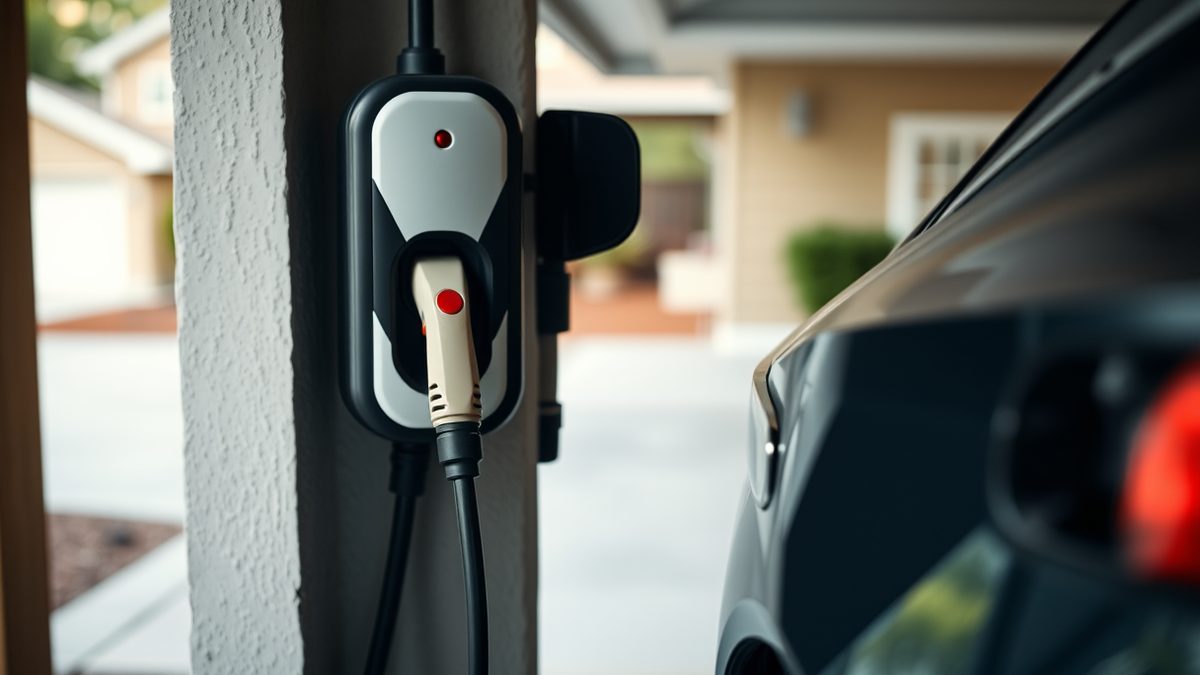
The Energy Efficiency and Conservation Authority (EECA) said the trial will install up to 100 two-way chargers in Auckland and other urban centres, according to RNZ's report on 29 September.
Two-way chargers let an EV charge as usual, then push electricity back into a home, a business or the national grid when demand peaks. Murray Bell, who manages policy and regulation at EECA, said the findings would build an evidence base for future policy. He also flagged the practical barriers. Very few combinations of EVs and two-way chargers are compatible in New Zealand, and some manufacturers worry about how third-party equipment affects battery performance. Older household wiring is another problem, as is the question of where to put a charger. Counties Energy, partner for the trial and operator of the OpenLoop charging service, will recruit participants and deploy the chargers. Its chief network and digital officer, Moonis Vegdani, said BYD, now New Zealand's second-most popular EV maker behind Tesla, had taken part in Australian trials and the company would look at a similar arrangement.
Vermont has already built one
The concept is not theoretical. In Vermont, Green Mountain Power (GMP) leases two home batteries to participants for $55 a month over 10 years, the BBC reported on 29 September. Those batteries now form the backbone of what has quietly become the state's largest power source. More than 5,500 households have systems. Pollyanna Bladyka, a resident of Springfield in eastern Vermont, told the BBC she chose the lease over a $12,000 gas generator and has not lost power since installation in 2024. "I'd like to say I did it for the environment, but I did it for myself," she said. "But I don't mind helping."
The numbers behind the model are large. The US now has over 40GW of virtual power plant capacity, according to internal analysis by Wood Mackenzie cited by the BBC, against roughly 600GW of natural gas and 200GW of coal. A 2025 US Department of Energy report cited in the same piece put potential capacity at 160GW by 2030, equal to about 20% of expected peak demand. GMP says seven of the ten most damaging storms in its history occurred in the last decade, causing more than $225m in damage.
The other end of the grid
Where Vermont adds storage, Delhi removed waste. Writing in IEEE Spectrum on 29 September, a professor of electrical engineering at Jamia Millia Islamia described a city that lost more than half its power to obsolete equipment and theft in 2002. Distribution losses have since fallen to 5 to 6 percent in 2026, on par with France and Belgium. The piece is a first-person account, so treat the reliability claims as the author's own experience rather than an independent audit.
Storage is also shrinking at the other extreme. Researchers at MIT built a swallowable battery from a papery cellulose cathode, a magnesium alloy anode and an electrolyte made by melting choline chloride and lactic acid, Chemical & Engineering News reported on 28 September. Delivered by endoscope into pig stomachs, it powered an RFID tag and a stimulation device for three days, with voltage dipping from 1.84V to 1.45V, then disintegrated within weeks. Yasser Khan of the University of Southern California, who was not involved, called powering electronics inside the body "one of the biggest challenges in our field" and said biocompatibility testing is still needed.
The demand picture explains the interest. A study by Oxford professor Nick Eyre, worked through by Hannah Ritchie on 29 September, suggests final energy demand falls about 40% in a decarbonised system, from 416 to 247 exajoules, even as electricity demand rises from 110 to 189 EJ. Electric cars convert around 80% of energy to motion against 20% for petrol. Separately, VDE calculated that every euro invested in international electrical engineering students in Germany generates about 16 euros in added value, but more than half of international master's graduates leave the country.
Sources
6- 01EVs being trialled as giant batteries to power homes for less in AucklandEN
- 02The US state replacing power plants with home batteriesEN
- 03How Delhi Cut Electricity Loss from 50 to 5 PercentEN
- 04This Battery Is Ready to EatEN
- 05Electrification is efficiency: The world will need less energy after the transitionEN
- 06VDE Figures: Electrical Engineering Programs Are Popular Internationally - But the Majority Leave Germany AgainEN
All figures and quotations in this text come from the sources listed below.
Content prepared by the editorial team with AI assistance.
Daniel Fisher
Comments
0- No comments yet — be the first.