GM picks Spring Hill for LMR cells as Geely pushes 1,100 kW charging
General Motors will build prismatic LMR battery cells at its Spring Hill, Tennessee plant, Ultium Cells said on Tuesday. The company claims the chemistry delivers 33 percent more energy density than LFP at a comparable cost.
 Daniel FisherSport, cars and travel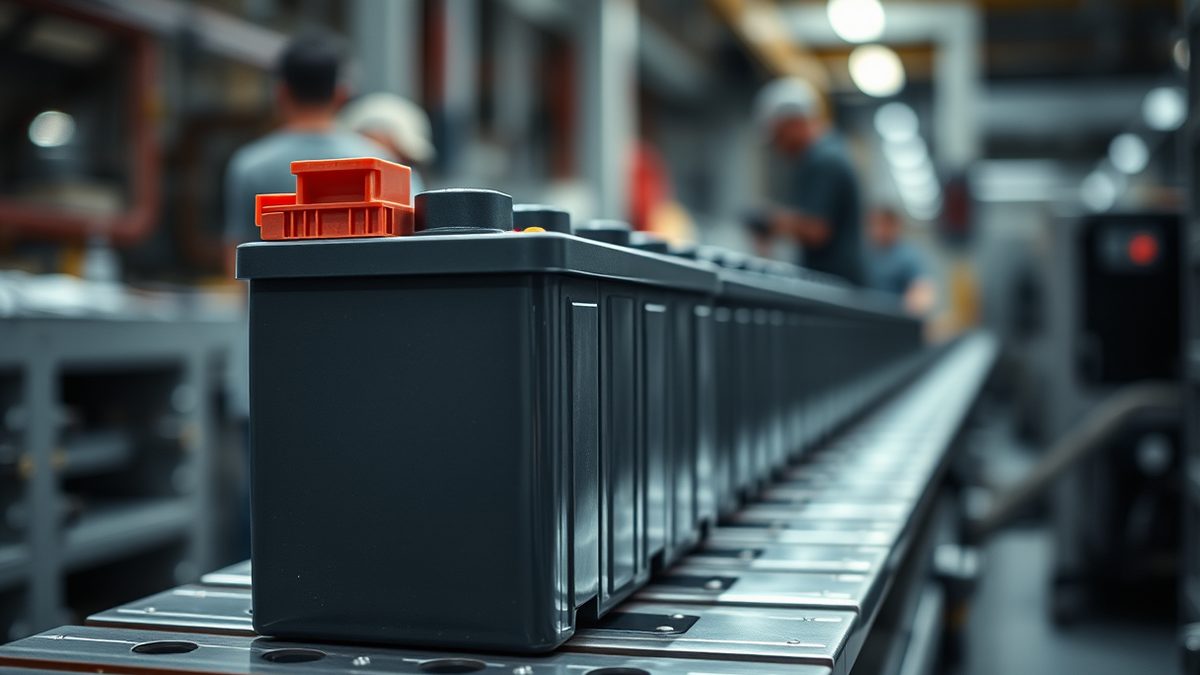
Electrek reported the announcement on 29 September. It ends more than a year of silence about where the lithium manganese rich cells would be made. GM and LG Energy Solution, its partner in the Ultium Cells joint venture, first showed the chemistry in 2025. In the company's words, Spring Hill is expected to be "the first in the world to mass produce prismatic LMR battery cells."
GM says the cells will go into upcoming electric trucks and full-size SUVs, with a target of more than 400 miles of range. Upgrades at the plant start later this year and should finish by 2028. The expansion adds 500 jobs, taking the workforce to 1,700.
Kurt Kelty, GM's vice president of battery and sustainability, framed the move as a portfolio play rather than a single bet. "Adding LMR positions us to leapfrog today's more affordable chemistries and deliver lower costs with better performance," he said. Kelty also said the ability to build high-nickel, LFP and now LMR cells, in both pouch and prismatic formats, lets GM "scale efficiently, reach more customers, and support GM's long-term EV strategy."
The first vehicle with LMR batteries is expected in 2028. For comparison, GM's current longest-range EV, the Chevrolet Silverado EV, is rated at up to 478 miles on a single charge using a high-nickel pack, and starts at $55,895, per Electrek.
What GM is describing is a chemistry bet on the middle of the market: cheaper than nickel-rich cells, denser than LFP. Whether that trade-off survives contact with production volumes at Spring Hill is the open question.
Geely goes the other way on charging
On the same day, InsideEVs reported that Geely Auto Group is chasing the opposite problem. Its new Ultra Short Blade Battery can peak at nearly 1,100 kilowatts. The company demonstrated a Lynk & Co 10 charging from 10 to 97 percent in 8 minutes and 40 seconds. That is well above the 400 kW peak of the Lucid Gravity and Porsche Cayenne Electric, and above the 600 kW the upcoming Mercedes-AMG GT will take, according to the same report. Most mass-market EVs in the US average around 30 minutes for a 10 to 80 percent charge.
Fast charging at those rates accelerates battery aging, and Geely did not pretend otherwise. "We do not advocate fast-charging technologies at the expense of lifespan," said Jerry Gan, CEO of Geely Auto Group. "If a battery frequently fast-charged is not maintained or repaired, its lifespan suffers irreversible decline."
Geely's answer is a mix of cell geometry and software. The Ultra Short Blade cell comes in 395 mm and 370 mm lengths, smaller than Geely's own 580 mm cell and the roughly 960 mm the company calls typical for the industry. Shorter cells mean a shorter path for lithium ions, which cuts internal resistance and heat. Ren Xiangfei, Geely's chief engineering scientist, described cathode changes using "high entropy elements" as "turning a single lane into a multi-lane highway," and anode structural work as "building a flyover." An AI-powered charger management system is meant to keep the pack inside its thermal limits. The company raised the battery warranty from eight years and 150,000 km to eight years and 200,000 km.
Geely also broke down where the heat comes from at megawatt speeds: 60 percent from current pushed through the cells' internal paths, about 35 percent from electrochemical reactions, and the rest from what it called entropic heat. The company's own framing is a useful corrective to charger marketing, which tends to quote peak kilowatts and stop there.
Two chemistries, two different problems
Read the GM and Geely announcements together and the split in the industry gets clearer. GM is trying to cut cost per kilowatt-hour without giving up range on trucks that need big packs. Geely is trying to stop a 1,100 kW charge from destroying the pack it just sold you.
The common thread is degradation, and how much of it a manufacturer is willing to warranty against. GM has not published a degradation figure for LMR. Geely has published a warranty extension, which is the more concrete claim of the two.
Battery chemistry is not the only variable. A Drive Smart Tools explainer published on 30 September lays out why LFP and nickel-rich packs behave differently in cost, durability and cold weather, and notes that charging guidance varies by vehicle. The piece also points out that solid-state cells, often floated as the next step, are not yet standard in mass-market cars because of manufacturing, cost and durability problems.
That caution is worth keeping in mind against the flow of announcements. Chinese firms are already past 1,000 kW for passenger cars, InsideEVs notes, while Western automakers are planning 750 kW chargers and shipping cars that peak at 400 kW. The gap is real, and it is measured in hardware that exists, not roadmaps.
For US buyers, the nearer question is price. GM says LMR is about cost parity with LFP and 33 percent denser. If that holds at volume, it changes what a 400-mile electric truck costs. If it does not, Spring Hill becomes another plant with a chemistry it cannot sell cheaply enough.
Neither company has announced a production vehicle date for the cells beyond GM's 2028 target. The Public Utilities Commission of Texas, meanwhile, has its own energy problem to settle, as Inside Climate News reported on 30 September: administrative law judges recommended approving El Paso Electric's 366 MW gas plant for Meta's $10 billion El Paso data center only if ratepayers are shielded from the cost. Batteries are not the only load growth story in the country.
Sources
6- 01GM's new EV battery tech will cut costs without sacrificing rangeEN
- 02How Geely's New Battery Handles A Megawatt Of Charging Power Without Crazy DegradationEN
- 03What Type of Batteries Do Electric Cars Use?EN
- 04Texas Electric Utility Only Considered Gas to Power $10 Billion Meta Data CenterEN
- 05Is The US Going To End DEAD LAST In Vehicle Electrification?EN
- 06Electric Vehicle News - Latest Electric Vehicle Updates & TrendsEN
All figures and quotations in this text come from the sources listed below.
Content prepared by the editorial team with AI assistance.
Daniel Fisher
Comments
0- No comments yet — be the first.