Goal-line technology: 250,000 pounds per stadium and one loud mistake
IFAB cleared goal-line measurement in July 2012. A year later the Premier League was paying 15,000 pounds per club and a quarter of a million per stadium. The system still failed once.
 Peter LindqvistSport, cars and travel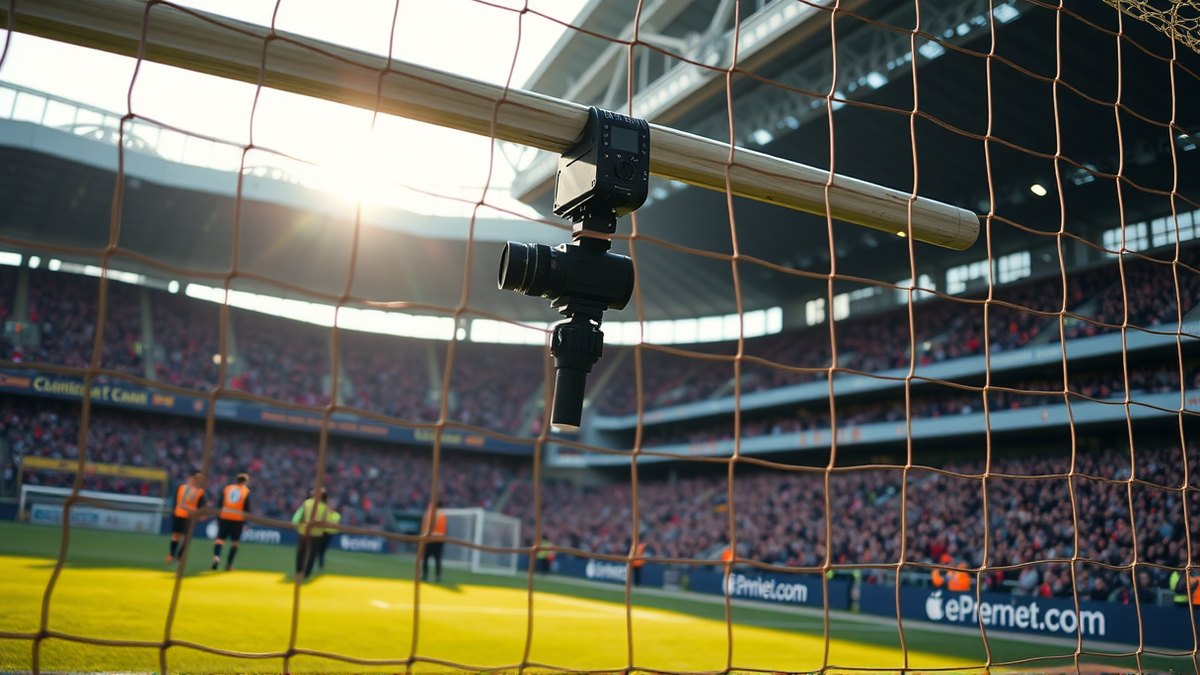
Goal-line technology is not there to replace the referee. It is there to help him decide whether the ball crossed the goal line in full. The International Football Association Board (IFAB), the body that writes the laws of the game, approved its use in July 2012. The rules changed so the system was allowed, not required.
Permission rather than obligation had one reason behind it: cost. The Premier League decided to install the system at all twenty top-flight stadiums before the 2013/14 season. Each club paid FIFA 15,000 pounds for installation, testing and the "FIFA quality seal". One venue came to roughly 250,000 pounds in total. FIFA charged another 15,000 for every further match. That is why goal-line technology runs only at the highest level of the game.
The first decision and the mistake
The first goal in the English top flight awarded unambiguously thanks to the system was a strike by Edin Džeko for Manchester City. The story also recorded a failure. In the Blackburn against Blackpool match, Yuta Nakayama lobbed the ball over the goal line before Daniel Grimshaw could clear it. The system did not report a goal. The referee did not award one, and the match ended 0:1. The English league issued a statement the next day: the referee's decision is final and the result stands.
That case shows the core of the problem with measurement systems. The technology does not "tell" the referee what to do. It supplies a reading, and the decision stays with the human. If the reading is wrong or incomplete, the official makes the wrong call in the full belief that he is acting in line with the technology.
Different leagues, different systems
Rollouts were uneven. The German Bundesliga adopted goal-line technology from the 2015/16 season and chose the cheaper Hawk-Eye system, rejecting two German technologies. Ligue 1 introduced the GoalControl system in the same season and switched to Hawk-Eye in 2018.
Earlier experiments were not convincing. Tests of a ball with an implanted microchip, which was supposed to send a signal to the referee once it crossed the line, were already run at the Under-17 World Cup in Peru. Sepp Blatter, then FIFA president, said the evidence was not clear. In 2012 the Hawk-Eye system worked at a Hampshire Senior Cup match at St Mary's Stadium in Southampton, but only in research mode: the readings went to an independent FIFA testing agency, not to the referee.
The criticism was not only about the technology. It was argued that the solution is too expensive for smaller and poorer federations.
Twelve years after the IFAB decision the picture is mixed: measurement works where the money is, and disputed cases still happen. It is an instructive precedent for all the later systems, from semi-automated offside to ball tracking.
Sources
2- 01Goal-line technologyEN
- 02Hawk-EyeEN
All figures and quotations in this text come from the sources listed below.
Content prepared by the editorial team with AI assistance.
Peter Lindqvist
Comments
0- No comments yet — be the first.