Google's quantum supremacy claim lands, but IBM calls it a lab stunt
Google says its 53-qubit Sycamore processor sampled a quantum circuit in about 200 seconds, a task it estimates would take a state-of-the-art supercomputer roughly 10,000 years. IBM's research head Dario Gil called the experiment a special case with "no practical applications."
 Grace OkonkwoAI, models and technology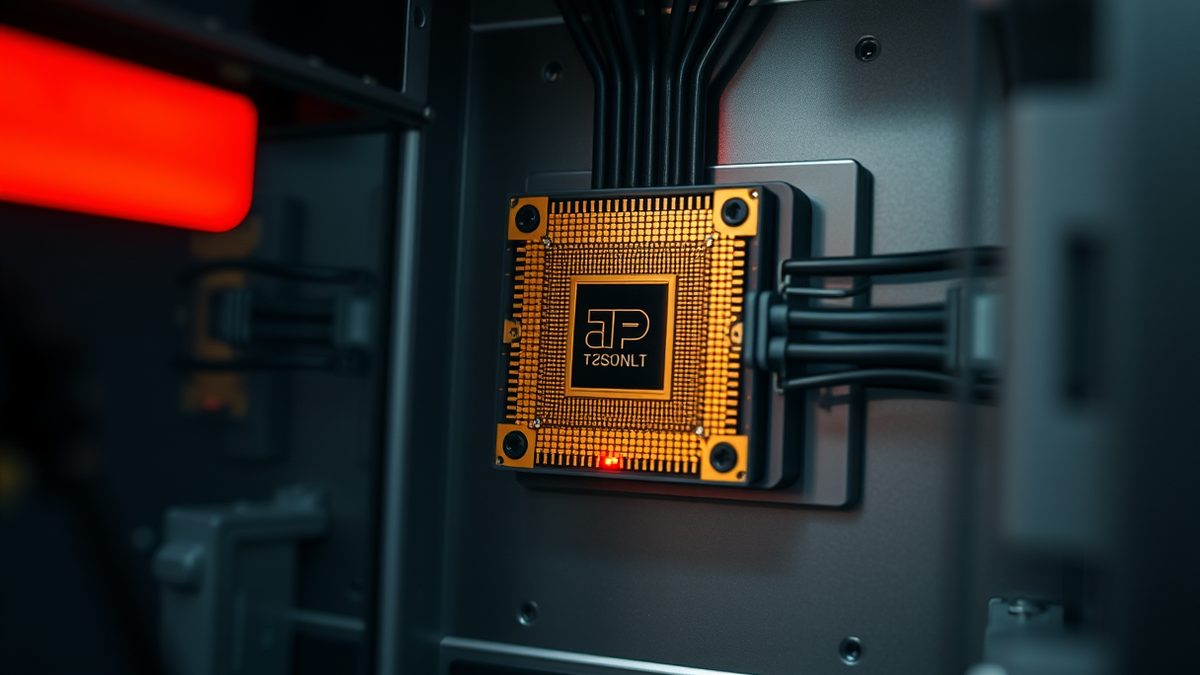
Google's claim, made in a paper posted to NASA.gov before being taken down, is the most serious indication yet that quantum processors can outperform classical machines on a narrow task. Fortune obtained a copy of the paper and reported on 20 September 2019 that a Google spokesperson declined to confirm its authenticity. A source at the company told Fortune that NASA published the paper early, before peer review had run its course.
The numbers in the paper are stark. "While our processor takes about 200 seconds to sample one instance of the quantum circuit 1 million times, a state-of-the-art supercomputer would require approximately 10,000 years to perform the equivalent task," the researchers wrote. On a Google Cloud server, the same experiment would take an estimated 50 trillion hours. On the quantum processor, it took 30 seconds.
That gap is the whole argument. Google calls the machine Sycamore, a 53-qubit chip scaled back from a 72-qubit design named Bristlecone. The paper states that superconducting qubits can now perform computations "beyond the reach of the fastest classical supercomputers available today," and that the experiment "marks the first computation that can only be performed on a quantum processor."
Not everyone reads it that way.
Dario Gil, who leads IBM Research, told Fortune the result should not be used as a progress metric. "The experiment and the 'supremacy' term will be misunderstood by nearly all," he said. He described it as a highly special case laboratory experiment with no practical applications, and argued that quantum computers will work alongside classical machines rather than replace them. Jim Clarke, Intel Labs' director of quantum hardware, called it "a notable mile marker" but said a commercially viable quantum computer needs many more R&D advances. "While development is still at mile one of this marathon, we strongly believe in the potential of this technology," Clarke said.
The dispute is not new. Two years earlier, in April 2017, John Martinis, who leads Google's quantum research group, told MIT Technology Review he had given himself until the end of that year to reach quantum supremacy. The team had just built a six-qubit chip arranged in a two-by-three grid, a test of a manufacturing method in which qubits and their control wiring are made on separate chips and then bump bonded. Martinis said a 49-qubit grid would be needed for the actual experiment. "We think we're ready to do this experiment. It's something we can do now," he told the magazine.
By December 2017, at a quantum computing for business conference at NASA Ames, Martinis was pushing back on how the race was being scored. "Press releases always talk about quantum space race in number of qubits," he said, according to Gizmodo. "It's more than just quantity, it's qubit quality." He said Google was then fabricating a 49 or 50 qubit device and would begin testing within two weeks.
IBM had its own timing. On 10 November 2017, the company said its scientists had built and measured a 50-qubit processor prototype. Dario Gil said at the time it was the first time any company had built a quantum computer at that scale. Seth Lloyd, an MIT mechanical engineering professor not involved in the research, told the Associated Press that IBM likely still had glitches to work out but that the announcement was a sign of significant progress.
Scale, though, turned out to be a moving target. By March 2019, IBM was promoting a different measure, Quantum Volume, which combines qubit count with connectivity, coherence time, gate and measurement errors, device cross talk and compiler efficiency. IBM said its Q System One, with a 20-qubit processor, reached a Quantum Volume of 16, double its earlier IBM Q system. The company projected that Quantum Volume would need to double every year to reach Quantum Advantage within a decade.
What Google demonstrated, by contrast, is a benchmark rather than a product. The paper's own framing is careful: quantum computing is "transitioning from a research topic to a technology that unlocks new computational capabilities," and "we are only one creative algorithm away from valuable near-term applications." That is a claim about what might follow, not about what the machine does today.
The experiment samples randomly generated numbers through specialized circuits. It has no obvious industrial use. Google's own researchers predict quantum computing power will "grow at a double exponential rate," which would outpace the roughly two-year doubling of classical computing described by Moore's Law. Whether that curve holds is exactly what peer review, and the next few machines, will decide.
Sources
5- 01Google Claims 'Quantum Supremacy,' Marking a Major Milestone in ComputingEN
- 02Google's New Chip Is a Stepping Stone to Quantum Computing SupremacyEN
- 03Why Google Is Poised to Hit the Next Critical Milestone in Quantum ComputingEN
- 04IBM says it's reached milestone in quantum computingEN
- 05IBM hits quantum computing milestone, may see 'Quantum Advantage' in 2020sEN
All figures and quotations in this text come from the sources listed below.
Content prepared by the editorial team with AI assistance.
Grace Okonkwo
Comments
0- No comments yet — be the first.