Humanoid robots meet the factory floor: data, latency and a boardroom fight
Innodata opened a motion-capture lab on 30 September to feed physical AI the real-world data it lacks. New latency and benchmark research shows how far humanoids still are from reliable factory work.
 Rachel NwosuAI, models and technology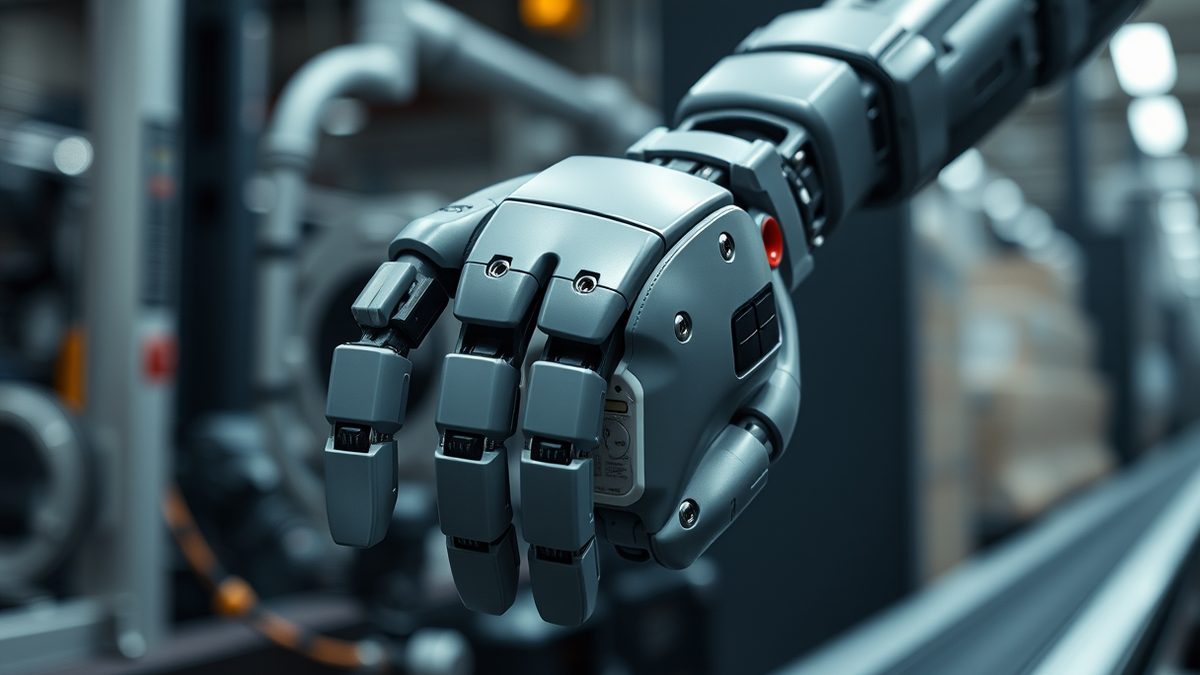
Innodata opened a motion-capture laboratory on 30 September. The company says the lab will generate training data for humanoid and industrial robots, and will independently check the performance figures those robots report about themselves. Innodata, a data engineering company based in Ridgefield Park, New Jersey, built the facility with Vicon, whose infrared optical tracking cameras measure movement down to the sub-millimeter level, according to The Robot Report.
The lab is the newest item in a week of hardware and software announcements that all point at the same gap. Robots can move. The data and control loops behind them are not yet good enough for ordinary factory shifts.
Throwing money at the data problem
"Physical AI is growing faster than any other segment in AI, but every robotics team hits the same wall: There isn't enough real-world interaction data, and what exists is expensive and slow to produce," Innodata CEO Rahul Singhal said in the announcement. Franklin Tanner, the company's vice president of robotics and physical AI, told The Robot Report that large language models can feed on the open internet, while robots cannot. "Physical AI has to earn its tokens one interaction at a time, and they have to be deliberate."
Innodata says it captures 3D motion directly from bodies, human or mechanical, rather than inferring it from 2D video. The resulting data can seed digital twins for edge cases. Tanner also named a limit the industry does not like to discuss: no training data exists today for situations where humans and robots interact. That is one area the new lab is working on.
Innodata is not alone in arguing that data, not the robot body, decides deployment. Destro AI came out of stealth on 30 September with an $8 million seed round led by Base10 Partners and Bonfire Ventures with CoFound Partners, and an unusual pitch. It does not build robots at all.
"One of the biggest reasons we are winning against robotics companies is because we are not a robotics company," founder Manthan Pawar told TechCrunch.
Orchestrating humans and carts
Destro's software directs the human workers as well as the machines. At a Yusen Logistics facility in the Pacific Northwest, three cart-moving robots built by Miva Robotics run on Destro's Vision operating system, which is based on open-weight vision-language-action models. Workers unload goods from one truck into carts, and the robots move the full carts to their destinations. Destro's Mothership operating system coordinates people, carts and trucks. Yusen's Richard Brunelle told TechCrunch that two other robot startups could not fit the same cross-dock workflow. One moved carts point to point but could not handle loading or unloading. The other needed a person for orchestration.
Destro is now expanding that pilot to 26 robots and starting a second one with 17 robots in Southern California. Pawar's plan is to copy the cross-dock workflow across other warehouses, though TechCrunch notes the company has not yet shown it can handle tasks that need real dexterity.
Speed is the other half of the problem. MindOn published a technical post on 30 September introducing Mind-1, a physical AI model it says cuts robot inference latency from 82 milliseconds to 32 milliseconds, bringing task execution toward human cycle times. The post is candid about why that matters. At an end-effector speed of 3 metres per second, 10 milliseconds of latency equals roughly 3 centimetres of movement, enough to ruin a grasp or an insertion. MindOn also points out that most manipulation data comes from teleoperation, which is far slower than natural human motion, so models learn a slow tempo along with the task.
Benchmarks hide the jagged edges
A separate study published on 30 September by researchers at Fig. Inc questions the scores used to compare the models that drive all of this. The team ran seven frontier models, including Astra and Opus 5.5, across 177 closed-loop web tasks in VisualWebArena, then ran three models across four physical domains: VLABench, Assembly101, IndEgo and Bench2Drive. Its conclusion is that benchmark averages hide how unevenly models perform. For every pair of models tested, the weaker one solved at least one task the stronger one missed. A model update can leave the average almost unchanged while flipping many individual tasks. Models that beat Gemini 3.5-Flash on every domain average still did worse in some task categories.
None of this is only a research problem. On 30 September, TechCrunch reported that Matan Grinberg, co-founder and CEO of the AI coding startup Factory, said he fired VC Chris Degnan as a board adviser, alleging Degnan shared confidential information with competitor Cognition. Degnan announced two hours later that he had joined Cognition as chief revenue officer, and said he resigned rather than being fired. Khosla Ventures, an investor in both companies, saw its founder Vinod Khosla and partner Keith Rabois take opposite sides on X. Factory raised $200 million at a $5 billion valuation this month; Cognition raised $2 billion at a $48 billion valuation.
The money is clearly there. The reliable robot that earns it back on a factory floor is still the open question.
Sources
4- 01Innodata opens motion-capture lab to help humanoids move more like peopleEN
- 02Destro AI's secret sauce is getting robots and humans on the same pageEN
- 03Mind-1: Physical AI at Human Speed, Built for Real WorkEN
- 04Astra, Opus 5.5, and other Frontier Models Demonstrate Jagged Performance Across SoTA Agentic Tasks from Web Browsing to RoboticsEN
All figures and quotations in this text come from the sources listed below.
Content prepared by the editorial team with AI assistance.
Rachel Nwosu
Comments
0- No comments yet — be the first.