Hyundai Workers Strike Over Humanoid Robots as China Trains Them for Factories
Thousands of unionized workers at Hyundai's Ulsan plant walked off the job after talks over humanoid robot deployment collapsed, while China pushes ahead with state-funded training centers for the machines.
 Rachel NwosuAI, models and technology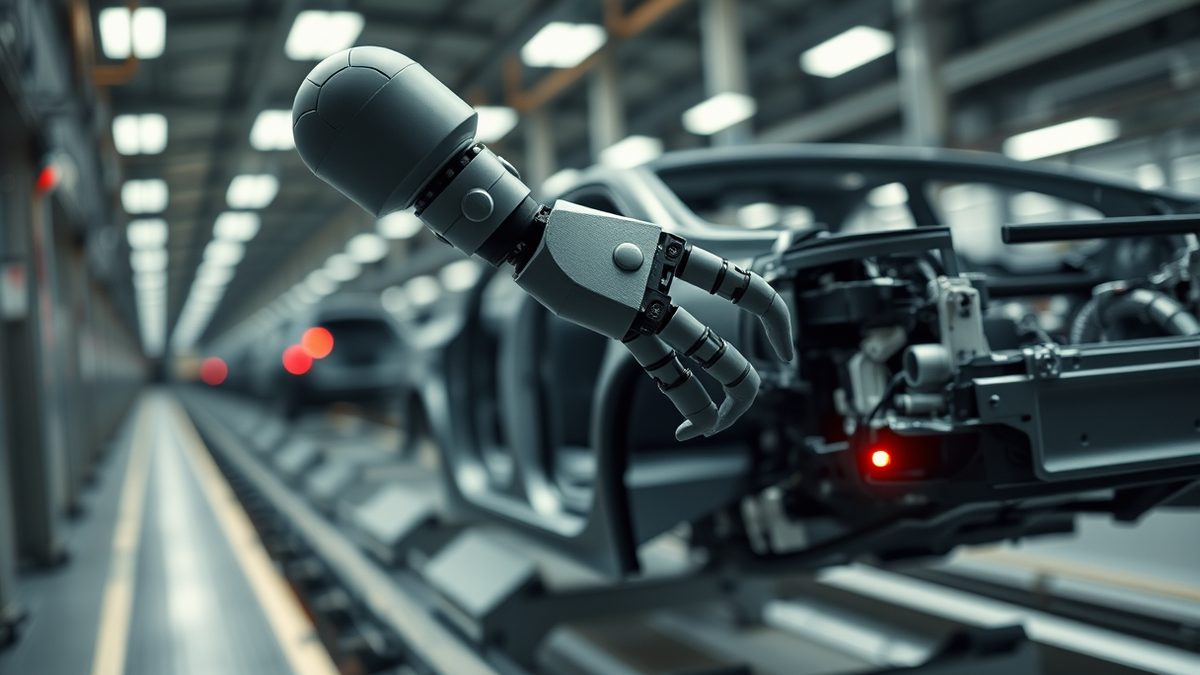
The partial strike at Hyundai's automotive production complex in Ulsan, South Korea, is the car industry's first factory stoppage over humanoid robots, according to The Wall Street Journal. Workers ended day and night shifts two hours early from July 13 through July 15. They planned four-hour strikes from July 20 to 22 after 15 rounds of negotiations failed, The Korea Times reported.
The trigger was Atlas, a two-legged robot made by Boston Dynamics. It stands more than 6 feet tall and can lift over 100 pounds. Hyundai Motor Group unveiled the latest version at the start of this year.
The automaker aims to deploy more than 25,000 Atlas robots across Hyundai and Kia plants, starting with US factories in 2028, according to The Korea Herald. The numbers behind the dispute are stark. Each Atlas costs an estimated $130,000, but it may pay for itself within about two years of operations, according to Samsung Securities analyst Esther Yim in a Bloomberg interview. If the robot cost falls to $100,000, Macquarie Securities Korea analyst James Hong suggested its operational cost could drop below the US federal minimum wage of $7.25 and significantly undercut a typical auto worker's salary. Hyundai's union represents more than 39,000 South Korean workers. It wants hourly production pay shifted to a fixed salary to protect against automation-driven cuts in work hours, plus a retirement age increase from 60 to 65 and bigger bonuses, The Wall Street Journal reported.
China's quieter robot training push
Hyundai's US plan avoids unionized labor at its Georgia Metaplant. China is approaching the same problem from the opposite direction.
Local governments have funded 40 robot training centers to address a data shortage in robotics research, according to Rest of World. About two dozen are already operating. At these facilities, human trainers wearing VR headsets and arm exoskeletons repeat movements like folding clothes or wiping tables hundreds of times a day so humanoid robots can learn them. One of the largest, a camp in suburban Beijing launched by the Shijingshan government with humanoid company Leju, covers more than 10,000 square meters and offers 16 training scenarios, including a mock car assembly line.
No other country matches that scale. Roughly 150 humanoid robot companies now operate in China, and more than two million robots already work in Chinese factories, more than anywhere else, according to the BBC. More than half of the world's industrial robots are now made in China.
Progress remains uneven. At the second World Humanoid Robot Games in Beijing from August 22 to 26, robots broke human sprint records but also crashed into barriers, broke at the waist in showers of sparks, or caught fire, Ars Technica reported. Many competitors were still teleoperated by humans.
Dipam Patel, a Purdue University PhD student who attended, told Ars that such robots are engineered for one task, not general autonomy. "If you cross the finish line, that's the goal. It doesn't matter if you stop and it doesn't matter if you fall into different pieces," he said.
Hyundai's Georgia plant already runs more than 850 robots and 300 automated guided vehicles, according to IEEE Spectrum. The company has committed to 8,100 full-time human workers there by 2031. For now, both the strike and the training centers point to the same unresolved question: who bears the cost of the transition.
Sources
4- 01Fear of humanoid robots spurs human workers to strike at Hyundai auto factoryEN
- 02In Chinese data factories, workers teach humanoid robots boring tasksEN
- 03Beyond China's humanoid robots, a quieter machine revolution is unfoldingEN
- 04World humanoid robot games show runners breaking records, bursting into flamesEN
All figures and quotations in this text come from the sources listed below.
Content prepared by the editorial team with AI assistance.
Rachel Nwosu
Comments
0- No comments yet — be the first.