NASA moves Starliner crew return to 2028 after uncrewed test
NASA said on 28 September that the next Boeing Starliner flight will carry no astronauts, with the uncrewed Starliner-1 targeted for no earlier than December 2026 and a crewed Starliner-2 in 2028 [1][4][6].
 Grace OkonkwoAI, models and technology
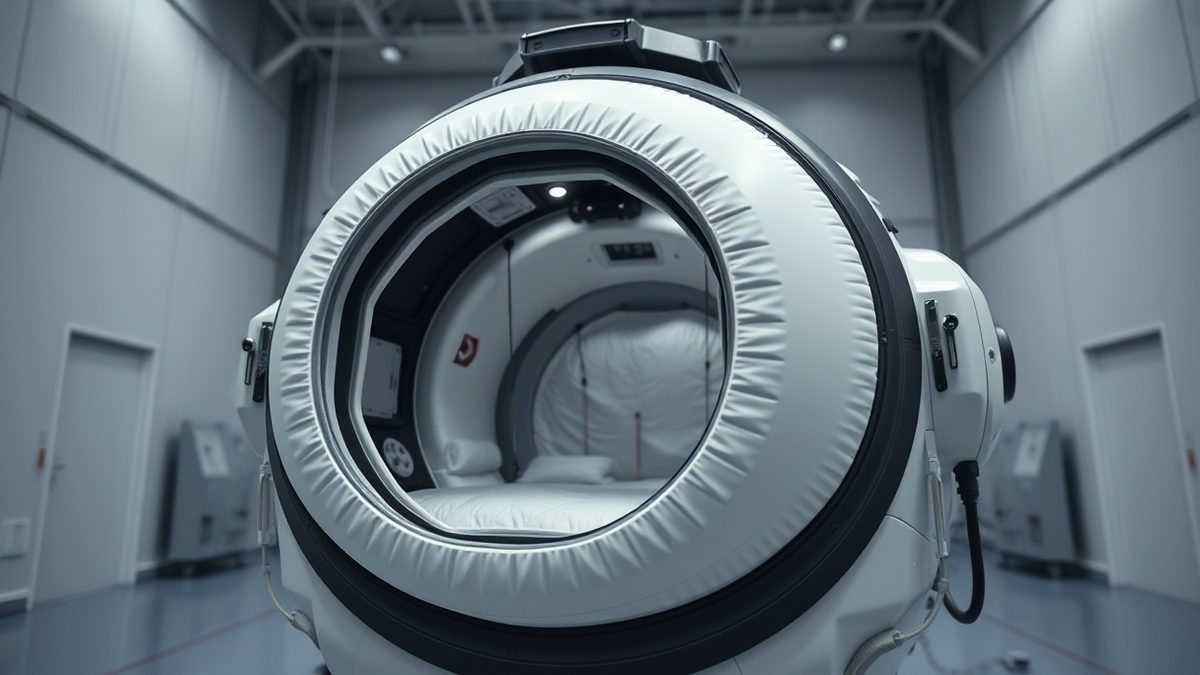
NASA sets a new Starliner schedule
NASA said on 28 September that Starliner will fly without astronauts [1][4][6]. The uncrewed Starliner-1 is targeted for no earlier than December 2026, and a crewed Starliner-2 is set for 2028 [1][4][6].
That leaves NASA without a second proven American crew vehicle for at least two more years [3][10]. SpaceX's Crew Dragon is the only operational US spacecraft flying astronauts to the station today [3][10]. If Starliner-1 runs into trouble, the agency has nothing to fall back on. No exact launch date has been set [1][9].
The schedule was laid out at a press conference on Monday afternoon and confirmed in a NASA statement [6][11]. Starliner-1 could launch in December 2026 or January 2027 [1][9][10]. Astronauts would follow on Starliner-2 by 2028, and NASA named veteran astronaut Woody Hoburg as commander of that flight [1][3][11]. The agency also said it will exercise options for two more crewed Starliner missions, taking its total to six [1][6][11]. That reverses an earlier cut. NASA had reduced Starliner's mission count from six to four about a year before, after the 2024 test flight went wrong [10].
Isaacman said NASA will use the uncrewed flight to gather data [1]. NASA will keep working through the remaining recommendations from the investigation report, then plan for crew [1].
Why NASA is not putting crew on the next flight
Starliner-1 is an engineering evaluation, not a cargo run with a bonus. Flight controllers plan to test the propulsion system under controlled conditions and measure thruster performance and heat around the spacecraft [3][4][9]. Some fixes cannot be fully validated on the ground, so the flight itself is the test [3].
The caution traces back to a classification. NASA declared the 2024 crew flight test a Type A mishap, its most serious category, and the investigation produced 61 recommendations [2][3][6][10]. No one was injured, but investigators said the mission carried the potential for a serious accident [2][3]. Boeing has made thermal changes to the service module and is redesigning valve components linked to seal extrusion [3]. All 12 crew-module thruster valves are being replaced, and Boeing plans upgraded batteries and parachute changes [3][9].
Boeing's commercial crew program manager said the company had implemented corrective actions [1]. The actions covered the technical and cultural issues identified in the report [1].
NASA associate administrator Amit Kshatriya put it more bluntly [2]. "We almost did have a really terrible day," he said [2].
The $359 million and the Atlas V problem
NASA will pay Boeing $359 million to help get Starliner flying again [1][6][11]. Dana Weigel, who runs NASA's low Earth orbit program, said the money covers spacecraft upgrades including the thrusters [1][6][11]. It also pays to certify United Launch Alliance's Vulcan rocket for crew [1][6][11].
NASA has paid Boeing $5.1 billion under the Commercial Crew contract [6][11]. The contract is fixed-price [6][11]. Starliner has cost Boeing more than $2 billion in losses, Ars Technica reported [6][11].
The rocket is a separate headache. Six Atlas V vehicles remain after the rocket stopped production in 2021, and NASA now wants Vulcan certified to carry astronauts [1]. Vulcan is grounded while engineers from United Launch Alliance, Northrop Grumman and NASA work through problems with Northrop's GRM-63XL solid rocket boosters [1]. It is expected to return to flight late in 2026 or early in 2027 [1]. The agreed price for Starliner-2 through Starliner-6 is about $90 million a seat, according to Ars Technica [6].
Boeing has talked to the private station companies about flying their crews [6]. It cannot quote prices yet because neither Vulcan nor Starliner is certified, the company said [6].
What went wrong in 2024
Starliner's first crewed flight launched on 5 June 2024 [3][4][10]. NASA astronauts Butch Wilmore and Suni Williams were aboard [3][4][10]. Five service-module thrusters failed as the capsule approached the station, and helium leaks developed [3][4]. Starliner regained control and docked, but NASA decided the spacecraft was not safe enough to bring the crew home [3][4][10].
Starliner came back empty in September 2024 [3][4][10]. It returned without the crew it launched with [3][4][10].
Wilmore and Williams stayed on the station until March 2025. They returned on a SpaceX Crew Dragon after 286 days in orbit, against a planned 8 to 14 [3][4][10].
NASA's February 2026 report found a mix of failures [2][10]. It cited hardware failures, qualification gaps, leadership missteps and cultural breakdowns [2][10]. Administrator Jared Isaacman said at the time that the most troubling failure was "decision-making and leadership" rather than hardware [7].
What happens next
After Starliner-1, NASA and Boeing will redesign the service module's thruster valves [6]. Boeing will fit new crew-module thrusters and batteries [6]. A crewed Starliner-2 depends on the uncrewed flight and on Boeing finishing its remaining certification work [3]. NASA says Starliner-2 could fly in mid-2028 [4][11].
There is precedent for slippage. A NASA inspector general's audit in July said Starliner might not be certified for operational flights until 2027, a decade behind its original target of 2017 [8].
The pressure behind the schedule is Crew Dragon's retirement. SpaceX intends to sunset Crew Dragon by 2030 as it concentrates on Starship, Isaacman said [4]. NASA has long wanted two independent providers so one spacecraft can back up the other [3]. Isaacman also said NASA will need two astronaut seats to low Earth orbit every six to nine months for the commercial stations planned to follow the ISS [6]. Whether Starliner fills that role is now a question for a flight in December or January, and for a certification review that has slipped before [1][9][8].
Sources
18- 01NASA, Boeing Provide Starliner UpdateEN
- 02NASA boss blasts Boeing and space agency for botched Starliner flightEN
- 03Boeing's Starliner is getting another chance and NASA is not risking astronauts yetEN
- 04Boeing's Starliner Faces a Critical Test This Year as NASA Runs Out of OptionsEN
- 05NASA pays Boeing $359m to get Starliner flying, eyes crew return by 2028EN
- 06NASA, Boeing provide update on the future of StarlinerEN
- 07NASA inspector general suggests Boeing's Starliner will now be a decade lateEN
- 08NASA, Boeing plan uncrewed Starliner return ahead of 2028 crewed missionEN
- 09Boeing "incredibly excited" to serve as nation's only astronaut transportationEN
- 10NASA weighs Boeing vs. SpaceX choice in bringing back Starliner astronautsEN
- 11Boeing Starliner is coming back after getting ‘stuck’ in space in 2024: Why NASA wants second crew vehicle beyond SpaceXEN
- 12Deutsche Polizei nimmt mutmaßlichen Auftraggeber von Starlink-Anschlag festEN
- 13How Do Artificial Agents Make Decisions in Light of Visual Data?EN
- 14 An aquanaut comes home: Returning to Earth from an undersea 'space station' EN
- 15 Happy Halloween! SpaceX launches 27 Starlink satellites to orbit from California (video) EN
- 16Astronauts just gave the International Space Station a powerful upgradeEN
- 17Blue Origin attempts end of year return and eyes Artemis IV selectionEN
- 18Qualcomm Dragonwing Nabs a Big SpaceX Starlink Mobile Nationwide US 5G Network WinEN
All figures and quotations in this text come from the sources listed below.
Content prepared by the editorial team with AI assistance.
Grace Okonkwo
Comments
0- No comments yet — be the first.