NHS launches 20,000-patient trial of blood tests for abdominal cancers at 200 GP practices
The Department of Health and Social Care said on 4 November 2026 that more than 20,000 NHS patients will join STRIDE-RCT, a trial at 200 GP practices of blood tests meant to catch hard-to-spot abdominal cancers earlier.
 Sofia MarchettiScience and health
The launch
The trial is called STRIDE-RCT. The University of Birmingham leads it and developed the tests with partners.
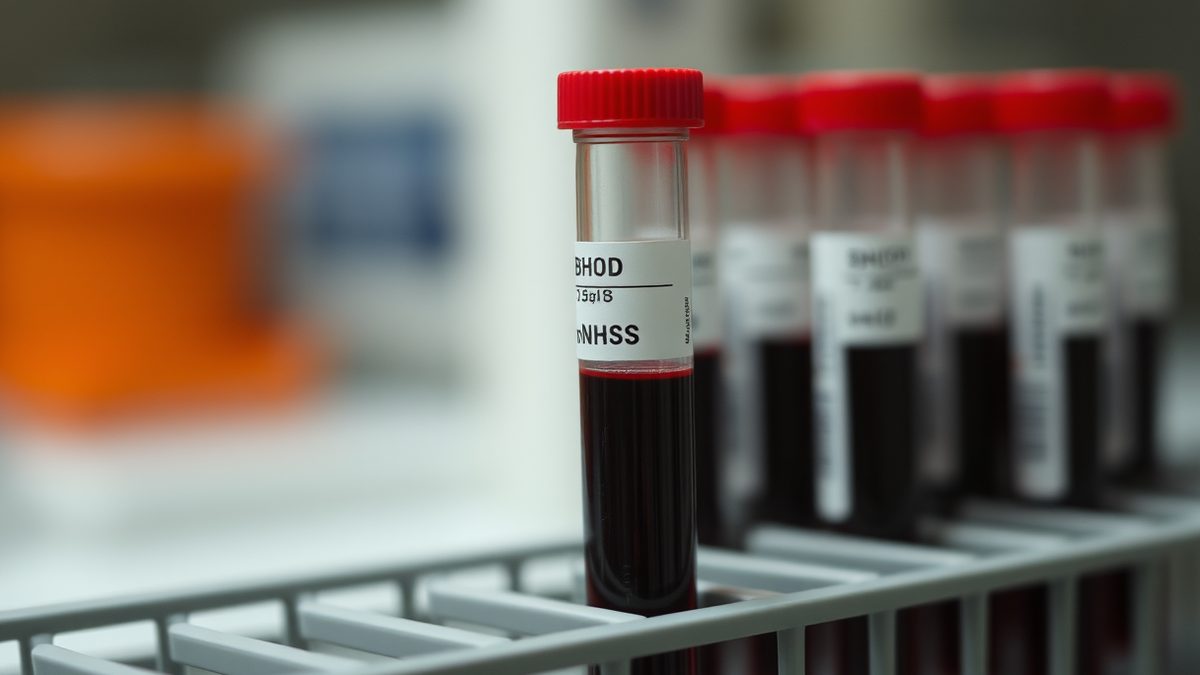
It has up to £8.49m in government funding, routed through the National Institute for Health and Care Research from the Office for Life Sciences. The practices serve inner-city, rural, seaside and deprived communities, which the researchers say will let them test the approach across different populations and settings. Most participants will give one or two tubes of blood at their practice alongside routine blood tests.
The government calls it a world-first trial, though Reuters corrected its own headline and first paragraph to remove that claim.
Yvette Cooper, the health and social care secretary, placed it inside the National Cancer Plan. "The earlier cancers are diagnosed, the more chance they can be successfully treated, and lives can be saved," she said.
Why the trial matters
Patients aged 45 and over who visit a GP with abdominal symptoms, such as persistent bloating or discomfort, will be offered the chance to take part.
Around 71,000 people in England are diagnosed each year with pancreatic, stomach, liver, ovarian or bowel cancer, and almost 35,000 die from these cancers. Abdominal cancers are often found late. Around nine in ten people diagnosed with bowel cancer at stage 1 survive at least five years, compared with around one in ten at stage 4. That gap is the argument for the trial: a test that moves a diagnosis from stage 4 to stage 1 would change outcomes, not just referral volumes.
Peter Johnson, NHS England's national clinical director for cancer and chair of the Office for Life Sciences Cancer Goal, said early detection of abdominal cancer is "notoriously difficult". Symptoms can easily be mistaken for less serious conditions, he said.
For GPs the harder question is triage. Only 2 to 6 per cent of urgent cancer referrals currently result in a cancer diagnosis, according to figures the government cited. Researchers hope the tests could reduce unnecessary referrals and pressure on diagnostic services, but that is one of the things the trial has to establish.
A positive result will help a GP and patient decide whether an urgent referral is needed, but it is not by itself a confirmed cancer diagnosis. A negative result cannot guarantee that cancer is absent.
How the tests work
The tests use artificial intelligence and measurements of proteins in the blood, and some look for DNA shed by tumours. The trial will initially evaluate three different tests, with more potentially added later. Samples will be analysed using tests from three companies.
Practices will be randomly allocated. Half will offer eligible patients a blood test alongside usual care, and the other half will provide usual care. GPs in the trial will record how strongly they suspect cancer, so researchers can assess how well the tests work alongside clinical judgement rather than in place of it.
The randomised design is meant to separate the test's contribution from a GP's own suspicion.
The government's list names 12 cancer types, from bowel and stomach to ovarian, kidney, bladder and prostate. Reuters reported the trial covers 14 cancers.
The Galleri precedent
An earlier NHS trial of the Galleri multi-cancer test involved more than 142,000 volunteers. It did not meet its main objective of reducing the number of cancers diagnosed at stages 3 and 4, Pharmacy Business reported. The new study tests people who already have symptoms, which researchers say may give doctors more useful information.
Aneel Bhangu, a consultant colorectal surgeon and co-chief investigator, said too many patients reach him after months of vague symptoms. Most people referred urgently do not have cancer, he said, which causes unnecessary worry and expense.
He said the tests might help GPs tell the two groups apart, but that this must be established for certain before use across the NHS.
Michelle Mitchell, chief executive of Cancer Research UK, welcomed the trial. The findings "will be valuable in guiding further research, including whether these tests could be used in the NHS", she said.
What happens next
The University of Birmingham's project record gives an end date of 31 October 2031. No results have yet been reported.
The government said the findings will help determine whether the tests are accurate and useful enough to support wider NHS use. For now, the tests are offered only to eligible patients who join the study.
Sources
28- 01New NHS blood test trial to help spot cancers earlier - GOV.UKEN
- 02NHS trial offers GP blood tests to patients aged 45 and over with abdominal symptoms - News AnywayEN
- 03Doctors in England launch primary-care trial of blood tests for spotting cancer early - ReutersEN
- 04NHS trial to test whether blood tests can detect ovarian cancer earlier - FemTech WorldEN
- 05New NHS blood tests aim to detect 12 cancers earlier in major trial - Pharmacy BusinessEN
- 06NHS launches 'world-first' cancer blood test trial in 200 GP practices - GPonlineEN
- 07NHS to trial new blood tests that could detect 13 types of cancer earlier - Redditch StandardEN
- 08GP practices to trial world-first cancer blood test trial - Healthcare ManagementEN
- 09UK trials blood tests for early cancer detectionEN
- 10Family doctors in England to use blood tests to spot cancer early in world first - TimesLIVEEN
- 11New NHS blood test trial to help spot cancers earlierEN
- 12'Multi-cancer' blood tests coming to some GP surgeries soon - Patient Safety Learning - the hubEN
- 13NHS announces major world-first test in at least 200 GP surgeries in England - Manchester Evening NewsEN
- 14A simple blood test could reveal Alzheimer’s risk 10 years before symptomsEN
- 15French blood storage impacted by freezer hacks as theories swirl about culpritsEN
- 16Blood banks targeted in latest European fridge cyberattacksEN
- 17French blood banks hacked in latest cyber-attack on EuropeEN
- 18Poweroad FLEX-261 series passes dual-standard large-scale fire testingEN
- 19Scientists trick cancer cells into making the drugs that kill themEN
- 20STAT+: Servier’s $1.55 billion muscular dystrophy drug fails first major testEN
- 21Cyberattack disrupts blood storage refrigeration systems in FranceEN
- 22New Research Tests Whether AI Models Know Their Own ThoughtsEN
- 23Boehringer Ingelheim strikes $7B backloaded ADC, TCE cancer deal with China's SinoEN
- 24Scientists discover that some “unhealthy” diets can boost cancer immunotherapy in miceEN
- 25Scientists use sound waves to deliver a new attack on deadly brain cancerEN
- 26Your blood pressure could be dangerous even when your numbers look normalEN
- 27Red Hat Patches 9.8-Rated Linux TCP RCE Flaw While Ubuntu Releases Fixes for TestingEN
- 28Ukrainian startup, GomSpace test satellite for future communications networkEN
All figures and quotations in this text come from the sources listed below.
Content prepared by the editorial team with AI assistance.
Sofia Marchetti
Comments
0- No comments yet — be the first.