Nittobo's T-glass squeeze threatens AI accelerator supply as prices jump 20-30%
A Japanese company controls roughly 90% of the global supply of a specialist glass-fiber cloth used inside every advanced AI chip package. It cannot keep up with demand, and prices have risen 20 to 30%.
 Rachel NwosuAI, models and technology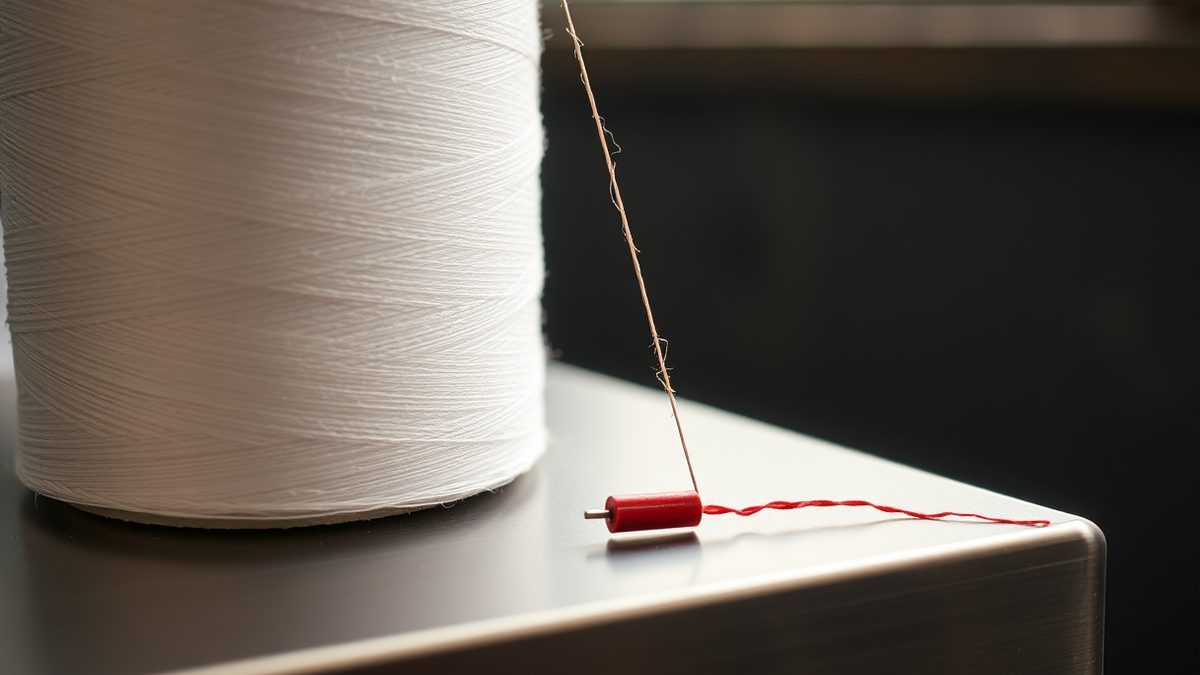
Nittobo dominates the market for T-glass, a low-CTE glass cloth used in the organic core of IC substrates, the interconnect layer between a chip and its printed circuit board. According to Tom's Hardware, the material keeps large, high-heat chip packages dimensionally stable as packaging gets denser. Demand now outstrips supply.
Lead times for downstream materials such as copper-clad laminates have stretched from a normal 8 to 10 weeks to beyond 20. Bill Ho, an analyst at Yuanta, told Tom's Hardware: "With T-glass supply even more constrained now, suppliers are no longer providing lead times."
Nittobo is tripling capacity at its Fukushima plant in Japan, but the new supply will not reach the market until mid-2027. Neither Nittobo nor anyone else can spin up a T-glass line overnight. The material requires specialised electric melting furnaces running between 1,600 and 1,700 degrees Celsius. Melting silica-rich glass, spinning it into yarn and weaving it into ultrathin cloth takes years of investment and expertise to scale.
Why T-glass is hard to replace
Bilal Hachemi, an analyst at Yole Group who tracks the IC substrate supply chain, said the material is not easily substituted. "It is not easy to replace the T-glass," he told Tom's Hardware Premium, pointing to its "specific dielectric and CTE values that work better for the AI chips, especially for the organic core."
Hachemi also noted that the IC substrate industry has historically run on thin margins, so even modest demand surges can trigger shortages. "Any increase in demand for build-up materials, ABF material, or T-glass can cause potential shortage, because it's against the basics of this industry," he said.
"For the first time, we are seeing Nvidia, the end customer, reaching out to the upstream material suppliers to secure the capacity and make sure they will get it."
What makes the current crunch sharper is who is driving it. Hyperscalers are ordering ever-larger chip packages that consume more T-glass per unit. Data from Nvidia shows interposer sizes have grown from 814mm2 for the Hopper architecture to 1,700mm2 for Blackwell, a 109% increase. The forthcoming Rubin and Feynman generations scale further still.
Hachemi said Nvidia reaching out directly to an upstream material supplier like Nittobo is unprecedented in that part of the supply chain. The worry is that once Nvidia locks down its share, rival chip buyers will be left fighting over whatever remains.
Capacity bets and a rival partnership
Bank of America estimates Nittobo's electronic materials segment will nearly double sales from 40.9 billion yen ($266 million) in 2025 to 87.7 billion yen by March 2028, with operating margins approaching 48%. "Demand for T-glass cloth seems likely to grow more than originally expected," said Takashi Enomoto, research analyst at Bank of America. He noted that attention had focused on thick T-glass for GPU and CPU packages, but that ultra-thin T-glass demand is likely to rise as leading-edge devices shift away from E-glass.
E-glass is the cheaper alternative, used mainly in lower-end chips such as microcontrollers and older mobile processors. For higher-powered chips and massive 2.5D and 3D packaging, T-glass is the preferred option.
Beyond Fukushima, Nittobo is doubling raw yarn capacity at its Taiwan plant and importing yarn back to Japan for cloth manufacturing. It has also struck a collaboration deal with Nanya Plastics to outsource some weaving. Tom's Hardware notes that partnering with one of its biggest competitors is itself a signal of how tight the market is. By 2027, roughly 20% of Nittobo's glass cloth is expected to be woven by Nanya, according to the company's disclosure.
The bottleneck sits alongside other pressures on accelerator supply chains. At Hot Chips 2026, Microsoft detailed its second-generation Maia 200 accelerator, a 3nm chip with 140 billion transistors, six HBM3e stacks, 7TB/second of memory bandwidth, 10,000 TFLOPS of FP4 performance and a 750 Watt TDP, according to ServeTheHome's live coverage. d-Matrix used the same event to present its Raptor 3D-DRAM accelerator, which stacks a TSMC N4 logic die on top of a 3D DRAM die using 36 micron face-to-face stacking, ServeTheHome reported.
Those designs all rely on advanced packaging, and advanced packaging relies on substrate materials. With new T-glass capacity still more than a year away, the allocation scramble is likely to run for a while yet.
Sources
3- 01Shortages of crucial chip packaging material threatens AI accelerator supply chainsEN
- 02Microsoft's Maia 200 AI Accelerator at Hot Chips 2026EN
- 03d-Matrix Raptor 3D-DRAM Accelerator for Generative Inference at Hot Chips 2026EN
All figures and quotations in this text come from the sources listed below.
Content prepared by the editorial team with AI assistance.
Rachel Nwosu
Comments
0- No comments yet — be the first.