Samsung Electro-Mechanics and Nvidia announce joint investment in AI chip substrate lines
Samsung Electro-Mechanics and Nvidia said on 21 October 2026 they will jointly invest in dedicated ABF substrate lines in Sejong and Busan, with supplies starting in 2026 to help ease AI infrastructure bottlenecks.
 Grace OkonkwoAI, models and technology
What the 21 October agreement covers
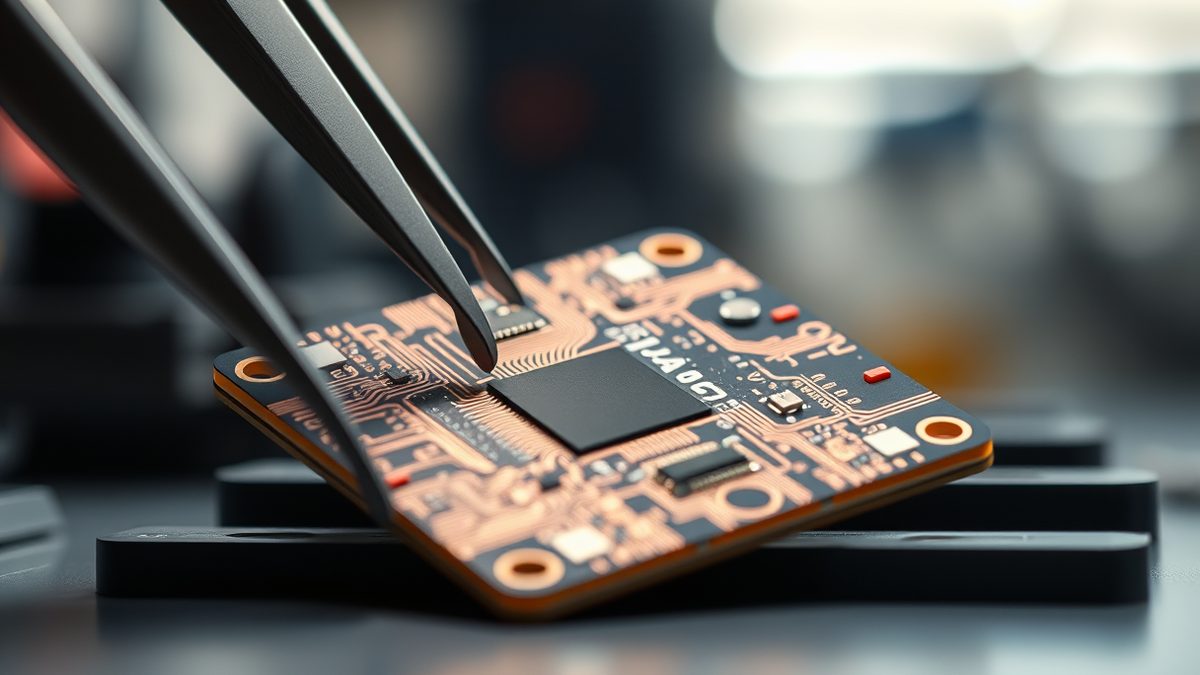
Samsung Electro-Mechanics and Nvidia said the dedicated lines will make ABF package substrates for Nvidia's compute chipsets and for high-speed networking switches used in data centres. Deliveries are scheduled to begin in 2026. The Korean company expects volumes supplied to Nvidia to grow at a double-digit annual rate over several years, and by 2028 Nvidia-related production is projected to account for a significant portion of its total annual package substrate capacity.
Nvidia said agreements with Samsung Electro-Mechanics, Japan's Ibiden and Taiwan's Unimicron would help increase substrate production capacity for its products by 2.5 times over the next three years. The target applies to the broader supply plan. Neither company disclosed the value of Nvidia's capital contribution.
Duck-Hyun Chang, president and CEO of Samsung Electro-Mechanics, said: "It is a great honor to join NVIDIA, a global leader driving AI innovation, as a key infrastructure partner." He said the company would combine its FC-BGA manufacturing with its MLCC expertise to help Nvidia deliver AI platforms on time. Debora Shoquist, Nvidia's executive vice president of operations, said: "The pace of the AI infrastructure buildout requires us to expand manufacturing capacity on a global scale." She said the work broadens Nvidia's substrate partner network and adds capacity.
Tesla's reported 1.1 trillion won
Maeil Business Newspaper reported that Tesla plans to invest 1.1 trillion won ($830.2m) in the expansion, a sum included in Samsung Electro-Mechanics' 4.27 trillion won capital expenditure programme for FC-BGA capacity in South Korea. Under a five-year supply agreement running from 2029 to 2033, Tesla gets priority access to medium and long-term output. A dedicated line at Sejong will make substrates for AI chips used in Tesla's autonomous electric vehicles and its Optimus humanoid robot.
Construction is expected to conclude by the end of 2027. Equipment installation and test production are scheduled for the first half of 2028, followed by commercial output in the second half. Tesla deliveries are due to begin in 2029.
Reports on 26 October put the combined Tesla and Nvidia commitment at 3.7 trillion won, split into 1.1 trillion won from Tesla and 2.6 trillion won from Nvidia. Samsung Electro-Mechanics declined to confirm the Nvidia amount. Tech-insider.org noted that the reports do not show a complete public investment filing confirming each company's full amount. The two reported amounts would cover close to nine-tenths of the 4.27 trillion won programme.
Why substrates are a bottleneck
An FC-BGA substrate routes power and signals between the chip and the circuit board. AI packages that grow larger and denser push up layer counts, and holding the board flat under heat gets harder as area increases. BigGo Finance reported that server-grade FC-BGA is more than four times the area of standard PC substrates, with more than 20 layers, more than double the typical layer count. Nvidia's Blackwell used a substrate measuring 81.5mm by 74.8mm. Its next-generation Rubin Ultra measures 153mm by 77.5mm, roughly double the area.
Samsung Electro-Mechanics has run its FC-BGA lines at full capacity since the second half of this year. Most of that output is already allocated to specific customers.
The money and what is not confirmed
Sedaily reported that Samsung Electro-Mechanics' board approved 4.27 trillion won for package substrate expansion at Sejong on 28 September. The company added 2.51 trillion won in Vietnam, taking the total to 6.78 trillion won. The Sejong sum equals 43.6% of the 9.7973 trillion won in shareholders' equity recorded last year. Mass production at Sejong is set for September 2028. Its package solutions division reported second-quarter revenue of 771.6 billion won, up 37% from a year earlier.
The confirmed 21 October announcement covers joint investment and a multi-year supply agreement. It does not disclose Nvidia's contribution or purchase volumes. The larger 3.7 trillion won total remains industry-sourced, and Samsung Electro-Mechanics declined to confirm the Nvidia share.
Sources
40- 01Nvidia and Tesla back Samsung Electro-Mechanics substrate expansionEN
- 02Samsung Electro-Mechanics Joins Nvidia's AI Chip Substrate Supply ChainEN
- 03Samsung FC-BGA: $2.7B Deal, 3.7T Won Bet [2026]EN
- 04Samsung Electro-Mechanics and NVIDIA Announce Strategic Partnership to Supply ABF SubstratesEN
- 05FC-BGA Shortage Deepens as AI Chips Get Bigger… Samsung Electro-Mechanics Runs Lines at Full CapacityEN
- 06Nvidia broadens ties with Korean component makersEN
- 07NVIDIA Co-Invests in Dedicated Samsung Electro-Mechanics Lines to Lock In Korean AI Chip SupplyEN
- 08Samsung Electro-Mechanics to Invest 6.78 Trillion Won in AI Chip SubstratesEN
- 09Samsung Electro-Mechanics lands $2.8 billion chip substrate investment from Tesla and NvidiaEN
- 10Nvidia taps Korean component makers for AI chips, robotsEN
- 11Samsung Electro-Mechanics Begins Glass Substrate Package Validation, Accelerating AI Substrate Leadership Race - BigGo FinanceEN
- 12Samsung Electro-Mechanics and Nvidia partner on ABF substrates for AI chipsEN
- 13Samsung Electro-Mechanics Will Supply AI Chip Substrates to NvidiaEN
- 14Samsung Electro-Mechanics and NVIDIA Announce Strategic Partnership to Supply ABF SubstratesEN
- 15TSMC is weighing a move into AI memory chips at Nvidia’s requestEN
- 16 Nvidia tightens tracking of AI GPUs in Southeast Asia as Chinese chip smuggling draws scrutiny, report claims EN
- 17Chip Industry Week In ReviewEN
- 18 Chinese AI lab Moonshot reportedly looked at European data centers to access Nvidia chips, report claims EN
- 19 Nvidia can only fulfill 1% of China’s massive $70 billion GPU order for AI chips, report claims EN
- 20Krispy Kreme Is Beating Nvidia, and That’s Not Even the Chip Giant’s Biggest ProblemEN
- 21Amazon set to deploy more than 3,000 TATA electric delivery trucksEN
- 22Apollo’s newest electric scooter is also its lowest-cost yetEN
- 23BYD is launching this 5-seat luxury electric SUV next week with over 1,000 km of rangeEN
- 24 Six pallets of Nvidia GPUs worth $11.4 million stolen in California cargo heist EN
- 25Kia’s PV7 electric van stretches over 17 feet and seats 9EN
- 26Details zu OneUI 9.5: Diese 2 Apps soll Samsung verbessernEN
- 27Liebherr expands excavator range with new, 250-tonne electric modelEN
- 28 Nvidia wants to repurpose over 130 old telco buildings as tiny data centers, report claims EN
- 29 Intel’s next-gen Nova Lake needs new motherboards — what we expect from Nova Point and Z990, Z970, and B960 chipsets EN
- 30Jensen Huang: Vorwurf chinesischer Spionage gegen „Vertraute“ – Nvidia-Chef soll im US-Kongress befragt werden EN
- 31Chinese AI lab Moonshot turned to Europe for Nvidia Blackwell access amid U.S. China curbs, sources tell CNBCEN
- 32Energica rises from the ashes with plans for cheaper electric motorcyclesEN
- 33The Spark: Alternative zu Nvidia? Technologiepreis für PhotonikchipsEN
- 34How Can Europe Accelerate Electric Trucking?EN
- 35You Need A New Car? Go Electric! It’s Superior Technology. Part 2EN
- 36You Need A New Car? Go Electric! It’s Superior Technology! Part 1EN
- 37Janus Electric secures battery supply deal for its battery-swap semi truckEN
- 38Ford’s electric pickup is suddenly selling like hotcakes at 50% off usedEN
- 39Hyundai is recalling nearly 30,000 Kona Electric vehicles due to an airbag software defectEN
- 40China’s AI chipmakers report first profits, but will the trend continue?EN
All figures and quotations in this text come from the sources listed below.
Content prepared by the editorial team with AI assistance.
Grace Okonkwo
Comments
0- No comments yet — be the first.