SpaceX's reported cell-site talks put a fourth U.S. carrier in view
AT&T and T-Mobile shares each fell nearly 8% on 23 October after Bloomberg reported SpaceX was in talks to access at least 80,000 U.S. cell sites, a step toward a fourth nationwide carrier.
 Rachel NwosuAI, models and technology
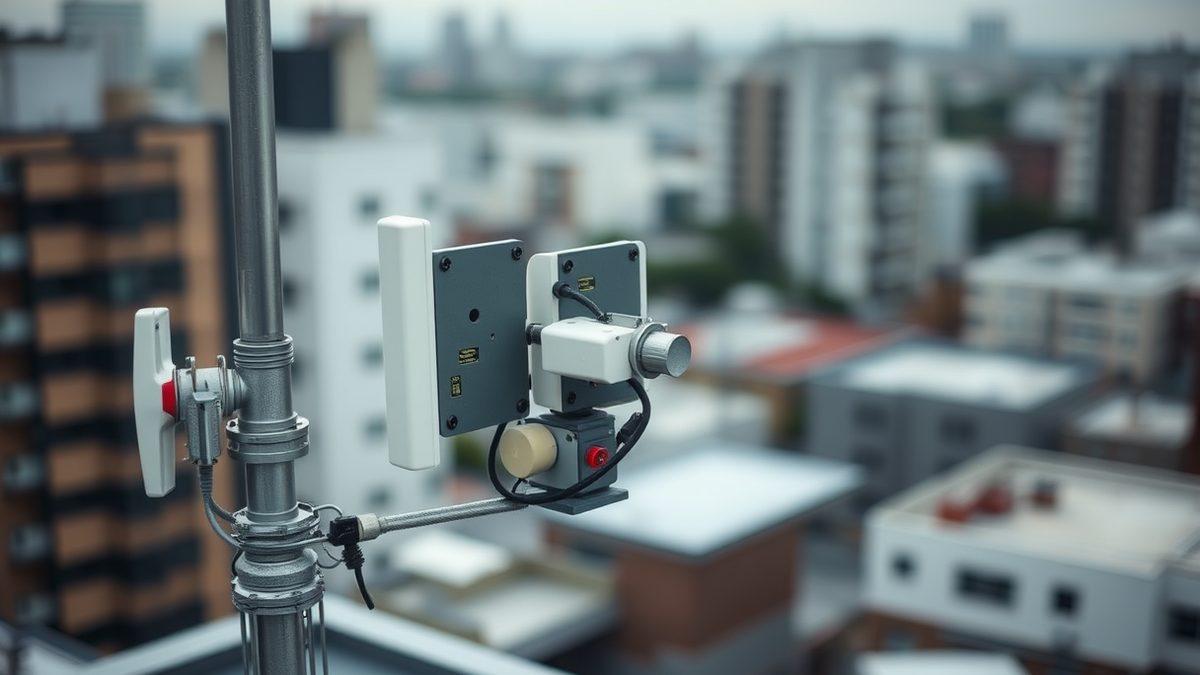
The 23 October report
The U.S. has not had four national carriers since T-Mobile bought Sprint in 2020. Regulators approved that deal expecting Dish Network to build a fourth network, a plan that collapsed in 2025 when Dish's parent, EchoStar, agreed to sell spectrum to AT&T and SpaceX. The Bloomberg report landed two weeks after SpaceX agreed to buy up to 14 MHz of 800 MHz spectrum from Grain Management, a deal that still needs FCC approval.
On the company's 20 October earnings call, President Gwynne Shotwell said a new spectrum purchase and FCC approval of its next satellites would "pave the way" for Starlink Mobile to become a major U.S. mobile carrier, with service on SpaceX's own airwaves targeted for early 2028. Elon Musk told analysts he sees "a clear path to several hundred billion dollars a year" in connectivity revenue, from a business that brought in about $5.2 billion in the third quarter.
The 800 MHz deal
Grain Management said on 8 October that SpaceX will acquire 100% of its nationwide 800 MHz portfolio, giving Starlink Mobile up to 14 MHz of paired low-band spectrum. Closing still needs FCC approval, and neither company disclosed a price. Reuters and The Wall Street Journal reported that SpaceX is paying about $8 billion, citing people familiar with the transaction, so that figure remains reported rather than confirmed. Grain bought the portfolio from T-Mobile in August. T-Mobile received $2.9 billion in cash plus Grain's 600 MHz licences in that transaction.
The FCC cleared SpaceX's request to deploy 15,000 satellites for a next-generation direct-to-device network on 6 October, two days before the spectrum deal was announced. Starlink already has more than 11,000 satellites in orbit.
Why the carriers sold off
On 9 October, the first session after the spectrum deal was announced, T-Mobile fell 13.2% and Verizon lost about 10%, with AT&T also sharply lower, FinanceFeeds reported. The three carriers ranked as the biggest percentage decliners in the S&P 500 that afternoon. AnalyticsInsight put Verizon down 8%, AT&T nearly 9% and T-Mobile 13%, so estimates of the declines differ between reports.
Tower owners moved the other way. American Tower, Crown Castle and SBA Communications rose between 6.5% and 13.3% that afternoon as investors weighed a fourth network as a new tenant for existing towers.
Coverage, not capacity
Lower-frequency spectrum travels farther and penetrates buildings, trees and other obstacles better than higher bands. Most existing U.S. smartphones already support the 800 MHz band, according to Reuters, so customers would not need specialist satellite handsets.
What the block does not buy is capacity. Wireless analyst Vish Nandlall argued the spectrum "provides coverage rather than much capacity." He said 14 MHz improves rural reach and indoor reception but cannot alone carry dense urban traffic at AT&T, Verizon and T-Mobile volumes. Building a genuinely competitive network would cost $50 billion to $130 billion, according to Bernstein estimates cited by FinanceFeeds. BNP Paribas has previously put the figure at roughly $100 billion.
SpaceX says the low-band holdings will act as a coverage layer alongside Starlink Mobile's existing 2 GHz mid-band spectrum, reaching ordinary phones from satellites and from ground infrastructure.
What happens next
The licence transfer is the gate. Until the FCC clears it, Grain still owns the portfolio, and neither company has said when it expects a decision.
The agency has also been working on the rules that would govern a service like this. It said it would vote on 29 October on taking public comment on a proposal to make an additional 482 MHz of spectrum available for supplemental coverage from space and to modernize rules for direct-to-device services. A yes vote would only put the plan out for comment, not adopt it. CTIA, the carriers' trade group, asked the FCC to keep satellites off the 2.5 GHz and 3.45 GHz bands and to let carriers keep the right to approve and terminate satellite leases on their airwaves. SpaceX's own target for service on its airwaves remains early 2028.
Sources
28- 01Verizon Slides as SpaceX's $8 Billion Spectrum Deal Clouds Wireless PricingEN
- 02SpaceX Agrees to Buy Grain's 800 MHz Spectrum for Reported $8 Billion as T-Mobile Falls 13%EN
- 03SpaceX deal to acquire spectrum license hammers shares of AT&T, Verizon and T-MobileEN
- 04'Real consequences': AT&T, Verizon and T-Mobile warn FCC as Elon Musk plots a SpaceX phone network for the US by 2028EN
- 05SpaceX Spectrum Deal Sparks Telecom Stock Selloff as Starlink ExpandsEN
- 06SPCX Stock Closed at $160.57 as Starlink's 800 MHz Deal Hits Verizon, AT&T and T-MobileEN
- 07FCC approves Verizon's $1 billion spectrum purchase - Yahoo FinanceEN
- 08Rural Carriers, Consumer Groups Want Verizon-Array Spectrum Deal Reviewed - Broadband BreakfastEN
- 09FCC Clears Verizon's $1 Billion Spectrum Buy From Array as Rural Groups Warn of Competition Squeeze - Tech TimesEN
- 10SpaceX's Two-Front Expansion: Spectrum, Satellites, and a $40 Billion AI BillEN
- 11SpaceX's India Delay and $8 Billion Spectrum Bet Test a Stretched Balance SheetEN
- 12OpenAI reportedly raises an additional $11 billion at a $1.25 trillion valuationEN
- 13OpenAI Completes $11 Billion Portion of Funding at $1.25 Trillion ValueEN
- 14Onsemi Scraps Plan for $2 Billion Expansion in Czech RepublicEN
- 15Elon Musk's Tesla and SpaceX lose over $420 billion in combined market cap after midtermsEN
- 16Baidu releases ERNIE 5.5 Flash Base with 280 billion parameters as an open-source foundation modelEN
- 17Spectrum overhauls operating model in bid to reignite growthEN
- 18Estonia approves 24/7 robotic pharmacies, paving the way for a European firstEN
- 19Elon Musk’s nearly half a billion dollars in midterms spending was a flopEN
- 20CesiumAstro Secures $730 Million in Janus Henderson-Led Series D at a Valuation Above $4.5 Billion; Unveils Synchronicity Satellite Constellation Following FullEN
- 21$150 Billion More Paid by Americans for Gas This Year Than LastEN
- 22Churchill Capital XI shareholders approve $2.5B Agility Robotics humanoid SPACEN
- 23China blocks SoftBank’s US$5.4 billion takeover of ABB’s robotics divisionEN
- 24Harmonic revenues break beyond Comcast and SpectrumEN
- 25Binance Reveals How Fake Job Interviews and AI Tool Abuse Led to $6.43 Billion TheftEN
- 26UK mmWave vendor CBNG collapses after losing Verizon dealEN
- 27AT&T and Verizon normalize layoffs as 8,000 jobs go in a quarterEN
- 28Federal Reserve Board announces approval of application by The Bank of Nova ScotiaEN
All figures and quotations in this text come from the sources listed below.
Content prepared by the editorial team with AI assistance.
Rachel Nwosu
Comments
0- No comments yet — be the first.