Open-weight token hosting pays only on B300 above a third utilisation
Hosting open-weight AI models loses money on H200 cards at any utilisation, according to an analysis userecurrence.ai published. The same model turns a 31% to 51% gross margin on an 8xB300 node at 50% to 70% utilisation.
 Dr. Amara PatelEconomy, business and world
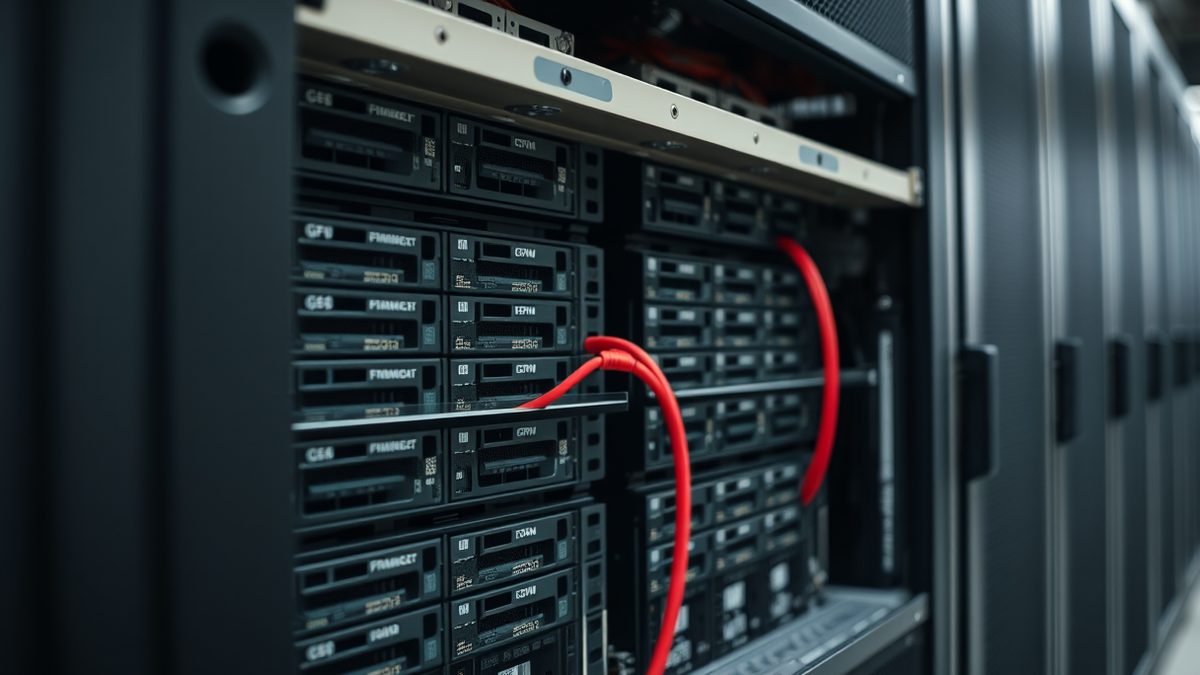
For anyone planning to sell tokens from open-weight models, the GPU card matters more than the inference engine. An 8xB300 node running at 50% to 70% utilisation returns a 31% to 51% gross margin. H200 does not break even at any utilisation. Whether those margins survive the OpenRouter price war is unknown. 29 providers sell the same model there, and the cheapest input price is $0.056 per million tokens against about $0.30 for most.
The profitability test
userecurrence.ai published the analysis. It fixes one model, one traffic pattern, one speed promise, one price and one rent, then changes only the card. H200 loses money even when fully busy. B300 makes money once it is 35% busy.
The test runs DeepSeek V4.1 Flash at a promised 100 output tokens per second per user, against public GPU rental prices. The traffic comes from SemiAnalysis's AgentX workload: 393 replayed Claude Code sessions. Median input is 142k tokens, median output 444, and about 95% of input is served from cache. One camp says DeepSeek makes $38 a GPU-hour; the other says everyone on OpenRouter is losing money. The analysis says they are measuring different things.
Why the card matters more than the engine
Open-source inference engines are no longer the weak point. vLLM and SGLang are production-grade, and DeepSeek has open-sourced DeepInfer, the engine behind its own API. The vLLM team reproduced DeepInfer's decode throughput within 6% on the same hardware in October 2026.
So the engine is a solved problem, whichever way you get one. A hand-rolled engine can reach the same level, according to the analysis. What separates profit from loss is the hardware you rent and how full you keep it. The speed bar is strict: 100 output tokens per second per user, while the median OpenRouter provider serves about 35.
The price war already undercuts the model
OpenRouter lists 29 providers selling the same DeepSeek V4.1 Flash. The cheapest asks $0.056 per million input tokens, against about $0.30 for most, which the analysis calls below cost by any math. Volume and revenue have already parted company: V4's token volume roughly doubled in the first half of 2026 while its share of spend barely moved.
DeepSeek V4.1 Flash took roughly 30% of all tokens on OpenRouter in the week of 19 to 25 October, the top open-weight model by a wide margin. The traffic is not chatbots. Agentic traffic runs at 7x human traffic, and about 87% of tokens are served from cache.
Open source as distribution
The same logic runs through the rest of the open-source business. In October 2026 NVIDIA released the entire HeavyAI platform as open source under Apache 2.0, including the Immerse visualisation interface, HeavyRF and HeavyConnect. The repository had long held only a limited open-source version of the core HeavyDB.
Elsewhere open source works as marketing. Higgsfield said it would open source its platform, and ComfyUI opened a two-week hackathon to rebuild its most popular apps. The best overall prize is $10,000, and submissions closed on 3 November. CaseCite, a self-hosted legal research platform under Apache 2.0, is pitched as an open-source answer to Harvey, which raised $500M for legal AI. Documents, the search index and chat history stay on the operator's servers, and AI features run on the operator's own API keys.
The buyer side pushes the same way. Enterprise AI teams now produce more code than they can evaluate, which makes review, security and governance the bottleneck rather than generation.
What happens next
ComfyUI announces its hackathon winners on 10 November. HeavyAI's full platform is available now under Apache 2.0. CaseCite versions up to 1.3.0 stay under the Elastic License 2.0, while current releases use Apache 2.0. Whether B300 margins hold as OpenRouter prices keep falling is the open question.
Sources
28- 01Is hosting an open-source inference engine profitable?EN
- 02HeavyAI (formerly MapD) is now open sourceEN
- 03Comfy hackathon: open-source Higgsfield's platformEN
- 04Harvey raised 500M for legal AI, I built the same and open sourced itEN
- 05Open Source or Custom in Enterprise AI Systems?EN
- 06Bug hunters can now earn up to $172,000 from OpenAI as company ramps up securityEN
- 07Architect creates open source replacement for VM migration toolEN
- 08OpenSc3k – SimCity 3000 Open SourceEN
- 09PixelLoupe 1.3 – free, open source Lightroom replacement for macOSEN
- 10 8 converted jet engines are powering xAI data centers as companies look for new energy sources EN
- 11On-device and open source Whisper dictationEN
- 12Cisco open sources tool for detecting AI agents on hacking spreesEN
- 13OpenAI says GPT-6 Astra designed a hardware device from scratch in under a weekEN
- 14OpenAI hires former US Army Secretary Dan Driscoll for national securityEN
- 15 OpenAI considers rebranding data centers to 'AI compute campuses" as data center backlash intensifies EN
- 16Open Coaster: an open source web/mobile RollerCoaster Tycoon cloneEN
- 17Friday: Run Claude Code and Codex as a crew on your computer (open source)EN
- 18Stringman, an $800 open-source room scale gripper robotEN
- 19Apple restricts dating apps and AI companions to users 18 and upEN
- 20Octomind – open-source AI harness that saves your tokens, static rustEN
- 21OpenAI hires ex-Army Secretary, gaining bipartisan reach just as midterms loomEN
- 22Vitroscope raises $7M to turn living human tissue into a new source of drug discovery dataEN
- 23Nvidia – open-source auto-ontologyEN
- 24Open-Source 5G Ran Platforms: A Dual Perspective on Performance and CapabilitiesEN
- 25OpenAI hires former U.S. Army Secretary Dan Driscoll for national security roleEN
- 26Medo: A modern UHD 4K open source Media editor for Haiku OS in less than 1.44MBEN
- 27On Bazel and Open Source (2015)EN
- 28Zero Breach Toolkit, open source tool capable of detecting Israeli spywareEN
All figures and quotations in this text come from the sources listed below.
Content prepared by the editorial team with AI assistance.
Dr. Amara Patel
Comments
0- No comments yet — be the first.