OpenAI's Georgia grid-flexibility test runs into Ember's load-shifting maths
OpenAI is testing a demand-response program called Grid Protectors at its planned Effingham County campus in Georgia. Tom's Hardware reported on 3 November that the site sits under a 3.2-gigawatt Georgia Power agreement with 1,000 megawatts of flexible demand response.
 Grace OkonkwoAI, models and technology
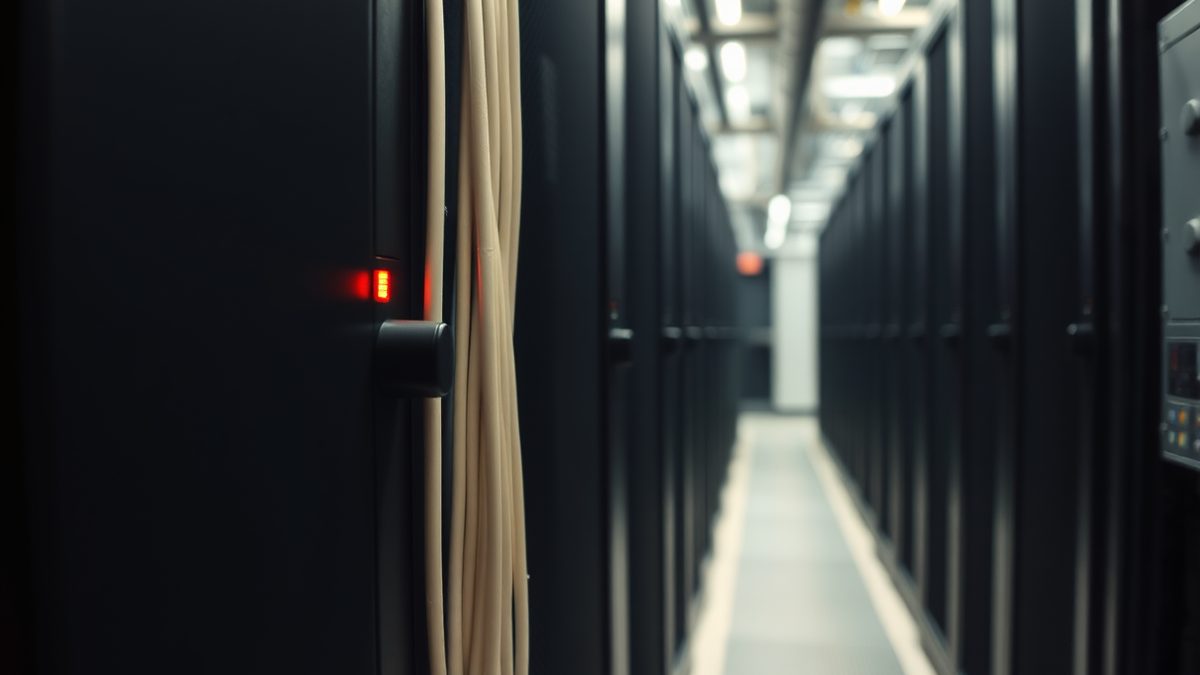
OpenAI tests grid flexibility in Georgia
The program is designed to cut a data center's power draw as local demand rises. OpenAI says the program keeps the lights on for everyone else. It also lets its campuses connect to the grid sooner instead of waiting for new power sources.
“Whether it’s heating homes during a northern cold snap or running air conditioning through a southern heat wave, families need reliable electricity,” OpenAI said in a blog post. “Our goal is to make campus flexibility a resource that utilities can call on when communities need it most”. The company added that it wants flexibility to become “a core part of how we build and operate future campuses”. That means designing facilities to cut electricity use on request. It also means agreeing with utilities on how much demand can be reduced, how quickly and for how long.
Georgia is the test bed. The flexible block in the Georgia Power agreement is enough to power around 800,000 households, nearly 20% of the state's homes, according to Tom's Hardware.
Demand response itself is decades old. Grid operators once phoned industrial customers such as steel mills and asked them to cut consumption during peaks. Automation now lets data centers trim load in under a minute. Nvidia has been running a similar experiment in the UK.
Why load shifting cannot carry the grid alone
An Ember analysis published in October 2026, and reported by pv magazine on 3 November, puts numbers on the limits. It covers nine markets across the United States, Europe and Southeast Asia.
The constraint is the workload mix. Cloud services, enterprise workloads and AI inference need low latency. Ember estimates they will account for about 87% of global data center capacity by 2030. AI training can be interrupted or moved with fewer consequences. Under its assumptions, about 6.5% of global capacity could theoretically shift. That assumes 35% flexibility for training, 5% for inference and none for traditional data centers. An average utilization rate of roughly 48% then cuts the capacity actually available during grid stress to around 3%.
Ireland shows the scale of the result. Load shifting could trim peak demand there by about 100 MW by 2030, or 1.5% of the projected peak. The other markets Ember studied land between 0.1% and 0.6%.
Keeping workloads running while swapping grid power for on-site generation or storage does better. Ember calls this bring-your-own-capacity. Ember finds it could deliver nearly five times as much grid relief as load shifting. For two large Texas data centers with a combined projected load of 5.6 GW, shifting would cut about 0.55 GW at peak. On-site generation could cut up to 2.7 GW.
What utilities and regulators will watch
Ireland is the stress case. Data centers already took about 19% of peak demand in January 2025, when system demand peaked at 6 GW and they used an estimated 1.1 GW. Ember projects that share at 24% by 2030, with data center demand at 1.6 GW against a 6.5 GW system peak.
Timing makes the gap harder. A large data center needs 200 MW to 500 MW of capacity and takes 18 to 24 months to build. Conventional grid expansion takes four to 10 years.
For regulators, the open question is verification. A demand-response promise is only worth the metering and controls behind it. OpenAI has not said how the 1,000-megawatt block will be measured or checked.
What is still unknown
OpenAI has committed to one campus. The company said arrangements will differ by location. It will share additional commitments as it finalizes them.
Ember's study is a model rather than a track record, and its nine markets include Ireland, the UK and Germany.
None of that settles the commercial question. A data center that promises to shed load gets a faster connection. The value of that promise depends on how much capacity is actually flexible, and on who checks.
Sources
28- 01OpenAI introduces program to reduce AI data center energy demand during peak hoursEN
- 02Behind-the-meter generation could deliver five times more grid relief than data center load shiftingEN
- 03Battery Energy Storage System and Pumped Storage Projects Offer Solutions for Integrating Energy Grid: A Report - Jharkhand State NewsEN
- 04Top Custom Energy Management Development Companies With Published Projects - Daily BusinessEN
- 05Key takeaways from All Energy Australia 2026EN
- 06AWS appoints British Embassy advisor as manager of energy policyEN
- 07Why data center growth requires smarter energy management - Hanwha GroupEN
- 08More of the Same Expensive Dependence on Fossil Fuels in TEP and APS 2026 Energy PlansEN
- 09On the pitch and on the grid, Ukraine is not waiting for the war to end and is asking the world to invest in itEN
- 10Can Enphase Energy (NASDAQ:ENPH) Overcome Its Cautious Guidance? - Kalkine MediaEN
- 11DOE Announces $8.5M for Fusion Energy Public-Private PartnershipsEN
- 12Bringing Design Data Management into the Developer WorkflowEN
- 13OpenAI deepens Abu Dhabi foothold as Sam Altman inks deals spanning energy, government and investmentEN
- 14More heat pumps would actually be good for the grid, researchers findEN
- 15Fintech platform Sageworks taken offline after suspected cyberattackEN
- 16Google plans big virtual power plant in energy-strapped PJM gridEN
- 17Percepto launches Axion AI platform to unify inspection data analysisEN
- 18Electric Hydrofoils Save Energy, But Do They Earn Their Price?EN
- 195 ballot proposals that could drive or derail clean energyEN
- 20Eugene Becomes 5th Oregon City to Adopt Home Energy Score RequirementEN
- 21The Ford Escape may return as an EV based on the UEV platform [Update]EN
- 22Einstein's equations may explain the universe without dark energyEN
- 23PJM desperately needs grid batteries. Here’s a way it could get some.EN
- 24How digital membership platforms help sports NGBs leave the spreadsheets behindEN
- 25Cloudflare’s Post-Quantum GeoKey Manager Enters Closed Beta without Attribute-Based EncryptionEN
- 26Can battery swapping and energy storage power CATL’s next phase of growth?EN
- 27U.S. Department of Energy Has Critical Role in Power System Impacts from Wildfires - Department of Energy (.gov)EN
- 28Solar Topics in Small Business Innovation Research and Small Business Technology Transfer (SBIR/STTR) - Department of Energy (.gov)EN
All figures and quotations in this text come from the sources listed below.
Content prepared by the editorial team with AI assistance.
Grace Okonkwo
Comments
0- No comments yet — be the first.