Stratos at 9GW: the health bill for gas-fired AI compute
A new estimate puts a public-health price on the on-site gas rush: at full build-out, the proposed 9GW Stratos data center in Utah could cause 5 to 45 additional premature deaths and $75m to $690m in health damages every year, CleanTechnica reported on 4 November.
 Rachel NwosuAI, models and technology
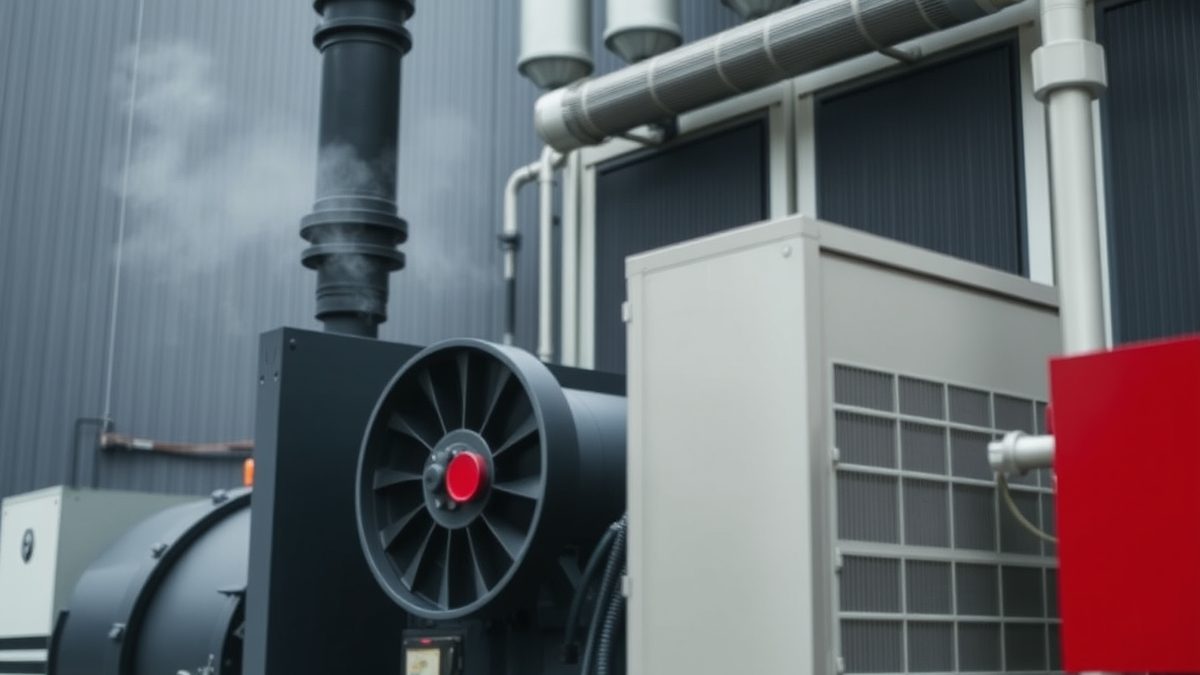
A health cost for gas-fired compute
The analysis was prepared by EmPower Analytics Group for NRDC. It models emissions from the proposed Stratos data center in Box Elder County, Utah, near Salt Lake City.
At full build-out the site would draw as much as 9GW of on-site power from burning methane gas.
At that scale, the report estimates air pollution from Stratos's gas generation could cause approximately 5 to 45 additional premature deaths and $75m to $690m in health-related economic damages every year. The main pollutant is fine soot, particulate matter of 2.5 microns or less. For host communities and regulators, that turns a power question into a permitting one: air permits and siting decisions become the place where on-site gas is argued, not the interconnection queue. For operators, the fastest route to power now arrives with a pollution bill attached. What nobody can say yet is whether Stratos gets built at 9GW, or whether the converted jet engines already running in Mississippi are a short bridge or a permanent fixture.
The choice of generator matters more than the headline number. Over 30 years at 9GW, the report estimates 856 to 1,350 premature deaths and $13.5bn to $20.7bn in damages under gas-fired RICE. The same build-out with combined-cycle gas comes to 145 to 253 premature deaths and $2.3bn to $3.8bn. RICE means reciprocating internal combustion engines: many small units running in parallel rather than a few large turbines.
The RICE scenario is not hypothetical. It is patterned on a methane gas-powered data center with 69 RICE generators that the Utah Division of Air Quality permitted in Millard County in early 2026.
Stratos cleared its first hurdle in May. The Box Elder County Commission approved the project under highly contentious circumstances, inside a project area created by Utah's Military Installation Development Authority.
The grid queue pushes operators on-site
The reason operators build their own generation is waiting. Hooking up 100MW to the grid in Northern Virginia takes about seven years, according to the International Energy Agency. Rystad Energy analyst Audun Martinsen told the New York Times that jet-powered units can have a data center running in 24 months.
xAI has already installed eight converted jet-engine turbines in Mississippi to help power its Colossus 2 data center in Memphis, according to a New York Times report cited by TechCrunch on 3 November.
Each unit can produce up to 50MW, normally enough to keep around 15,000 homes running.
ProEnergy, a Missouri company, rebuilds GE engines commonly found on Boeing jets for data-center duty.
The queue is already costing operators business. Microsoft pulled out as anchor customer for Nscale's data center in Loughton, England, after the local utility said it could not deliver enough power until the early to mid-2030s. As of April, half of data center buildouts had been canceled or delayed, with lack of power among the causes.
Efficiency, emissions and equipment limits
The shortcut has its own physics. Converted jet engines are less efficient and pollute more than turbines built for conventional gas plants, and it takes more of them to make the same power, according to the Times.
Permits reflect that. xAI's permits allow a 25% higher limit for volatile organic compounds, and environmentalists have warned about carbon monoxide.
The Southern Environmental Law Center has challenged Mississippi's decision, arguing xAI failed to guarantee the turbines meet standards for pollutants including formaldehyde and undercounted projected emissions.
Supply is the other constraint. Some turbine models are effectively sold out through 2031, according to Data Center Knowledge.
Patrick Hughes, senior vice president at NEMA, told Data Center Knowledge that a standalone AI data center can generate enough on-site power. But he said it is not feasible for a single facility, let alone the whole fleet, to supply 100% of its own power and run reliably around the clock. A hybrid of on-site generation and grid connection is the likely outcome for many sites, he said.
Developers are still lining up. TerraVolt acquired 1,077 acres in Cassia County, Idaho, for a behind-the-meter gas campus with an initial 240MW of on-site generation. It has an agreement for 55,000 MMBtu per day from the Williams Northwest pipeline.
What happens next
Drax signed an agreement with Brookfield and Radiant to develop an AI data center at Drax Power Station in North Yorkshire. Phase one targets up to 100MW of compute capacity operational from the first quarter of 2028, with a further 500MW between 2028 and 2031.
The partners are looking for more than 1GW at the site by an unspecified date. The first phase still needs planning, regulatory and network approvals and a tenant, and final investment decisions have not been made. Drax hopes to clear the approvals needed to supply the data center directly by the early 2030s.
xAI, meanwhile, plans to increase its data center capacity by 7x before the end of 2027, Elon Musk said in August. President Donald Trump said in an Oct. 21 Truth Social post that new, large-scale data centers should generate their own electricity and return excess power to the local community or grid. That post has not been translated into formal policy.
The numbers behind the pivot
- Stratos at 9GW: 5 to 45 additional premature deaths and $75m to $690m in health damages per year.
- 100MW grid connection in Northern Virginia: about seven years, against 24 months for a jet-powered data center.
- xAI's eight converted jet engines: up to 50MW each, enough for around 15,000 homes per unit.
- US data centers: 20% of all power by 2035, an 83% increase over the same forecast made seven months earlier.
- Drax phase one: up to 100MW of compute capacity from Q1 2028, then 500MW between 2028 and 2031, then more than 1GW.
- Turbine supply: some models sold out through 2031.
- xAI capacity: a 7x increase before the end of 2027.
Sources
28- 01Stratos Data Center Will Emit Air Pollution That's Linked to Premature Deaths and Health Economic Damages for Utah & States DownwindEN
- 02Data centers are turning to old jet engines as the wait for power growsEN
- 03xAI installs eight converted jet engines to power Mississippi data centerEN
- 04Brookfield plans for a $27 billion AI data center at UK power stationEN
- 05UK's most polluting power plant could power country's largest AI datacentreEN
- 06Trump Onsite Power Push Meets AI Data Center RealityEN
- 07TerraVolt acquires site in Idaho to develop 240MW gas powered behind-the-meter data center campusEN
- 08AI Data Centre Cooling Gets Aerospace-Grade Thermal Buffer - Urban AcresEN
- 09UL Solutions launches AI data center power and cooling certifications - scanx.tradeEN
- 10AI Data Centre Cooling Gets New Thermal Buffer from HoneywellEN
- 11Aluminum–Air Generators for Data Centres Face a Metal Logistics TestEN
- 12UK’s ARIA will test Lumai’s light-based AI servers in a data centreEN
- 13 China deploys 'world's first' 800-volt DC power system for massive AI data center EN
- 14Why Don't More Data Centers Use Liquid Nitrogen For Cooling?EN
- 15Liquid cooling retrofits complex for existing data centers - ET DatacentersEN
- 16Envision’s 800V DC Data Centre World-First in Ulanqab, China - Data Centre MagazineEN
- 17Honeywell Aerospace tests thermal module for Equinix AI cooling - DataCentreNews UKEN
- 18Nidec Data Center Cooling: 13K+ CDUs, 90 Years [2026] - shattered.ioEN
- 19Google's Suncatcher data centre satellite sends a haiku to EarthEN
- 20Drax wants to feed Britain's AI habit with £20B datacenter at biomass power stationEN
- 21OpenAI is quietly renaming data centers 'compute campuses'EN
- 22Nvidia tells data center operators to limit business to Chinese customersEN
- 23California Resources and Bloom Energy eye 1GW of fuel cells across California to power data centers and other offtakersEN
- 24Liquid Cooling Is Changing What Data Centers Need to MeasureEN
- 25Daikin Introduces Coolant Distribution Unit for AI Data Center Cooling - RefindustryEN
- 26Vertiv Introduces SmartIT Platform with Liquid Cooling for AI Data Centers - RefindustryEN
- 27Proposed data centre will release 23 Hiroshima atomic bomb worth of energy a dayEN
- 28Supersonic airliner in doubt as company shifts to powering AI data centersEN
All figures and quotations in this text come from the sources listed below.
Content prepared by the editorial team with AI assistance.
Rachel Nwosu
Comments
0- No comments yet — be the first.